
Small Fry (2011)
Story overview
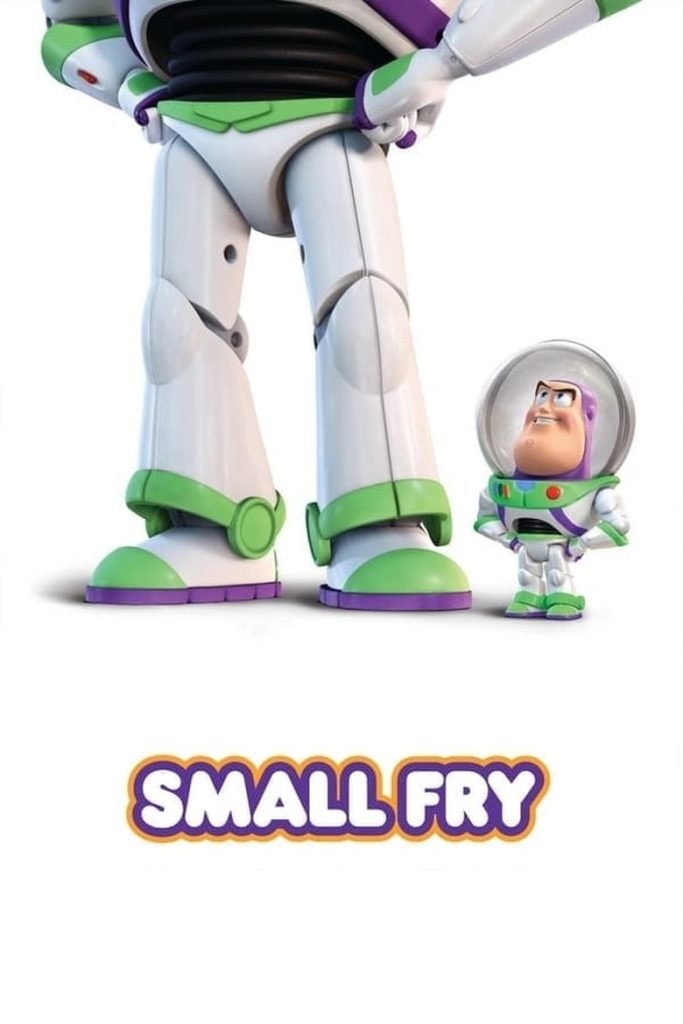
In this animated short film, a miniature toy version of Buzz Lightyear from a fast-food restaurant unexpectedly replaces the real Buzz. The real Buzz's friends must cope with this annoying impostor who disrupts their usual dynamics. The story explores themes of identity, friendship, and dealing with unexpected changes in a humorous, family-friendly way. At just 7 minutes, it's a quick, entertaining watch suitable for all ages.
Parent Guide
A completely harmless animated short with positive messages about friendship and identity, appropriate for all ages.
Content breakdown
No violence or dangerous situations present.
Nothing frightening or disturbing occurs.
No inappropriate language used.
No sexual content or nudity present.
No substance use depicted.
Mild frustration from dealing with an annoying impostor, resolved quickly with humor.
Parent tips
This G-rated animated short is completely appropriate for all audiences with no concerning content. The humor is light and slapstick-based, focusing on the impostor's obnoxious behavior rather than anything mean-spirited. Parents can feel comfortable letting children watch this independently as it contains no violence, scary elements, or problematic language.
Parent chat guide
Parent follow-up questions
- What was your favorite part of the movie?
- How did the friends feel when Buzz was replaced?
- What made the impostor different from the real Buzz?
- Was the impostor funny or annoying?
- How did the friends help each other?
- Why do you think the impostor wanted to take Buzz's place?
- How did the characters show they were good friends?
- What would you do if someone pretended to be you?
- What lesson did the characters learn about friendship?
- How was the problem solved in the end?
- What does this story say about identity and being authentic?
- How did the characters' different personalities help solve the problem?
- What real-life situations might be similar to having an impostor?
- Why is it important to be yourself rather than pretend?
- How does humor help deal with frustrating situations?
- What broader themes about identity and authenticity does this short explore?
- How does the film use comedy to address the concept of impostors?
- What does the resolution suggest about friendship and acceptance?
- How might this story relate to social situations where people pretend to be someone they're not?
- What film techniques make this short effective despite its brief runtime?
🎭 Story Kernel
At its core, 'Small Fry' explores identity crisis and corporate disposability through the lens of Buzz Lightyear's forgotten fast-food toy double. The narrative isn't about heroism but about what happens when you're literally designed to be inferior—a mass-produced knockoff in a world that values authenticity. The characters are driven by existential dread: Buzz's double seeks validation in a system that created him to be discarded, while the other toys confront their own replaceability. The film cleverly uses fast-food culture as a metaphor for consumer society's throwaway mentality, asking what happens when products develop consciousness but remain trapped in their programmed purpose.
🎬 Visual Aesthetics
The animation employs a stark contrast between the pristine, sterile fast-food restaurant and the lived-in warmth of Bonnie's room. The camera lingers on plastic surfaces and artificial lighting in the restaurant, creating a cold, institutional feel that mirrors the toys' predicament. Color plays a crucial role—the muted, corporate palette of the restaurant versus the vibrant, organic colors of Bonnie's home. Action sequences are deliberately clumsy, emphasizing the toys' artificial nature rather than superheroic grace. Symbolism appears in details like the sticky floors representing entrapment and the fluorescent lights casting harsh shadows that suggest manufactured identities.
🔍 Details & Easter Eggs
💡 Behind the Scenes
The short film was directed by Angus MacLane, who previously worked on 'Toy Story 3' and brought his signature blend of humor and pathos to this project. Voice actor Tim Allen recorded his lines separately from the other cast members due to scheduling conflicts, requiring careful audio engineering to match the group scenes. The fast-food restaurant set was modeled after real 1990s-era chain restaurants, with animators studying vintage promotional materials for accuracy. Interestingly, the concept originated from discarded 'Toy Story 3' ideas about fast-food toy promotions gone wrong.
Where to watch
Choose region:
- Disney Plus
- Amazon Video
- Apple TV
- Google Play Movies
- YouTube
- Fandango At Home