
Society of the Snow (2023)
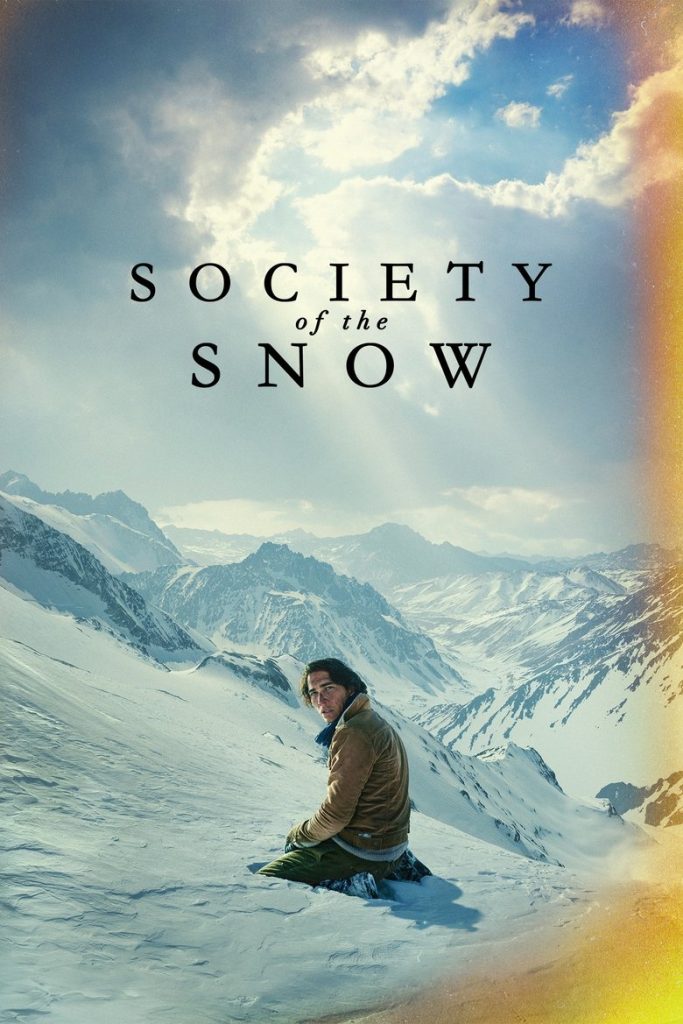
Story overview
Society of the Snow is a 2023 historical drama based on the true story of the 1972 Andes flight disaster. The film follows a Uruguayan rugby team whose plane crashes in the remote mountains, forcing the survivors to endure extreme conditions. It explores themes of human resilience, survival, and moral dilemmas in life-or-death situations.
Parent Guide
Intense survival drama based on true events with mature themes and graphic situations. Recommended for mature teenagers with parental guidance.
Content breakdown
Contains realistic depictions of a plane crash, injuries, and survival-related peril. Scenes show the aftermath of the disaster and the physical toll on survivors.
Includes disturbing survival situations, starvation, and life-or-death decisions. The harsh mountain setting and isolation create intense psychological tension.
May include strong language appropriate to high-stress survival situations. Not the primary focus but present in emotional moments.
Minimal to no sexual content. May include non-sexual nudity related to survival situations or medical necessity.
No notable substance use depicted in the survival context.
High emotional intensity throughout due to life-threatening situations, grief, loss, and difficult moral choices. Themes of mortality and human suffering are central.
Parent tips
This R-rated film contains intense survival situations and mature themes that may be disturbing for younger viewers. The story involves graphic depictions of the crash aftermath, starvation, and difficult ethical decisions. Parents should preview the film or research content details before deciding if it's appropriate for their family.
Parent chat guide
Parent follow-up questions
- What did you see in the movie?
- How did the people help each other?
- What was your favorite part?
- How did the story make you feel?
- What would you do if you were lost?
- What challenges did the survivors face?
- How did they work together to survive?
- What would you have done differently?
- What does 'resilience' mean in this story?
- How did the setting affect their situation?
- What ethical decisions did characters face?
- How did different people react to the crisis?
- What survival skills were most important?
- How does this true story compare to fictional survival stories?
- What lessons about human nature does this story teach?
- How does this film handle the moral complexities of survival?
- What psychological effects might such an experience have?
- How accurate do you think the portrayal is compared to historical accounts?
- What does this story reveal about human limits and capabilities?
- How might different cultural perspectives view these events?
🎭 Story Kernel
Society of the Snow transcends the sensationalism of the 1972 Andes flight disaster by focusing on the collective soul rather than mere physical endurance. At its core, the film explores the reconstruction of human civilization in a vacuum where traditional morality is rendered obsolete by the sheer necessity of survival. Through the narration of Numa Turcatti, the story shifts the perspective from those who lived to the sacrifice of those who died, framing the act of anthropophagy not as a macabre taboo, but as a profound, eucharistic pact of mutual preservation. It is a study of 'the society' formed in the fuselage—a communal organism where faith is redefined through the tangible, agonizing reality of the flesh. The movie ultimately argues that survival is not an individual triumph, but a heavy, shared burden of memory and grief.
🎬 Visual Aesthetics
Director J.A. Bayona and cinematographer Pedro Luque utilize a visual language that oscillates between suffocating claustrophobia and agoraphobic vastness. The Andes are portrayed not as a scenic backdrop, but as an indifferent, monolithic antagonist. The camera frequently stays tight on the survivors' weathered faces, capturing the visceral degradation of their bodies—sunken eyes, cracked lips, and frostbitten skin—contrasted against the blinding, desaturated white of the snow. The avalanche sequence is a masterclass in sensory terror, using muffled sound and tight framing to simulate the experience of being buried alive. Symbolically, the transition from the warm, saturated tones of 1970s Montevideo to the cold, blue-grey palette of the mountains visually marks the characters' departure from the world of the living into a purgatorial realm where light itself feels hostile.
🔍 Details & Easter Eggs
💡 Behind the Scenes
To ensure absolute authenticity, J.A. Bayona recorded over 100 hours of interviews with the real survivors and the families of the deceased. The production was filmed primarily in the Sierra Nevada in Spain, but the crew also traveled to the actual 'Valley of the Tears' in the Andes to capture the specific topography and atmosphere of the crash site. In a poignant meta-textual touch, several real-life survivors make cameo appearances; most notably, Carlitos Páez plays his own father, reading the names of the survivors over the radio, effectively announcing his own survival to the world.
Where to watch
Choose region:
- Netflix
- Netflix Standard with Ads
Trailer
Trailer playback is unavailable in your region.