
Society of the Snow: Who Were We on the Mountain? (2024)
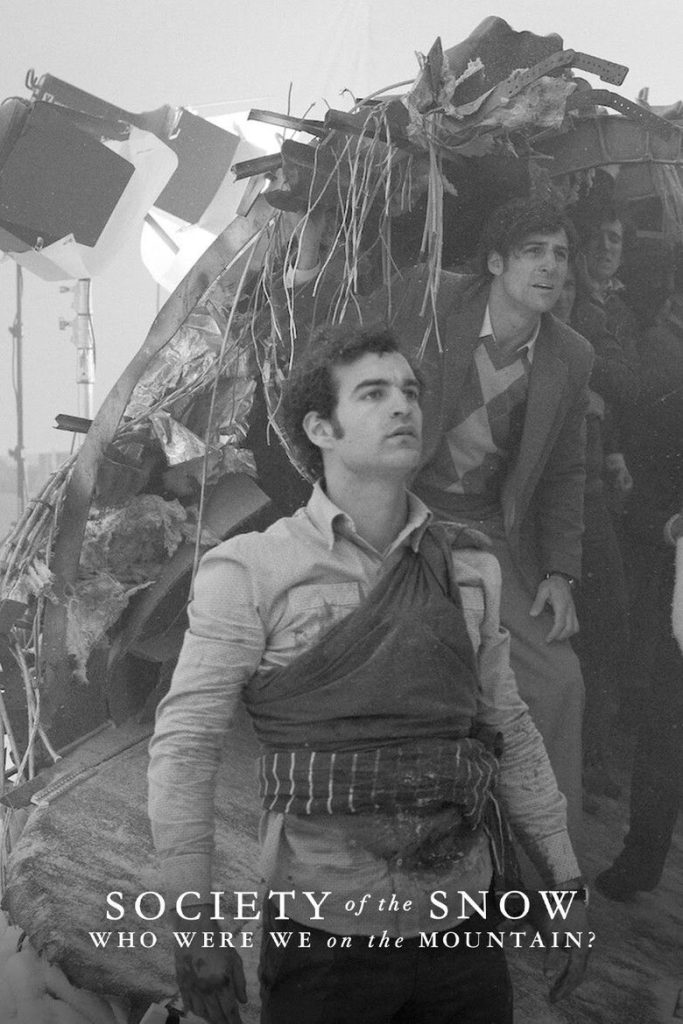
Story overview
This 2024 Spanish documentary provides an in-depth exploration of the creative process behind the film 'Society of the Snow,' focusing on the 1972 Andes flight disaster. It features interviews with director J.A. Bayona, crew members, cast, and real-life survivors, offering insights into filmmaking and historical reflection.
Parent Guide
A documentary about the making of a film based on a real-life survival story, suitable for mature audiences due to thematic intensity and TV-MA rating.
Content breakdown
Discusses a plane crash and survival scenario, but likely without graphic visuals; may include descriptions or reenactments of perilous situations.
Themes of survival, trauma, and disaster could be emotionally intense or disturbing for sensitive viewers, especially given the real-life context.
No strong language expected in this documentary-style content; primary language is Spanish with possible subtitles.
No sexual content or nudity anticipated in this behind-the-scenes documentary.
No substance use depicted or discussed in this context.
Emotional discussions of survival, loss, and resilience from survivors and filmmakers may be impactful.
Parent tips
This documentary discusses a real-life survival story involving a plane crash in the Andes mountains, which may include emotional or intense themes. It's rated TV-MA, suggesting it may be unsuitable for children under 17 without parental guidance. Consider the maturity level of your child regarding discussions of survival, trauma, and documentary-style content.
Parent chat guide
Parent follow-up questions
—
- What is a documentary?
- What do you think it means to survive something hard?
- How do you think the filmmakers showed respect to the real survivors?
- What can we learn from stories of people working together in tough times?
- How does this documentary balance entertainment with historical accuracy?
- What ethical considerations might arise when making a film about real-life trauma?
🎭 Story Kernel
The documentary explores the blurred lines between the actors' experiences and the real survivors' trauma. It is not merely a 'making-of' featurette; it is a profound study of empathy and the immense weight of historical representation. The film examines how the cast lived in semi-isolation, underwent extreme physical transformations, and bonded to replicate the 'society' formed in 1972. The core theme is the ethical responsibility of storytelling—how to honor the deceased while celebrating the living without falling into sensationalism. It captures the psychological transition of young actors becoming the men they portrayed, highlighting the collective effort required to reconstruct a tragedy that remains a raw wound in Uruguayan history. Ultimately, it asks if one can ever truly return from the mountain once they have mentally inhabited it.
🎬 Visual Aesthetics
Director Manuel Romo utilizes a fly-on-the-wall aesthetic, contrasting the pristine, clinical beauty of J.A. Bayona’s finished film footage with the raw, gritty, and often chaotic behind-the-scenes digital recordings. The visual language emphasizes the staggering scale of the production, showcasing massive gimbals and artificial snow sets against the vastness of the Sierra Nevada. Symbolism is found in the physical decay of the actors; as the documentary progresses, their faces hollow out, mirroring the haunting archival photos of the real survivors. The use of direct visual comparisons between the 1972 photographs and the 2023 recreations serves as a testament to the production's obsessive commitment to authenticity. This visual juxtaposition bridges the gap between cinematic artifice and the harrowing reality of the Andes flight disaster.
🔍 Details & Easter Eggs
💡 Behind the Scenes
Director Manuel Romo captured over 300 hours of footage during the production of J.A. Bayona’s epic. The documentary features extensive interviews with the real survivors, many of whom had never spoken in such detail about the cinematic adaptation of their lives. It details the rigorous casting process involving over 2,000 auditions to find actors who could handle the grueling physical demands. The actors were placed on a strict medically supervised diet to lose weight in real-time, a process documented to show the physical toll of the production. The film was released on Netflix shortly after the main feature.
Where to watch
Choose region:
- Netflix
- Netflix Standard with Ads