
Something the Lord Made (2004)
Story overview
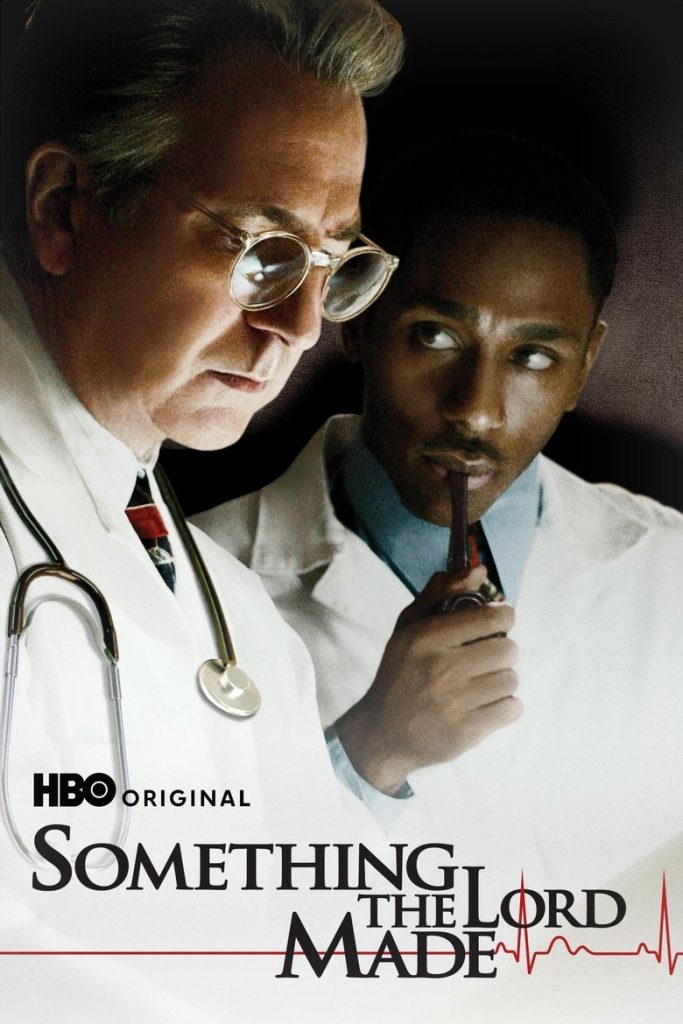
Something the Lord Made is a 2004 TV movie drama that tells the true story of the partnership between a white surgeon and a Black lab technician who together pioneered groundbreaking heart surgery techniques in the 1940s. The film explores their professional collaboration against the backdrop of racial segregation in America, highlighting both medical innovation and social injustice. It focuses on their determination to save lives while navigating the racial barriers of their time.
Parent Guide
Historical drama about medical innovation and racial inequality suitable for mature children with parental guidance.
Content breakdown
Medical procedures shown in clinical context without graphic detail; tense hospital scenes involving life-threatening conditions.
Racial discrimination and segregation depicted; serious medical situations that may concern sensitive viewers.
No offensive language noted in this TV-PG production.
No sexual content or nudity.
No substance use depicted.
Themes of racial injustice and life-or-death medical situations create emotional weight.
Parent tips
This historical drama deals with mature themes including racial discrimination and medical ethics that may require parental guidance for younger viewers. While there's no graphic content, the film portrays systemic racism and professional inequality that could prompt important family discussions about history and social justice. The medical scenes are clinical rather than gory, but the emotional weight of the story might be intense for sensitive children.
Parent chat guide
Parent follow-up questions
- What did the doctors do to help sick people?
- How did the two main characters work together?
- What colors did you see in the movie?
- Why do you think the two doctors became friends?
- What was hard about working in a hospital back then?
- How did the characters show they cared about their patients?
- How did racial segregation affect the doctors' partnership?
- What qualities made their medical teamwork successful?
- Why is this story important for people to remember today?
- How does the film portray institutional racism in medical fields?
- What ethical dilemmas arise from their groundbreaking procedures?
- How does this historical partnership inform current discussions about diversity in STEM fields?
🎭 Story Kernel
The movie is less about the triumph of a surgical procedure and more about the anatomy of a partnership built on intellectual theft and emotional dependency. It expresses how systemic racism can co-opt genius, making Dr. Blalock the public face of a discovery while Vivien Thomas, the true architect, remains the invisible hand. The characters are driven by a shared obsession—Blalock by ambition and ego, Thomas by a desperate need for validation and dignity within a system designed to deny him both. Their relationship is the film's real subject: a profound, painful symbiosis where professional respect and personal affection are permanently entangled with exploitation.
🎬 Visual Aesthetics
The film's visual language meticulously constructs a world of separation. The camera often frames Thomas outside the frame of privilege—looking through windows, standing in doorways, or positioned behind Blalock. The color palette is deliberately drab and institutional in the labs and back rooms Thomas inhabits, contrasting with the brighter, sterile whites of the operating theaters where Blalock performs. Key actions, like the delicate suturing practice on the lab wall, are filmed with intimate, focused close-ups, emphasizing Thomas's manual genius and concentration, making his invisible labor viscerally tangible.
🔍 Details & Easter Eggs
💡 Behind the Scenes
Alan Rickman (Dr. Blalock) and Mos Def (Vivien Thomas) had no prior medical training. Rickman studied Blalock's archived surgical films to mimic his precise, almost artistic hand movements. The film was shot in Baltimore, not far from the actual Johns Hopkins Hospital. Notably, the real Vivien Thomas was finally awarded an honorary doctorate from Johns Hopkins in 1976, a fact the film incorporates into its emotional conclusion, though the ceremony was less dramatic in reality.
Where to watch
Choose region:
- HBO Max
- HBO Max Amazon Channel
- Amazon Video
- Apple TV
- Google Play Movies
- YouTube
- Fandango At Home