
Sophie’s Choice (1982)
Story overview
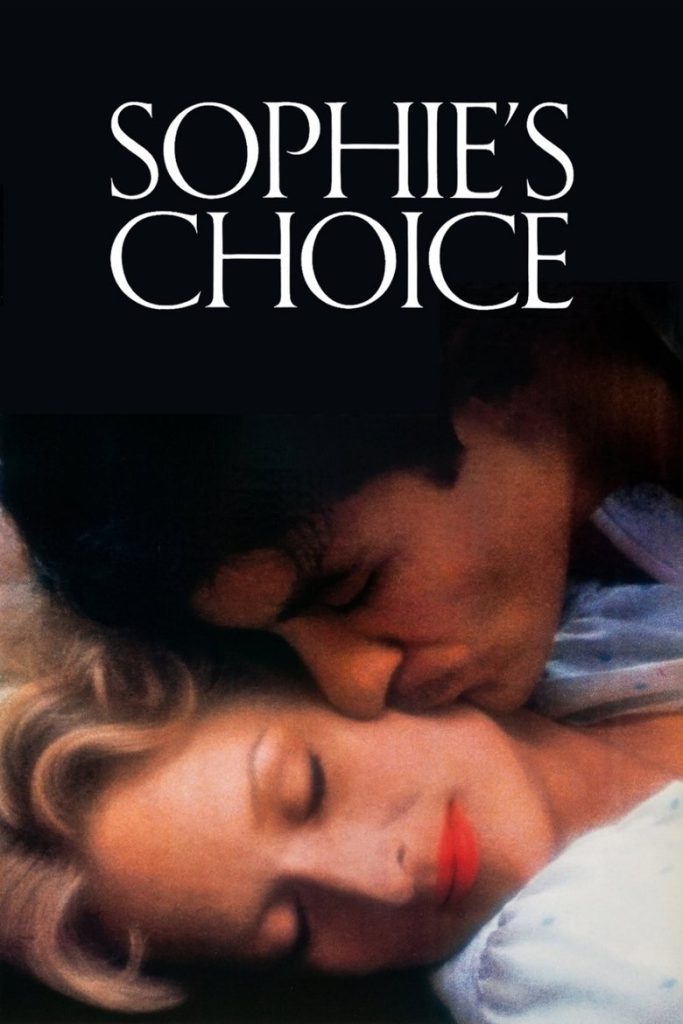
Sophie's Choice is a powerful 1982 drama set in post-WWII Brooklyn, where young writer Stingo befriends Sophie, a Polish Holocaust survivor, and her volatile lover Nathan. Through flashbacks, the film reveals Sophie's traumatic experiences in Auschwitz, including the devastating choice referenced in the title. The story explores themes of guilt, trauma, memory, and survival as Sophie's past haunts her present relationships.
Parent Guide
Extremely mature film dealing with Holocaust trauma, emotional devastation, and adult relationships. Not suitable for children or young teens. Only consider for mature 17+ with strong historical understanding and emotional readiness.
Content breakdown
Graphic Holocaust violence including concentration camp scenes, implied executions, brutal treatment of prisoners. Psychological violence through traumatic flashbacks and emotional manipulation in relationships. The central 'choice' scene is emotionally devastating though not visually graphic.
Extremely disturbing Holocaust imagery and themes. Intense emotional trauma throughout. Mental health deterioration portrayed realistically. The film's central tragedy is profoundly unsettling. Atmospheric tension in present-day scenes adds to unease.
Some strong language including occasional uses of f-words, s-words, and religious exclamations. Not excessive but present in emotional scenes. Period-appropriate ethnic slurs in historical context.
Several sexual scenes with partial nudity (breasts, backsides) in romantic contexts. Sexual relationships are central to plot. Some sensual scenes with implied sexuality. Nudity is not gratuitous but serves character development.
Frequent social drinking in post-war settings. Characters use alcohol to cope with trauma. Some smoking typical of the period. Prescription medication use shown in context of mental health treatment.
Extremely high emotional intensity throughout. Devastating exploration of trauma, guilt, and survival. Characters experience profound grief, anxiety, and psychological distress. The film's climax is emotionally crushing. Requires significant emotional maturity to process.
Parent tips
This R-rated film contains intense Holocaust depictions, emotional trauma, and mature themes unsuitable for children. The central 'choice' scene is profoundly disturbing. Consider watching first alone to assess appropriateness for mature teens. Be prepared to discuss historical context, mental health, and the psychological impact of trauma. The film's length (2.5 hours) and heavy subject matter require emotional maturity.
Parent chat guide
Parent follow-up questions
—
—
—
- What emotions did you notice Sophie experiencing in different scenes?
- How did the flashback structure help you understand her trauma?
- What do you think the film says about how people cope with impossible situations?
- How did the relationship between Sophie, Nathan and Stingo change throughout the story?
- What historical facts about the Holocaust would you like to learn more about after watching this?
🎭 Story Kernel
The film's core is about the impossibility of survival without self-betrayal. Sophie's 'choice' at Auschwitz isn't an act of agency but the ultimate theft of it—forcing her to participate in her own moral destruction. This psychic wound becomes the central character, more real than Sophie herself. She survives physically but becomes a ghost haunted by her complicity. Nathan represents the performative guilt of those who weren't there, while Stingo embodies the naive witness trying to understand the incomprehensible. The film argues that some traumas don't just damage you—they rewrite your fundamental humanity, leaving only a performance of a person where a soul should be.
🎬 Visual Aesthetics
Pakula uses a deliberate visual descent from bright, nostalgic Brooklyn brownstones into increasingly claustrophobic interiors mirroring Sophie's psychological imprisonment. The Auschwitz flashbacks aren't sepia-toned nostalgia but stark, almost documentary-style grays—the color drained from the world. Notice how the camera physically distances itself during emotional climaxes, observing trauma from the cold remove of history. The present-day scenes use warm, inviting colors that feel increasingly false as we understand their foundation in horror. The visual language creates a prison without bars—Sophie is trapped in the very freedom she fought to survive for.
🔍 Details & Easter Eggs
💡 Behind the Scenes
Meryl Streep learned Polish and German phonetically for the role, spending months with a dialect coach to perfect Sophie's accent—a blend of Polish-inflected English and German phrases. The famous 'choice' scene was shot in one continuous take on the first attempt; Streep's physical collapse afterward was genuine exhaustion. Alan J. Pakula insisted on filming the Brooklyn sequences in actual 1947 locations, tracking down period-appropriate streetcars and storefronts. Kevin Kline, then relatively unknown, was cast against type as Nathan—his theatrical background helped create the character's performative volatility.
Where to watch
Choose region:
- fuboTV
- Peacock Premium
- YouTube TV
- TCM
- Peacock Premium Plus
- Shout! Factory Amazon Channel
- The Roku Channel
- Pluto TV
- Shout! Factory TV
- Tubi TV
- Amazon Video
- Apple TV Store
- Google Play Movies
- YouTube
- Fandango At Home
Trailer
Trailer playback is unavailable in your region.