
Spaceballs (1987)
Story overview
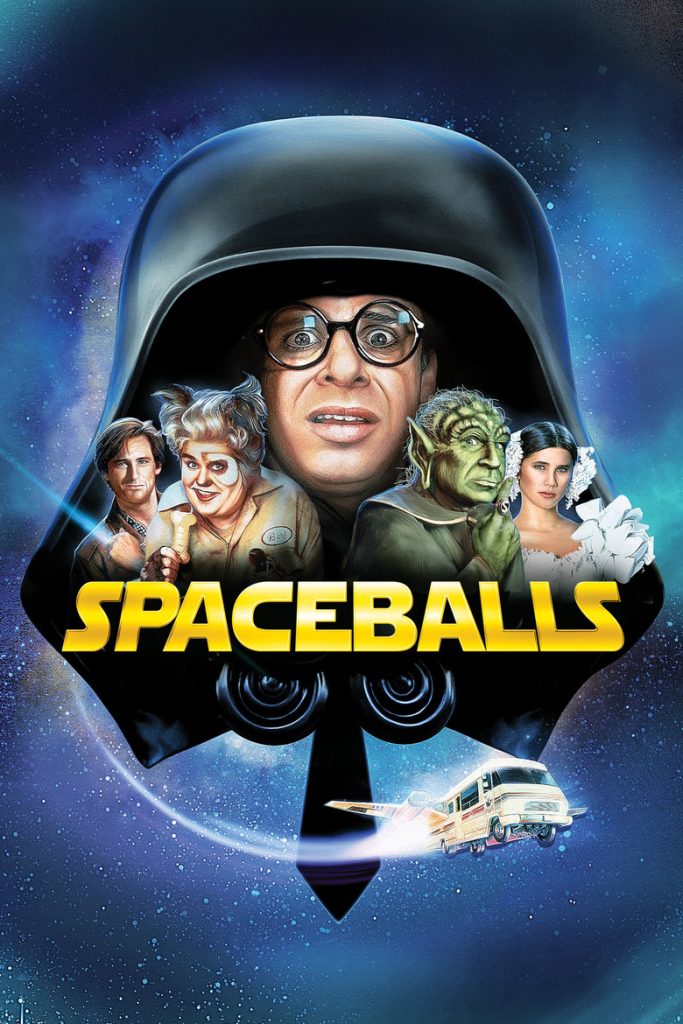
Spaceballs is a 1987 sci-fi comedy parody that follows Lone Starr, a space adventurer hired to rescue Princess Vespa from the villainous Dark Helmet, who plans to steal her planet's air. With his sidekick Barf, they encounter Yogurt who teaches them about 'The Schwartz'—a humorous take on 'The Force' from Star Wars. The film is filled with slapstick humor, visual gags, and satirical references to popular sci-fi movies, making it a lighthearted spoof suitable for older children and families.
Parent Guide
Spaceballs is a PG-rated parody with mild content suitable for most children ages 8 and up. It features cartoonish violence, occasional suggestive humor, and minimal language. The film's humor is more accessible to older kids who can grasp its satirical take on sci-fi movies.
Content breakdown
Cartoonish and slapstick violence, such as characters being hit with comedic effect, spaceship battles with no graphic consequences, and exaggerated peril scenes (e.g., characters in silly danger). No blood or serious injuries shown.
No scary or disturbing content. The villain Dark Helmet is portrayed as comically inept, and all threats are played for laughs in a lighthearted, non-threatening manner.
Minimal mild language, such as 'hell' or 'damn' used infrequently in a comedic context. No strong profanity or offensive slurs.
Occasional suggestive jokes and innuendos (e.g., references to relationships or body parts in a humorous way), but no nudity or explicit sexual content. Mostly relies on double entendres that may go over younger children's heads.
No depiction of substance use, smoking, or drinking. The film focuses on comedic action and parody without involving drugs or alcohol.
Low emotional intensity overall. The story is fast-paced and humorous, with no deeply sad or tense moments. Characters face silly challenges resolved with comedy, keeping the tone light and upbeat.
Parent tips
Spaceballs is a parody film best suited for children ages 8+ who can understand its humor and references. The comedy relies heavily on slapstick, wordplay, and satire of sci-fi tropes, which may be lost on younger viewers. While generally mild, there are some suggestive jokes and cartoonish violence that parents should be aware of. Consider watching together to explain the parody elements and discuss the exaggerated characters.
Parent chat guide
Parent follow-up questions
- Which character made you laugh the most?
- What was your favorite spaceship in the movie?
- What silly things did the characters do?
- How is this movie different from other space stories you know?
- What sci-fi movies do you think Spaceballs is making fun of?
- Why do you think the filmmakers used so much exaggeration?
- How effective is the satire in Spaceballs compared to modern parodies?
- What does the film say about hero and villain stereotypes in sci-fi?
🎭 Story Kernel
Beneath the relentless gags, 'Spaceballs' is a meta-commentary on Hollywood's obsession with merchandising and franchise exploitation. The characters aren't driven by traditional heroism but by capitalist impulses—President Skroob wants to steal Druidia's air to sell it, Dark Helmet craves power through ridiculous means, and even the heroes are motivated by Princess Vespa's dowry. The film's climax isn't about defeating evil but about literally fast-forwarding through the plot via the VHS tape, exposing narrative shortcuts. It's a satire where the villain's plan mirrors Hollywood's own: sucking resources (creativity) from others to repackage and sell.
🎬 Visual Aesthetics
The visual language deliberately mimics low-budget 80s sci-fi with a garish, plastic aesthetic—the Eagle 5 Winnebago and the giant vacuum cleaner 'Mega Maid' look intentionally cheap, mocking Hollywood's expensive but unconvincing effects. Brooks uses wide shots to emphasize absurd scale (like Dark Helmet's comically oversized helmet), while the color palette shifts from sterile whites on Spaceball One to Druidia's lush greens, parodying 'Star Wars'' desert-to-forest contrasts. The 'instant cassette' sequence breaks the fourth wall with VHS tracking lines, visually representing media consumption itself as part of the joke.
🔍 Details & Easter Eggs
💡 Behind the Scenes
Mel Brooks cast John Candy as Barf after seeing his improv skills; Candy ad-libbed the 'mawg' backstory mid-scene. The Winnebago was a real 1986 model spray-painted silver, breaking down repeatedly during desert shoots. Rick Moranis based Dark Helmet's voice on Darth Vader but pitched it higher to sound petulant, while George Lucas allowed parody rights only if no 'Spaceballs' merchandise was ever made—which Brooks ironically mocked in the film itself. The 'Mega Maid' set was so large, actors had to shout to be heard across it.
Where to watch
Choose region:
- fuboTV
- HBO Max
- HBO Max Amazon Channel
- The Roku Channel
- Tubi TV
- Amazon Video
- Apple TV Store
- Google Play Movies
- YouTube
- Fandango At Home
- Spectrum On Demand
- Plex
Trailer
Trailer playback is unavailable in your region.