Spider-Man: Across the Spider-Verse (2023)
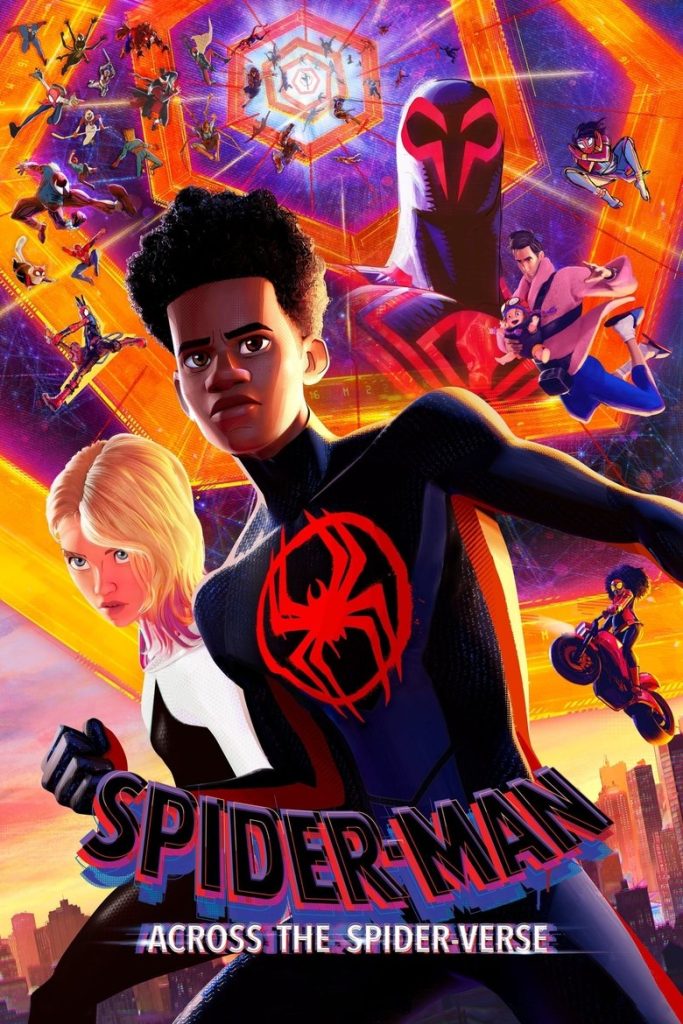
Story overview
In this animated sequel, Miles Morales continues his journey as Spider-Man, reuniting with Gwen Stacy and discovering a vast multiverse of different Spider-People. He joins the Spider Society, a group tasked with protecting the multiverse, but conflicts arise over how to handle a new threat. Miles must navigate complex relationships and make difficult choices to protect those he cares about most, exploring themes of identity, responsibility, and friendship across dimensions.
Parent Guide
An animated superhero adventure with intense action, complex themes, and emotional moments that's best suited for older children who can handle stylized violence and multiverse concepts.
Content breakdown
Stylized comic book violence with characters being punched, thrown, webbed, and engaged in battles across dimensions. No graphic injuries shown, but intense action sequences with characters in peril.
Some visually intense multiverse scenes and character designs might be overwhelming. Emotional moments involving family conflict and difficult choices could be unsettling for sensitive viewers.
Occasional mild language typical of PG-rated films. No strong profanity.
No sexual content or nudity. Characters are shown in superhero costumes appropriate for the genre.
No substance use shown.
Characters experience emotional conflicts, difficult choices, and family tensions. Themes of responsibility, sacrifice, and challenging authority create emotional weight throughout the story.
Parent tips
This PG-rated animated film features intense action sequences with stylized comic book violence, including characters being thrown, punched, and webbed during battles across multiple dimensions. The multiverse concept and some character designs might be visually overwhelming for younger viewers, and there are emotional moments involving family conflict and difficult choices. The 140-minute runtime is quite long for a children's movie, so consider breaks for younger viewers.
Parents should be aware that the film deals with themes of responsibility, sacrifice, and challenging authority figures, which could prompt discussions about when to follow rules versus doing what you believe is right. Some scenes show characters in perilous situations and emotional distress, though everything is presented in an animated, stylized format. The multiverse concept might be confusing for younger children but engaging for older kids who enjoy complex storytelling.
Parent chat guide
After viewing, ask open-ended questions about how characters handled conflicts and what your child thought about the different Spider-People working together (or sometimes against each other). Discuss the themes of friendship and family that run through the story, and how Miles balanced his personal relationships with his responsibilities. For older children, you might explore the idea of challenging authority when you believe something is wrong.
Parent follow-up questions
- What was your favorite Spider-Person to look at?
- How did the characters help each other in the movie?
- What colors did you like best in the different worlds?
- How did Miles show he was a good friend?
- What was something funny that happened?
- What did you think about all the different Spider-People working together?
- How did Miles handle having to make difficult choices?
- What did you think about the way the characters moved and fought in the different worlds?
- Why do you think some characters disagreed about what was right?
- What was your favorite part of the adventure?
- What did you think about the multiverse concept and how it was shown in the movie?
- How did the characters balance following rules with doing what they believed was right?
- What themes about friendship and responsibility did you notice in the story?
- How did the animation style help tell the story in different ways?
- What did you think about how the characters handled conflicts with each other?
- How did the film explore themes of identity and belonging across different versions of characters?
- What did you think about the ethical dilemmas presented when characters had to choose between rules and personal beliefs?
- How did the visual storytelling and animation styles contribute to the multiverse concept?
- What commentary did you notice about heroism, responsibility, and challenging authority?
- How did the relationships between characters develop throughout their conflicts and collaborations?
🎭 Story Kernel
At its core, the film is a meta-textual exploration of narrative determinism and the burden of legacy. While the first film was about anyone being able to wear the mask, this sequel interrogates what it actually means to be Spider-Man. It introduces the concept of 'Canon Events'—preordained tragedies that define every Spider-Hero. Miles Morales finds himself at odds with the Spider-Society, led by Miguel O'Hara, who believes that breaking these patterns will cause the collapse of the multiverse. The story shifts from a simple hero's journey to a radical act of defiance against the 'rules' of storytelling itself. It is a profound meditation on the tension between individual agency and the weight of tradition, asking whether one must accept suffering to belong to a legacy or if they have the right to write their own story.
🎬 Visual Aesthetics
The film is a technical marvel, utilizing distinct artistic languages to represent different dimensions. Earth-65 employs a subjective, watercolor aesthetic where colors shift based on Gwen’s emotional state, reminiscent of a mood ring. Mumbattan draws inspiration from 1970s Indrajal Comics, featuring bright colors and visible print textures. In contrast, Miguel O’Hara’s Nueva York is a brutalist, neo-futuristic landscape with sharp lines and a cold palette. The animation team pushed the boundaries of frame rates and layering, blending 2D hand-drawn techniques with 3D environments. This visual cacophony isn't just for spectacle; it serves as a narrative tool, illustrating the collision of disparate realities. The use of 'halftones' and 'Ben-Day dots' creates a living comic book that feels both tactile and transcendent, redefining the possibilities of modern animation.
🔍 Details & Easter Eggs
💡 Behind the Scenes
The production was an immense undertaking involving over 1,000 animators, the largest crew ever for an animated feature. The film features approximately 280 unique Spider-People, ranging from established comic variants to deep-cut cameos like the LEGO Spider-Man, which was notably animated by a 14-year-old fan, Preston Mutanga, after his fan-made trailer went viral. Daniel Kaluuya, who voiced Spider-Punk, used his natural North London accent and ad-libbed lines to enhance the character's authenticity. The score, composed by Daniel Pemberton, blends orchestral elements with punk rock and Indian percussion to match the film's diverse multiversal settings.
Where to watch
Choose region:
- Disney Plus
- fuboTV
- Amazon Video
- Apple TV
- Google Play Movies
- YouTube
- Fandango At Home
- Spectrum On Demand
- FXNow
Trailer
Trailer playback is unavailable in your region.