
Spies in Disguise (2019)
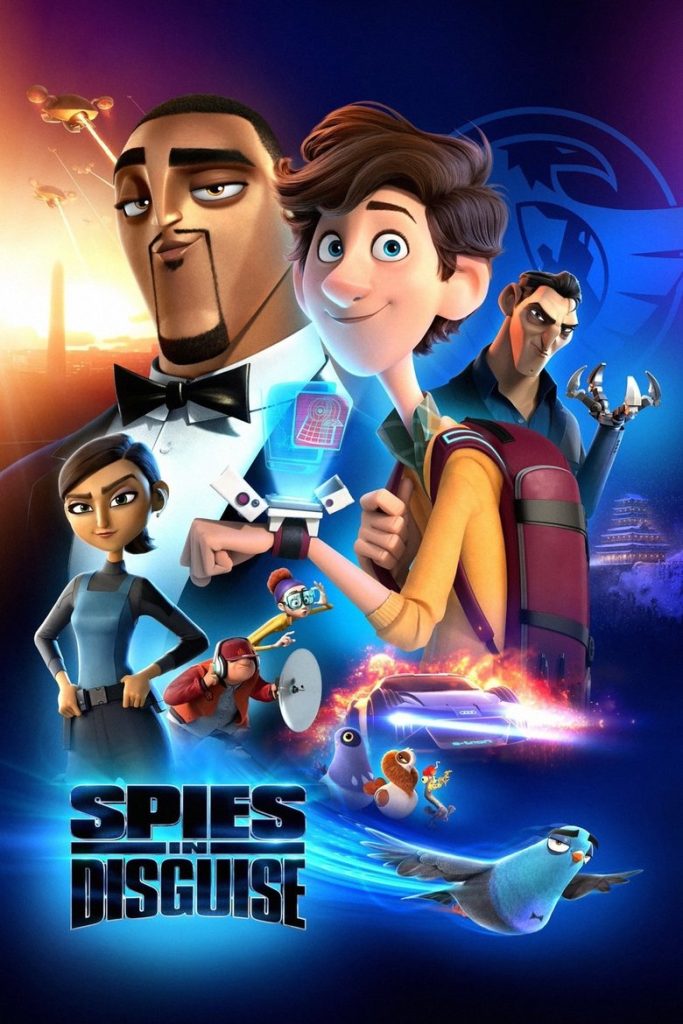
Story overview
Spies in Disguise is an animated family adventure about a suave super-spy and an awkward but brilliant scientist who must work together when their usual partnership takes an unexpected turn. The film combines high-tech gadgetry with comedic situations as these two opposites learn to appreciate each other's strengths. Through their journey, the movie explores themes of teamwork, friendship, and finding value in different perspectives.
Parent Guide
A family-friendly animated spy adventure with positive messages about teamwork and acceptance, suitable for most children ages 8 and up.
Content breakdown
Cartoonish action sequences including chases, explosions, and gadget-based confrontations. No graphic violence or injuries shown.
Some chase scenes and moments of peril that might be intense for very young viewers, but resolved humorously.
No offensive language noted in typical family film context.
No sexual content or nudity.
No substance use depicted.
Mild tension during action sequences balanced with frequent humor and positive resolutions.
Parent tips
This PG-rated animated film contains mild action violence typical of spy adventures, including cartoonish chases, explosions, and gadget-based confrontations. The peril is generally lighthearted and resolved humorously, though some younger children might find certain chase sequences intense. The film's positive messages about cooperation, accepting differences, and using intelligence over force make it suitable for family viewing with elementary-aged children and up.
Parents should be aware that the film includes some slapstick humor and mild peril that might be too intense for very sensitive preschoolers. The transformation of a main character into a pigeon provides comedic situations but could confuse some younger viewers. Overall, the film maintains a positive tone with clear distinctions between heroes and villains.
Parent chat guide
After the movie, talk about the friendship that develops between the two main characters. Ask what your child learned about teamwork from their story. Discuss how the characters grew throughout their adventure and what positive qualities they demonstrated.
Parent follow-up questions
- What was your favorite gadget in the movie?
- How did the characters help each other?
- What made you laugh the most?
- Which character would you want to be friends with?
- What was the funniest part with the pigeon?
- Why was teamwork important for the characters?
- What did the spy learn from the scientist?
- How did they solve problems without fighting?
- What makes a good friend in the story?
- What would you invent to help the characters?
- How did the characters overcome their differences?
- What does the movie say about judging people by appearances?
- What real-world teamwork lessons can you take from the film?
- How did humor help in tense situations?
- What qualities make someone a hero in this story?
- How does the film challenge traditional spy movie tropes?
- What commentary does the movie make about intelligence versus physical ability?
- How are friendship and trust developed between the main characters?
- What societal messages about acceptance does the film convey?
- How does the animation style enhance the storytelling?
🎭 Story Kernel
Beneath the gadget-filled surface, 'Spies in Disguise' explores the tension between hyper-masculine, violent espionage and a radically different approach to conflict resolution. Lance Sterling represents the old guard—muscle-bound, destructive, and emotionally closed-off. Walter Beckett embodies a new paradigm where problems are solved through creativity, non-violence, and understanding. The film's real conflict isn't between heroes and villains, but between two competing philosophies of power. When Lance is transformed into a pigeon, it's not just a gag—it's a literal deconstruction of toxic masculinity, forcing the ultimate alpha male to survive through cooperation, vulnerability, and community. The climax proves Walter right: the most dangerous weapon isn't a gun, but the ability to turn enemies into allies.
🎬 Visual Aesthetics
The film employs a sleek, angular visual style for spy sequences—all sharp edges, cool blues, and metallic surfaces that reflect Lance's cold professionalism. This contrasts dramatically with Walter's lab, which bursts with warm, organic colors, rounded shapes, and chaotic invention animations that feel hand-drawn. The pigeon transformation sequence is a masterclass in visual comedy, using exaggerated squash-and-stretch animation to emphasize Lance's loss of control. During action scenes, the camera adopts Bourne-style shaky-cam for human Lance, but switches to smooth, soaring aerial shots when he's a pigeon, visually equating freedom with his new form. The villain's tech has a sinister, insectoid aesthetic—all clicking limbs and glowing red eyes—that visually opposes Walter's life-affirming creations.
🔍 Details & Easter Eggs
💡 Behind the Scenes
Will Smith and Tom Holland recorded many scenes together in the same studio, allowing for genuine improvisation and chemistry rarely seen in animated voice work. The pigeon animation required a unique technical approach—animators studied thousands of hours of pigeon footage and consulted with ornithologists to create accurate flight patterns and social behaviors. One deleted scene had Walter inventing 'empathy grenades' that made enemies cry and hug, highlighting the film's early commitment to its pacifist themes. The production team visited CIA headquarters for research, but found Walter's 'non-lethal' gadgets more inspired by Silicon Valley tech culture than actual espionage tools.
Where to watch
Choose region:
- Disney Plus
- fuboTV
- Amazon Video
- Apple TV
- Google Play Movies
- YouTube
- Fandango At Home
- FXNow
Trailer
Trailer playback is unavailable in your region.