
Spotlight (2015)
Story overview
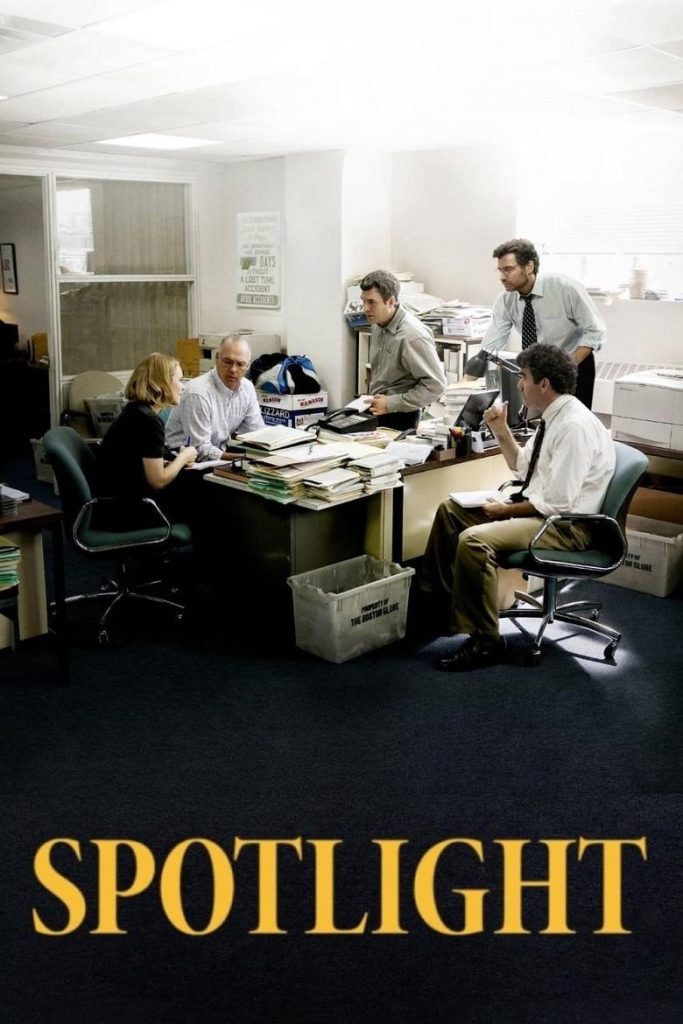
Spotlight is a 2015 drama based on the true story of the Boston Globe's investigative team that uncovered widespread child abuse within the Catholic Church. The film follows journalists as they methodically research and report on systemic cover-ups by religious institutions. It portrays the emotional toll on victims and the journalistic process of uncovering difficult truths.
Parent Guide
A serious drama about investigative journalism uncovering institutional child abuse, recommended for mature teens due to heavy thematic content.
Content breakdown
No physical violence shown, but discussions of past abuse and emotional distress.
Themes of child abuse and institutional betrayal are emotionally disturbing, though not depicted visually.
Occasional mild profanity in realistic dialogue.
No sexual content or nudity, though the subject involves sexual abuse of minors discussed non-graphically.
Brief social drinking in office settings.
High emotional intensity due to serious themes of abuse, betrayal, and institutional failure.
Parent tips
This film deals with mature themes of institutional child abuse, cover-ups, and betrayal of trust. While there are no graphic depictions of violence or sexual acts, the subject matter is emotionally heavy and involves discussions of trauma. The R rating primarily reflects the serious thematic content rather than explicit visuals. Parents should consider their child's emotional maturity and ability to process discussions about abuse and institutional failure before viewing.
Parent chat guide
Parent follow-up questions
- What job do the people in the movie have?
- How do newspapers help people?
- Why is it important to tell the truth?
- What does it mean to be a good friend?
- How can we help people who are sad?
- What were the reporters trying to find out?
- Why is it important for grown-ups to protect children?
- What does 'investigation' mean?
- How did the newspaper help people in the story?
- What would you do if you saw someone being treated unfairly?
- Why was it difficult for people to talk about what happened?
- What responsibilities do institutions have toward children?
- How did the journalists know they were finding important information?
- What are some ways people can make positive changes in their community?
- Why is it important for newspapers to tell true stories?
- What systemic factors allowed the abuse to continue for so long?
- How does this film demonstrate the importance of investigative journalism?
- What ethical responsibilities do institutions have when wrongdoing occurs?
- How can communities better support survivors of abuse?
- What role does courage play in speaking truth to power?
🎭 Story Kernel
At its core, 'Spotlight' is less about exposing individual predators and more about dissecting the architecture of complicity. The film's true antagonist isn't a single priest, but the insidious system—legal, religious, and social—that enabled and concealed the abuse for decades. The Spotlight team's driving force shifts from professional duty to moral reckoning as they realize their own newspaper's past failures to act. Their investigation becomes a methodical dismantling of the 'It's just a few bad apples' defense, revealing a sprawling, protected network. The characters are propelled by a growing horror at the scale of the betrayal and a dogged commitment to letting the facts, however ugly, speak for themselves.
🎬 Visual Aesthetics
The film's visual language is one of deliberate, unglamorous process. Director Tom McCarthy employs a muted, naturalistic color palette of grays, beiges, and blues, mirroring the drab offices and Boston winter. The camera is often static or employs slow, deliberate pans, observing rather than dramatizing. There are no flashy hero shots; instead, we see the repetitive, granular work of journalism: fingers tracing phone book listings, reporters waiting in hallways, and the cluttered, paper-strewn 'Spotlight' bunker. This aesthetic reinforces the theme that truth is uncovered through accumulation and persistence, not sudden revelation. The visual restraint makes the emotional weight of the discovered documents and victim testimonies land with greater force.
🔍 Details & Easter Eggs
💡 Behind the Scenes
To achieve authenticity, the actors spent time shadowing the real-life Boston Globe journalists they portrayed. Mark Ruffalo met with Mike Rezendes, adopting his specific posture and speech patterns. The production used the actual Boston Globe newsroom for filming. Notably, the film's climactic scene of the newspaper hitting the presses was shot at the Globe's real printing plant. Director Tom McCarthy and co-writer Josh Singer conducted extensive research, including interviews with survivors and lawyers, ensuring the script's factual rigor. Liev Schreiber's portrayal of editor Marty Baron is notably understated, based on the real Baron's calm, determined demeanor.
Where to watch
Choose region:
- Starz Apple TV Channel
- Amazon Video
- Apple TV
- Google Play Movies
- YouTube
- Fandango At Home
- FlixFling
- Tubi TV
- Kanopy
- Plex Channel
Trailer
Trailer playback is unavailable in your region.