
Stand by Me Doraemon 2 (2020)
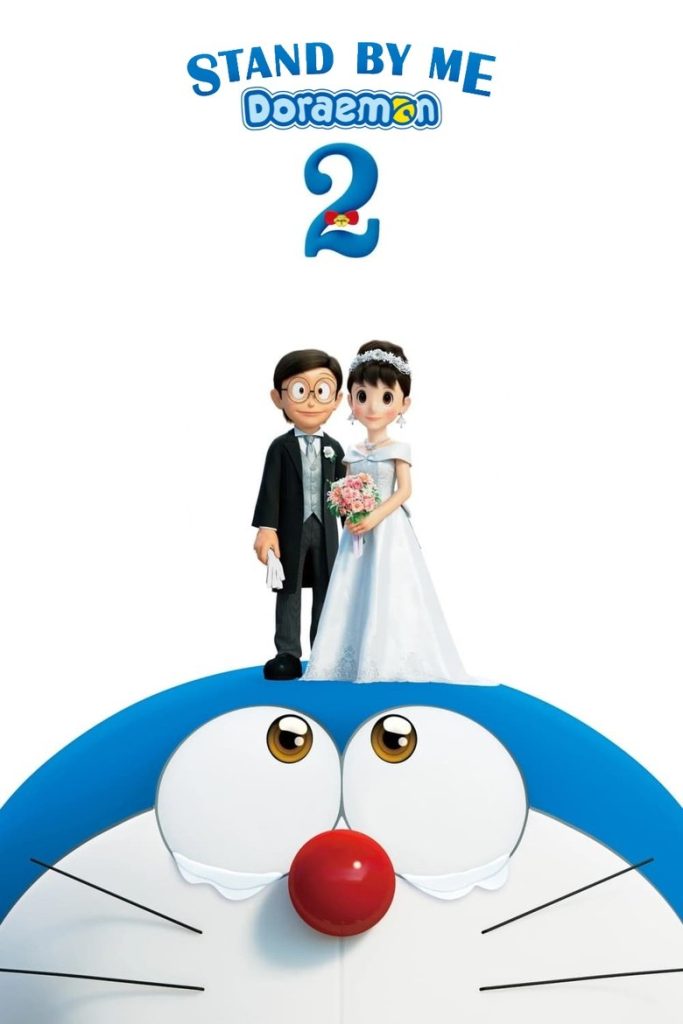
Story overview
This animated film follows Nobita, a young boy who uses time travel to visit his future self. He wants to show his beloved grandmother his adult life, including his upcoming wedding. However, when he arrives in the future, he discovers that adult Nobita has run away from his own wedding ceremony. The story explores themes of family, responsibility, and personal growth through this time-traveling adventure.
Parent Guide
A gentle animated film about family, time travel, and personal responsibility with positive messages suitable for most children.
Content breakdown
No physical violence or dangerous situations. Some mild tension around the interrupted wedding.
Mild emotional moments involving family relationships and wedding anxiety. No frightening imagery or intense scenes.
No offensive language. Typical family-friendly dialogue.
No sexual content or nudity. Brief references to marriage in a family-appropriate context.
No depiction of alcohol, drugs, or tobacco use.
Mild emotional themes about family bonds, responsibility, and personal growth. Some scenes show characters experiencing sadness or anxiety.
Parent tips
This family-friendly animated film contains mild emotional moments that might resonate differently with various age groups. The central theme of a character running away from their wedding could prompt questions about commitment and responsibility from older children. The time-travel elements are presented in a gentle, non-threatening way typical of the Doraemon franchise.
Younger viewers might need reassurance during scenes where characters express sadness or anxiety about family relationships. The film's resolution emphasizes positive values like family bonds and personal growth. There are no intense action sequences or frightening imagery, making it suitable for most family viewing.
Parent chat guide
Focus conversations on the film's positive messages about family connections and facing responsibilities. For younger children, you might emphasize how Nobita wanted to make his grandmother happy. For older children, you could discuss how characters grow through their experiences and what it means to be ready for important life events.
Parent follow-up questions
- What was your favorite part of the movie?
- How did Nobita feel when he saw his grandma?
- What colors did you like in the animation?
- Did you see any funny moments?
- What would you show your grandma if you could time travel?
- Why do you think Nobita wanted to show his grandma the future?
- How do you think the characters felt when the wedding was interrupted?
- What does it mean to be responsible like the characters learned?
- What would you do if you could visit the future?
- How did the characters help each other in the story?
- What do you think the film says about family relationships across time?
- How did the time travel affect the characters' decisions?
- What qualities make someone ready for big life events like marriage?
- How did the characters handle disappointment or fear?
- What did you learn about Japanese culture from the animation style?
- How does the film explore the theme of personal growth through time travel?
- What cultural values about family are presented in the story?
- How might the wedding situation reflect broader questions about adulthood?
- What emotional maturity did the characters demonstrate?
- How does animation as a medium enhance this type of storytelling?
🎭 Story Kernel
The film explores intergenerational trauma and the messy, non-linear nature of grief through Nobita's journey to his grandmother's past. It's not just about Nobita maturing, but about understanding how unresolved family pain echoes through time. The characters are driven by a deep-seated need for closure—Nobita's guilt over his grandmother's unfulfilled wish, and Grandma's quiet hope for her grandson's happiness. The movie argues that healing requires confronting painful memories rather than avoiding them, and that emotional growth means accepting both joy and sorrow as parts of love's continuum.
🎬 Visual Aesthetics
The animation employs a warm, nostalgic color palette dominated by sunset oranges and soft blues during emotional scenes, contrasting with the brighter, more saturated tones of present-day sequences. Camera work often uses intimate close-ups during conversations between Nobita and his grandmother, emphasizing their emotional connection. The time-travel sequences feature subtle visual distortions and light trails, visually representing memory's imperfect nature. Symbolically, Doraemon's Time Machine appears less mechanical and more organic in this installment, mirroring the story's focus on emotional rather than technological journeys.
🔍 Details & Easter Eggs
💡 Behind the Scenes
This film commemorates the 50th anniversary of the Doraemon manga. Director Takashi Yamazaki insisted on hand-drawn elements for the nostalgic scenes with Grandma to contrast with the digital animation of present-day sequences. Voice actor Wasabi Mizuta recorded Doraemon's emotional scenes separately from comedic ones to maintain tonal consistency. The grandmother's house was modeled after traditional Japanese homes from the Showa era, with animators visiting preserved neighborhoods for reference.
Where to watch
Choose region:
- Netflix
- Netflix Standard with Ads