
Steamboat Willie (1928)
Story overview
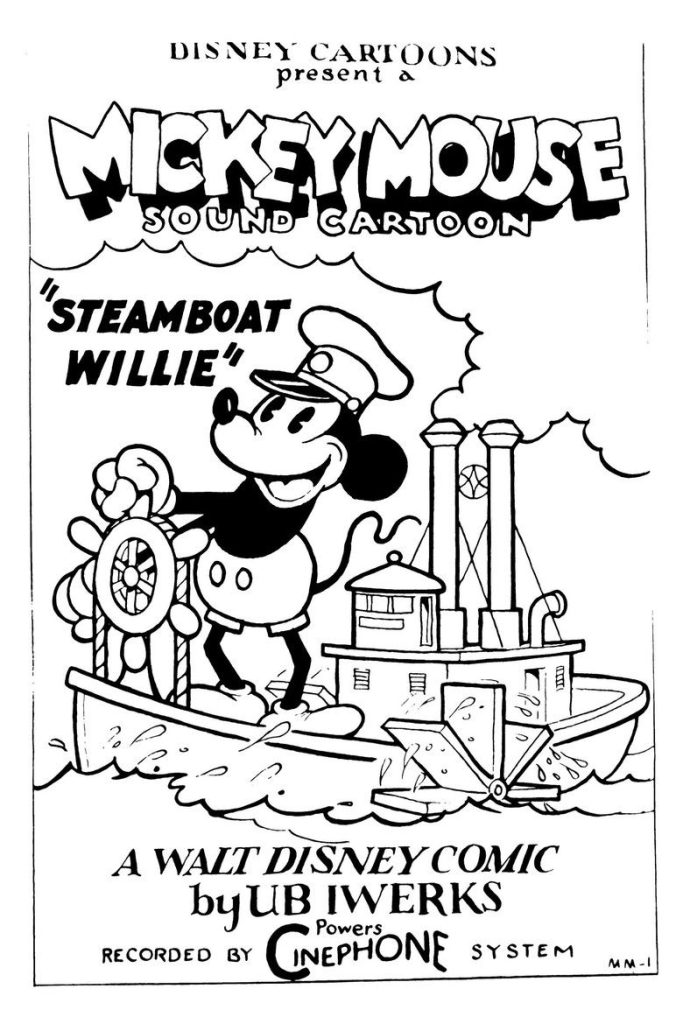
Steamboat Willie is a classic 1928 animated short film featuring Mickey Mouse as a steamboat pilot. In this early cartoon, Mickey entertains his passenger Minnie Mouse by creating improvised musical instruments from various animals and objects on the boat deck. The film showcases the playful, mischievous spirit of Mickey Mouse in a simple riverboat setting. This historic animation represents one of Mickey Mouse's first appearances and helped establish the character's enduring popularity.
Parent Guide
A classic silent cartoon suitable for most children with mild slapstick humor.
Content breakdown
Contains cartoonish slapstick involving animals being used as musical instruments, but no actual harm is depicted.
No scary or disturbing content; all action is playful and comedic.
Silent film with no spoken dialogue; any text appears in title cards.
No sexual content or nudity; characters are fully clothed cartoon animals.
No depiction or reference to substance use.
Lighthearted and playful throughout with no emotionally intense moments.
Parent tips
Steamboat Willie is a very short, silent black-and-white cartoon from 1928 that may require some context for modern children. Since it's a silent film with musical accompaniment, you might need to explain that characters' dialogue appears in title cards or is conveyed through exaggerated physical comedy. The animation style is quite different from today's cartoons, which could be an interesting discussion point about how animation has evolved over time. The film contains some mild slapstick humor involving animals that might seem dated but is generally harmless and playful in nature.
Parent chat guide
Parent follow-up questions
- What was your favorite part of the cartoon?
- How did Mickey Mouse make music with the animals?
- What sounds did you hear in the movie?
- How did Mickey and Minnie show they were friends?
- What was funny about the cartoon?
- How is this cartoon different from cartoons you watch today?
- Why do you think Mickey used animals to make music?
- What did you notice about how the characters moved and expressed themselves?
- How did the music help tell the story since there's no talking?
- What makes Mickey Mouse a fun character in this cartoon?
- What do you think makes this 1928 cartoon historically important?
- How does the silent film format affect how the story is told?
- What aspects of Mickey's personality are established in this early appearance?
- How does the animation style compare to modern animation techniques?
- Why do you think this cartoon was entertaining for audiences in 1928?
- What cultural or historical significance does Steamboat Willie have in animation history?
- How does this early portrayal of Mickey Mouse compare to his modern characterizations?
- What technical limitations of 1928 animation can you identify in this film?
- How does the silent film format influence the storytelling techniques used?
- What elements of this cartoon do you think contributed to Mickey Mouse becoming an iconic character?
🎭 Story Kernel
At its core, 'Steamboat Willie' is less a traditional narrative and more a primal expression of mischievous joy and creative rebellion against authority. Mickey Mouse isn't driven by a complex goal, but by a simple, anarchic impulse to play music using anything—and anyone—he can find. The real conflict is between this unfettered, rhythmic creativity and the oppressive, grumpy authority of Captain Pete. The film's 'story' is the triumph of playful improvisation over rigid order, a theme that would define the character for decades. It's a seven-minute manifesto on finding music in chaos and fun in defiance.
🎬 Visual Aesthetics
The visual language is groundbreaking in its synchronization, where every bouncy step, tossed potato, and animal squeal is married perfectly to the soundtrack, making the music visible. The black-and-white palette, with its high-contrast inks, emphasizes fluid, rubber-hose animation where characters' bodies are less anatomical and more like musical instruments themselves—stretching, squashing, and conducting the rhythm. The camera work is simple but effective, using direct frontal shots on the steamboat deck to create a stage-like setting for the musical chaos, while quick cuts to extreme close-ups of instruments being 'played' amplify the tactile, inventive comedy.
🔍 Details & Easter Eggs
💡 Behind the Scenes
This was the third Mickey Mouse cartoon produced but the first released, chosen because its fully synchronized sound made it a safer bet for audiences wary of 'talkies.' Walt Disney himself provided Mickey's high-pitched voice, while Ub Iwerks did most of the animation. The steamboat setting was inspired by the silent film 'Steamboat Bill, Jr.,' starring Buster Keaton. Notably, it was one of the last cartoons to use the Cinephone sound system before Disney switched to RCA's superior technology, making this a technical as well as creative milestone.
Where to watch
Choose region:
- Disney Plus
- Amazon Video
- JustWatchTV
- Fawesome
- Artflix