
Stranger Than Fiction (2006)
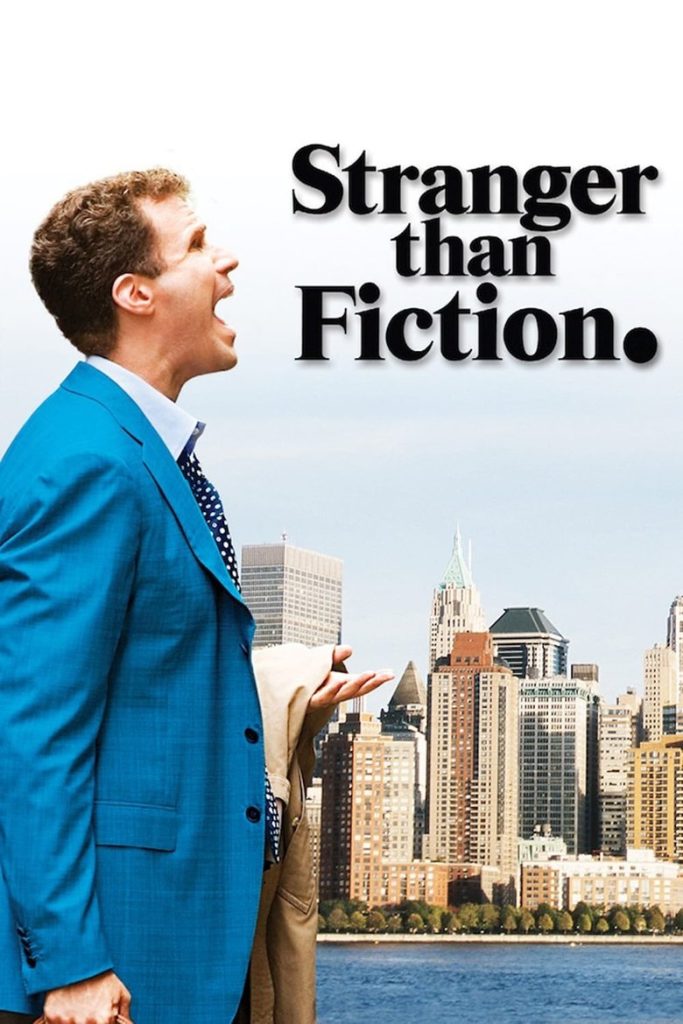
Story overview
Stranger Than Fiction is a 2006 fantasy comedy-drama about Harold Crick, a meticulous IRS auditor who begins hearing a narrator's voice describing his life. As he discovers he's a character in a novel being written by an author, he must confront his mortality and find meaning in his existence. The film blends humor, romance, and philosophical themes in a unique exploration of fate versus free will.
Parent Guide
A thoughtful, imaginative film suitable for teens and adults with mild content concerns.
Content breakdown
Some mild peril as the main character faces potential death, but no graphic violence.
The concept of hearing a narrator's voice and facing mortality might be unsettling for sensitive viewers.
Occasional mild profanity consistent with PG-13 rating.
Some romantic situations and kissing, but no explicit content.
No notable substance use depicted.
Themes of mortality, existential crisis, and life choices create emotional depth.
Parent tips
This PG-13 film is suitable for most viewers aged 13 and up, though mature 10-12 year olds may also enjoy it with parental guidance. The movie contains mild language, some romantic situations, and themes about mortality that might require explanation for younger viewers. Parents should be prepared to discuss the film's philosophical questions about life choices and destiny.
Parent chat guide
Parent follow-up questions
- What was your favorite part of the movie?
- Did you like the man who could hear the voice?
- What color was the guitar the man played?
- Why do you think Harold could hear the narrator's voice?
- How did Harold change from the beginning to the end?
- What would you do if you heard a voice telling your story?
- What does the movie say about following rules versus following your heart?
- How does Harold's relationship with Ana help him grow?
- What do you think the author learned about her characters?
- How does the film explore the tension between fate and free will?
- What commentary does the movie make about modern office life and conformity?
- How does the narrative structure itself become part of the story's meaning?
🎭 Story Kernel
At its core, 'Stranger Than Fiction' explores the tension between free will and predestination through the lens of metafiction. Harold Crick's discovery that he's a character in Karen Eiffel's novel forces him to confront whether his choices matter if his fate is already written. The film asks: does awareness of our narrative change its outcome? Harold's journey from passive IRS agent to active participant in his own life demonstrates that consciousness itself can rewrite destiny. The central drive isn't about avoiding death, but about making a death—and by extension, a life—meaningful. When Harold chooses to die because it makes for a better story, he paradoxically gains ultimate agency over his existence.
🎬 Visual Aesthetics
The film employs a distinctive visual language that mirrors Harold's psychological state. Early scenes use rigid, symmetrical compositions and a muted color palette dominated by grays and blues, reflecting his monotonous, number-obsessed life. As Harold becomes aware of the narration, visual elements become more expressive—the CGI overlays of his wristwatch calculations visually externalize his internal compulsions. Director Marc Forster uses subtle shifts in lighting and camera movement to distinguish between Harold's reality and Karen's writing process. The bakery scenes introduce warmth through golden lighting and organic compositions, visually representing Harold's awakening to life's possibilities beyond his mathematical precision.
🔍 Details & Easter Eggs
💡 Behind the Scenes
Will Ferrell prepared for his role as Harold Crick by shadowing an actual IRS agent for two weeks, adopting their mannerisms and speech patterns. Emma Thompson based Karen Eiffel's chain-smoking, disheveled appearance on real-life novelist Patricia Highsmith. The film's distinctive narration was recorded by director Marc Forster himself as a temporary track, but test audiences responded so positively that they kept his voice. Chicago's brutal winter during filming caused multiple production delays, but the gray, overcast weather ultimately enhanced the film's melancholic aesthetic.
Where to watch
Choose region:
- Peacock Premium
- Peacock Premium Plus
- The Roku Channel
- Tubi TV
- Amazon Video
- Apple TV
- Google Play Movies
- YouTube
- Fandango At Home
Trailer
Trailer playback is unavailable in your region.