
Stranger Than Paradise (1984)
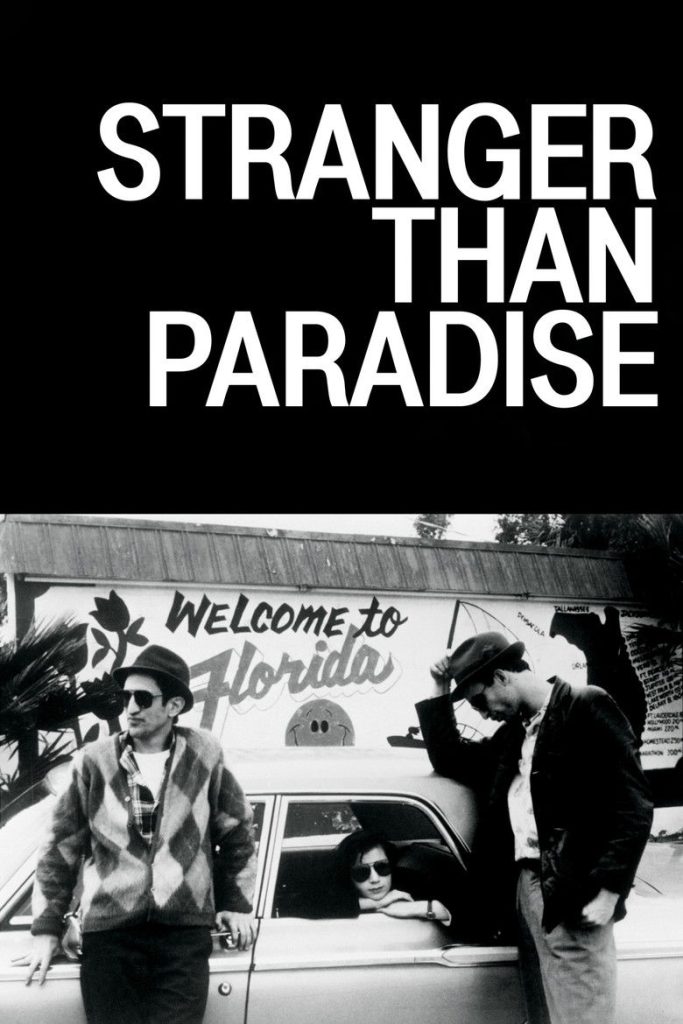
Story overview
Stranger Than Paradise is a 1984 indie comedy-drama that follows Willie, a New York slacker, who reluctantly hosts his teenage Hungarian cousin Eva during her surprise visit. Their awkward but growing connection leads to a road trip with Willie's friend Eddie to visit Eva in Cleveland, culminating in an odd, uneventful-yet-eventful journey to Florida. The film is known for its deadpan humor, minimalist style, and exploration of boredom, cultural displacement, and unexpected human bonds.
Parent Guide
A minimalist, character-driven indie film with dry humor and themes of alienation. Best for mature teens due to its pace and subtle content.
Content breakdown
No violence or peril. The film is entirely character-driven with no action sequences or threats.
Nothing scary or disturbing. The tone is consistently low-key and observational.
Occasional mild profanity (e.g., 'hell,' 'damn'), but no strong or frequent swearing.
No sexual content or nudity. Relationships are platonic and conversations are not romantic.
Characters smoke cigarettes occasionally, and there are brief scenes of social drinking in bars, but no excessive or glorified substance use.
Low emotional intensity overall. Themes of boredom and displacement are presented subtly, not dramatically. The mood is consistently calm and uneventful.
Parent tips
This R-rated film is suitable for mature teens due to its slow pace, subtle themes, and occasional adult language. Parents should note: the movie features minimal plot, dry humor that may not engage younger viewers, and themes of alienation that require some emotional maturity. It's best for teens interested in indie cinema or character studies, but not for children under 13.
Parent chat guide
Parent follow-up questions
—
—
—
- What did you think about the film's slow pace and lack of action? Did it hold your interest?
- How did the characters show their feelings even with very little dialogue?
- What does the movie say about family connections, even when people seem very different?
- Why do you think the director chose to film in black and white with long, still shots?
- How does Eva's experience as an immigrant compare to what you know about coming to a new country?
🎭 Story Kernel
At its core, 'Stranger Than Paradise' expresses the profound emptiness of the American Dream and the search for meaning in a world of mundane repetition. The characters are driven not by grand ambitions, but by a vague, restless boredom. Willie and Eddie's initial apathy is disrupted by Eva's arrival, yet their subsequent road trip to Florida reveals that geographical change cannot cure existential drift. The film posits that connection and purpose are fleeting, found in small, awkward moments—like Willie's silent gift to Eva—before dissolving back into the static of everyday life, culminating in the bleak, open-ended airport finale.
🎬 Visual Aesthetics
The film's visual aesthetic is defined by its minimalist, black-and-white cinematography and static long takes. Each scene is presented as a single, uninterrupted shot, often framed like a tableau, which amplifies the characters' isolation and the monotony of their environments. The lack of camera movement and the sparse, drab settings—from a bleak New York apartment to a desolate Florida motel—create a sense of entrapment. This visual language mirrors the narrative's theme of stasis, making the rare moments of action, like the chaotic gambling scene, feel jarringly alive against the pervasive stillness.
🔍 Details & Easter Eggs
💡 Behind the Scenes
Directed by Jim Jarmusch on a shoestring budget, the film was shot in black-and-white 35mm and famously structured in three distinct acts, each separated by a black screen. It was expanded from a short film Jarmusch made with leftover film stock from another project. The actors, including John Lurie and Richard Edson, largely improvised their dialogue, contributing to the naturalistic, deadpan tone. Filming locations included real, unglamorous spots in New York, Cleveland, and Florida, enhancing the authentic, gritty atmosphere that defines the movie's aesthetic.
Where to watch
Choose region:
- HBO Max
- HBO Max Amazon Channel
- Criterion Channel
- Amazon Video
- Apple TV Store
- Fandango At Home
Trailer
Trailer playback is unavailable in your region.