
Summer of Soul (…Or, When the Revolution Could Not Be Televised) (2021)
Story overview
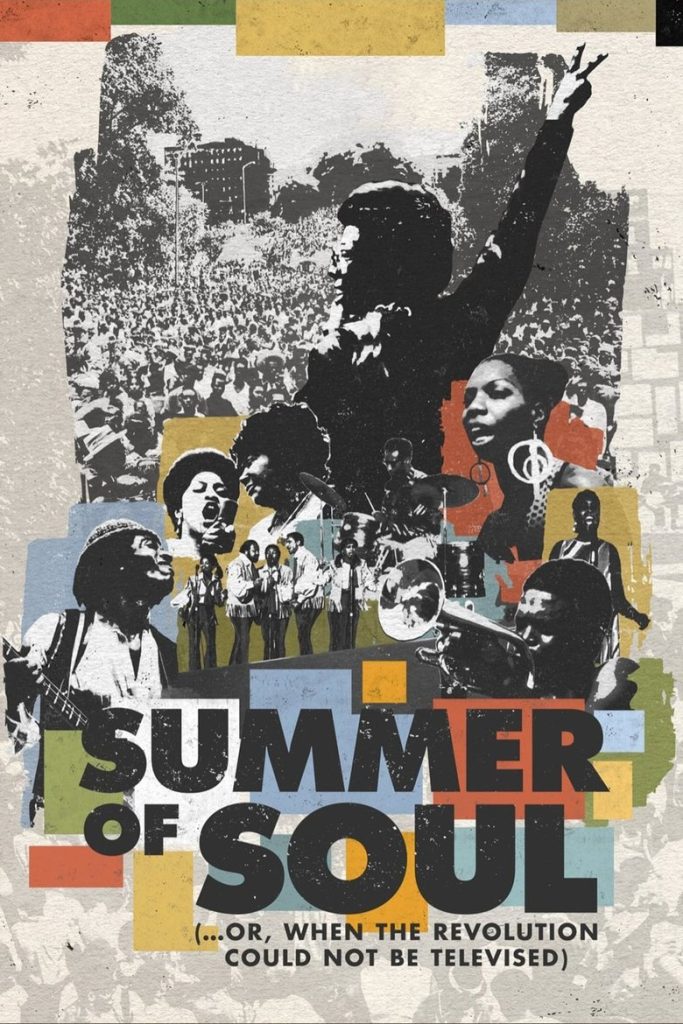
Summer of Soul is a 2021 documentary that explores the 1969 Harlem Cultural Festival, a significant music event featuring performances by legendary artists like Stevie Wonder, Nina Simone, and Sly and the Family Stone. The film combines concert footage with historical context, highlighting the cultural and political atmosphere of the time, particularly within the African American community. It serves as both a celebration of Black music and a reflection on social issues during a transformative period in American history.
Parent Guide
A documentary celebrating music and culture with historical context suitable for older children and teens.
Content breakdown
No violence or peril depicted; focuses on concert footage and interviews.
No scary or disturbing content; the tone is uplifting and informative.
No strong language noted; the content is respectful and focused on music and history.
No sexual content or nudity; performers are dressed appropriately for a public festival.
No depiction or mention of substance use; the focus is on music and cultural celebration.
Some emotional moments related to historical context and cultural pride, but presented in a balanced way.
Parent tips
This documentary is suitable for older children and teens due to its historical and cultural themes. It provides an excellent opportunity to discuss music history, civil rights, and social change. Parents should be prepared to explain the context of the late 1960s, including references to racial inequality and political movements, which are presented in a thoughtful, non-graphic manner.
Parent chat guide
Parent follow-up questions
- What was your favorite song in the movie?
- Did you see people dancing? What did they look like?
- What colors did you notice in the festival scenes?
- Why do you think people came together for this festival?
- How did the music make you feel?
- What do you think the performers were trying to share with the audience?
- What does this festival tell us about the time period it happened in?
- How does music help communities express their feelings?
- Why might this event have been important for the people who attended?
- How does the film connect the music to broader social and political issues of the late 1960s?
- In what ways did the festival represent a form of cultural resistance or celebration?
- Why do you think this event was not widely known before this documentary?
🎭 Story Kernel
The film is less a concert documentary than an archaeological excavation of cultural memory. It argues that the 1969 Harlem Cultural Festival was intentionally forgotten not because it was insignificant, but because its power—the vision of a unified, joyful, and politically conscious Black community—was too threatening to the mainstream narrative. The driving force isn't a character's arc, but the collective yearning of a community to reclaim its own history from the erasure of time and cultural gatekeeping. Questlove, as director, becomes a curator of this reclamation, using the rediscovered footage not just to show what happened, but to ask why we were never allowed to see it. The film's true subject is the politics of memory itself.
🎬 Visual Aesthetics
The visual language is a masterclass in contrast. The pristine, newly restored 1969 footage—vibrant with saturated colors, dynamic crowd shots, and intimate close-ups of performers in ecstatic flow—is constantly juxtaposed against the grainy, black-and-white newsreels of the era. This isn't just an aesthetic choice; it's an argument. The color represents the lived, embodied reality of Black joy and community, while the monochrome archival news represents the sterile, often fear-mongering, mainstream media lens through which that reality was filtered and diminished. The editing rhythm mirrors musical performance, cutting on beats and emotional peaks to make the past feel viscerally present.
🔍 Details & Easter Eggs
💡 Behind the Scenes
The 40 hours of original festival footage sat in a basement for nearly 50 years, described by producer Robert Fyvolent as 'the holy grail.' Director Ahmir 'Questlove' Thompson was initially hesitant to direct, feeling the responsibility was immense. The restoration process was a technical marvel, requiring extensive color correction and audio remastering from the original reels. Notably, the film's release and Oscar win in 2021 directly catalyzed efforts to formally memorialize the festival site in Harlem's Mount Morris Park, finally granting the historical recognition the film argues was always deserved.
Where to watch
Choose region:
- Disney Plus
- Hulu
- Amazon Video
- Apple TV
- Google Play Movies
- YouTube
- Fandango At Home
Trailer
Trailer playback is unavailable in your region.