
Sunset Boulevard (1950)
Story overview
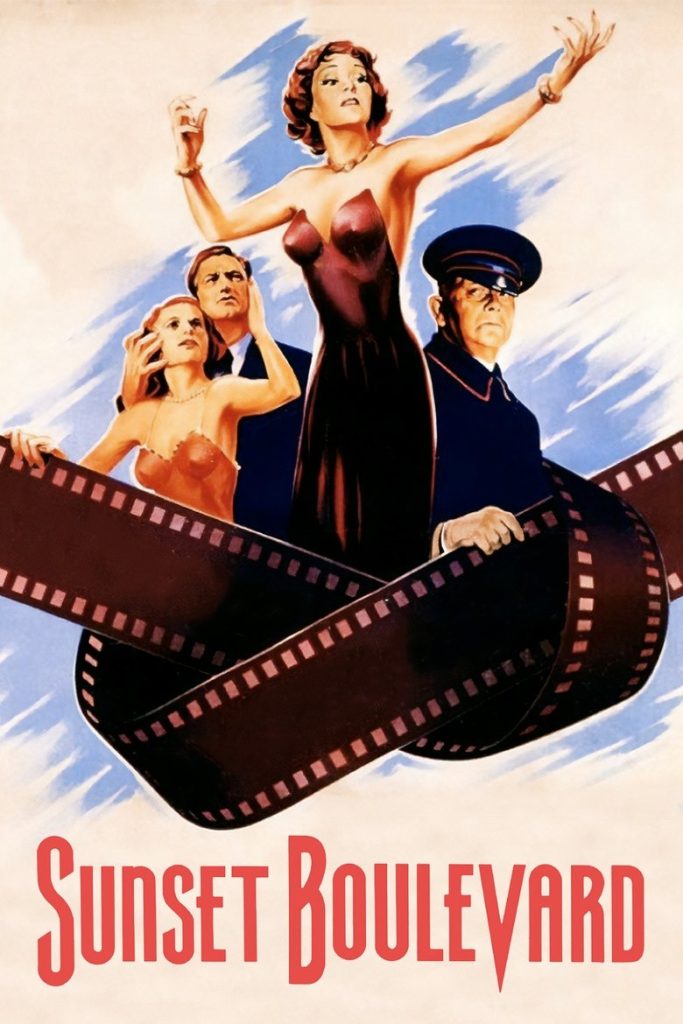
Sunset Boulevard is a classic Hollywood drama about a struggling screenwriter who becomes entangled with a faded silent film star living in delusional grandeur. The film explores themes of fame, obsession, and the harsh realities of the entertainment industry through a noir-style narrative. It offers a critical look at Hollywood's treatment of aging performers and the desperation that can accompany lost glory.
Parent Guide
A psychologically intense drama about obsession and faded fame best suited for mature teens who can handle complex themes.
Content breakdown
Some tense confrontations and psychological manipulation, but no physical violence shown.
Psychological tension, themes of mental instability, and a generally dark, melancholic atmosphere.
Period-appropriate dialogue with some cynical or sharp remarks, but no strong profanity.
Implied romantic relationships and some suggestive dialogue, but no explicit content.
Social drinking shown in some scenes, consistent with the time period.
Strong themes of obsession, desperation, and psychological manipulation throughout.
Parent tips
This film contains mature themes about obsession, mental instability, and the dark side of fame that may be difficult for younger viewers to understand. The psychological tension and cynical portrayal of Hollywood could be unsettling for sensitive children. Parents should be aware that while there's no graphic content, the film's atmosphere is heavy with melancholy and desperation.
Parent chat guide
Parent follow-up questions
- What did you notice about how the people talked to each other?
- How did the music make you feel during the movie?
- What was your favorite part of the movie?
- Did any parts make you feel sad or worried?
- What colors or places do you remember from the movie?
- Why do you think the main character agreed to help the movie star?
- How did the movie star feel about her past fame?
- What does it mean to live in the past?
- How do people show they care about someone in this movie?
- What would you do if you couldn't do what you loved anymore?
- What does this film say about how Hollywood treats aging performers?
- How does the setting contribute to the story's mood?
- What are the consequences of living in denial about reality?
- How do the characters use each other throughout the story?
- What makes someone's dreams healthy versus unhealthy?
- How does the film critique the Hollywood system and celebrity culture?
- What commentary does the film make about the relationship between art and commerce?
- How does the cinematography and lighting contribute to the psychological tension?
- What does the film suggest about the price of fame and artistic integrity?
- How do the characters' delusions serve as coping mechanisms?
🎭 Story Kernel
Sunset Boulevard is a brutal autopsy of Hollywood's soul, where the real horror isn't murder but the industry's cannibalistic relationship with time and fame. Norma Desmond isn't driven by madness, but by an industry that taught her she was a goddess, then declared the religion obsolete. Joe Gillis, the cynical writer, represents the new Hollywood—opportunistic, hollow, and equally trapped. The film's core tension is between authenticity and performance; in this world, everyone is acting, even off-camera. The tragedy isn't Norma's delusion, but that her delusion is the only logical response to a system that creates immortal icons then discards them like yesterday's props. It's about the violence of being forgotten by the dream factory you built.
🎬 Visual Aesthetics
Billy Wilder crafts a visual language of decay and grotesque grandeur. The mansion isn't just a set; it's a museum of Norma's ego, shot with deep focus to emphasize its cavernous emptiness. The iconic opening—Gillis' corpse floating in the pool—frames the entire story as a postmortem. Cinematographer John F. Seitz uses high-contrast lighting to carve Norma out of shadows, making her seem both monumental and ghostly. The camera often stares up at her, mimicking the adoring angles of silent film, while it looks down on Gillis, emphasizing his moral descent. The final, terrifying close-up as she descends the staircase merges madness with performance—the ultimate, unwritten scene.
🔍 Details & Easter Eggs
💡 Behind the Scenes
Gloria Swanson, like Norma, was a silent film superstar largely forgotten by 1950. She used her own photographs and memorabilia as props. The legendary director Cecil B. DeMille plays himself; his genuine affection for Swanson during their scene together adds painful authenticity. The film was originally darker: in a scrapped opening, dead Hollywood stars played cards in the morgue, complaining about their corpses. The Paramount lot refused Wilder's request to shoot at actual stars' homes, fearing exposure of their decay. Erich von Stroheim, playing Max, had directed Swanson in real life, adding another layer of tragic history.
Where to watch
Choose region:
- fuboTV
- MGM+ Amazon Channel
- Paramount+ Amazon Channel
- Paramount+ Roku Premium Channel
- MGM Plus
- Philo
- Paramount Plus Essential
- Paramount Plus Premium
- Amazon Video
- Apple TV
- Google Play Movies
- YouTube
- Fandango At Home
- Spectrum On Demand
Trailer
Trailer playback is unavailable in your region.