
Surviving Paradise: A Family Tale (2022)
Story overview
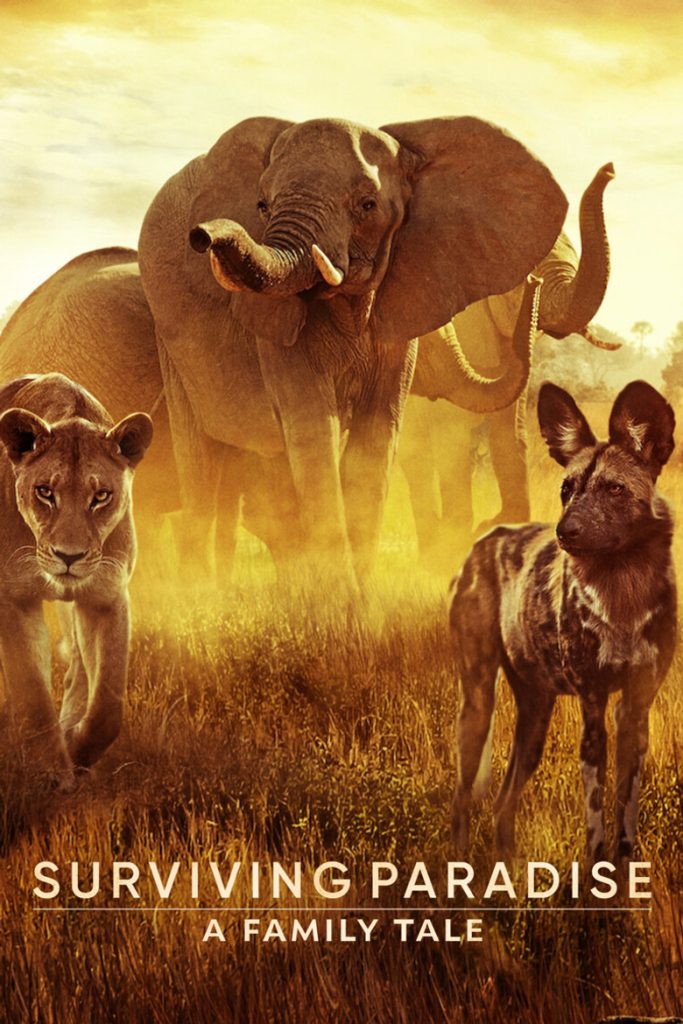
This 2022 British documentary follows wildlife in the Kalahari Desert during a harsh dry season, focusing on how animal families—including prides of lions, packs of wild dogs, and herds of elephants—rely on cooperation and resilience to endure extreme conditions. Narrated by Regé-Jean Page, it blends stunning cinematography with a gentle, educational tone to highlight themes of survival, family bonds, and nature's challenges.
Parent Guide
A mild, educational wildlife documentary suitable for family viewing, with no significant content concerns. It portrays natural animal behavior in a non-graphic way, focusing on survival and family bonds.
Content breakdown
Includes scenes of animals hunting (e.g., predators chasing prey) and natural peril like dehydration or starvation, but shown without blood or gore. The tone is factual rather than intense.
Some scenes might be tense for very young children, such as animals in distress or predators stalking, but it's not graphic or frightening. The overall mood is hopeful and educational.
No offensive or inappropriate language; the narration is formal and family-appropriate.
No sexual content or nudity; animals are shown naturally without focus on mating behaviors.
No depiction of substance use.
Emotional moments arise from animals struggling to survive or showing family bonds, but it's presented calmly without high drama. Suitable for sensitive viewers.
Parent tips
This TV-G rated documentary is family-friendly and suitable for most ages. It depicts realistic wildlife struggles, including animals hunting, competing for resources, and facing dehydration or starvation, but without graphic violence. The tone is educational and hopeful, emphasizing family unity. Consider watching with younger children to discuss nature's cycles and animal behavior.
Parent chat guide
Parent follow-up questions
- Which animal was your favorite?
- How did the animals help each other?
- What sounds did you hear in the desert?
- Why was the dry season hard for the animals?
- How do lion prides act like families?
- What did you learn about the Kalahari Desert?
- How did different animal groups survive differently?
- What might happen if the dry season got worse?
- How does this documentary show the importance of family?
- What environmental issues does this film hint at?
- How does the narration shape the story's message?
- Compare this to other wildlife documentaries you've seen.
🎭 Story Kernel
The film explores how extreme circumstances strip away social facades, forcing characters to confront their core identities. The family's struggle isn't just against the elements but against their own complacency and the illusions of their previous comfortable life. Each character's transformation reveals that 'survival' means different things—for some it's physical endurance, for others it's maintaining human dignity or family bonds. The real tension comes from watching people who thought they knew each other discover entirely new dimensions under pressure, questioning whether their relationships were built on convenience or genuine connection.
🎬 Visual Aesthetics
The cinematography masterfully contrasts idyllic beauty with creeping dread through a shifting color palette—vibrant tropical hues gradually desaturate as danger mounts. Handheld camera work during tense moments creates visceral intimacy, while wide static shots emphasize the characters' isolation in paradise. The film uses water symbolism throughout, from life-giving to threatening, with the ocean's changing appearance mirroring the family's psychological state. Natural lighting enhances realism, with harsh midday sun exposing truths and golden hour scenes highlighting lost innocence.
🔍 Details & Easter Eggs
💡 Behind the Scenes
The cast underwent basic survival training together before filming, which informed their authentic on-screen dynamics. Shooting occurred entirely on location in remote Hawaiian areas with minimal crew to preserve the isolation atmosphere. Several scenes used practical effects for injuries and environmental challenges rather than CGI. The director intentionally limited scripted dialogue for emotional scenes, allowing actors to improvise based on their character development during the shoot.
Where to watch
Choose region:
- Netflix
- Netflix Standard with Ads
Trailer
Trailer playback is unavailable in your region.