
Suzume (2022)
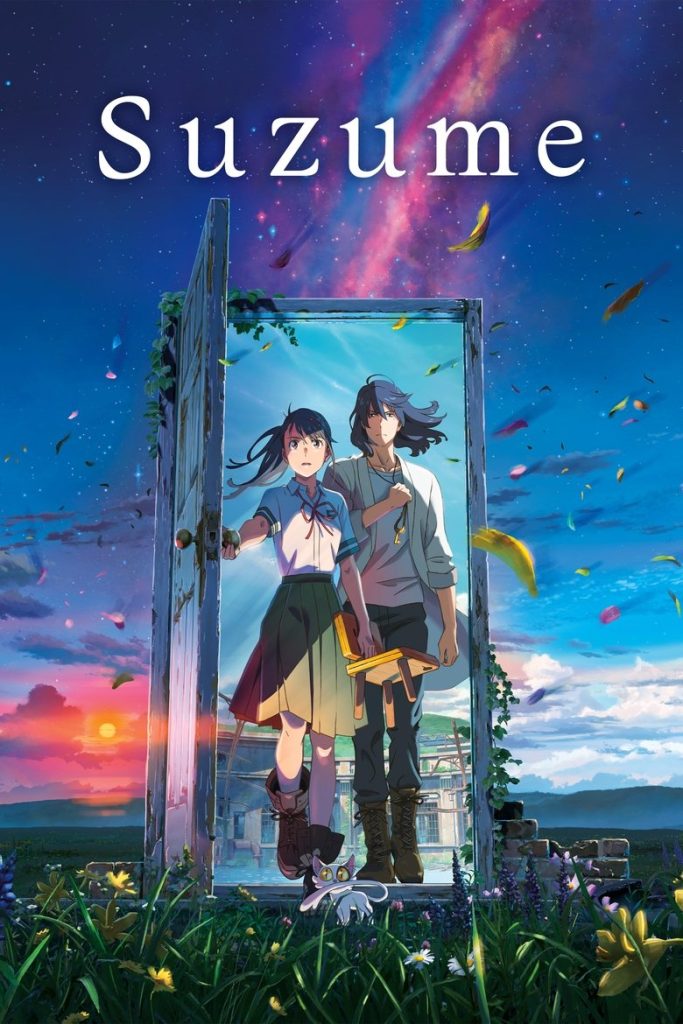
Story overview
Suzume is a 17-year-old girl who lost her mother in childhood and embarks on an unexpected adventure when she meets a mysterious stranger. Her curiosity accidentally triggers a supernatural calamity that threatens all of Japan, forcing her to journey across the country to prevent disaster. The film blends emotional drama with fantasy elements as Suzume confronts grief, responsibility, and connection while racing against time.
Parent Guide
A fantasy adventure with emotional depth about loss and responsibility, suitable for older children with some intense sequences.
Content breakdown
Supernatural peril involving earthquakes and disaster prevention; no graphic violence but tense sequences of natural disasters threatening characters.
Intense scenes of earthquakes and supernatural phenomena; themes of parental loss and grief may be emotionally affecting for sensitive viewers.
No offensive language noted in the PG-rated content.
No sexual content or nudity in this animated film.
No depiction of substance use.
Themes of grief, loss, and responsibility create emotional depth; scenes of impending disaster generate tension.
Parent tips
This animated fantasy deals with themes of loss, grief, and responsibility in a way that may resonate differently with children of various ages. The PG rating reflects some intense sequences involving supernatural peril and emotional moments related to parental loss. While there's no graphic violence or inappropriate content, younger or sensitive viewers might find certain scenes involving earthquakes and supernatural threats unsettling.
Parents should know the film explores mature themes of coping with death and family separation through its fantasy narrative. The 122-minute runtime requires sustained attention, and the emotional journey may prompt questions about loss and resilience. The animation is beautiful but contains some intense sequences of natural disasters and supernatural phenomena.
Parent chat guide
After watching, ask open-ended questions about how characters showed courage or dealt with difficult emotions. Focus on themes of resilience, friendship, and taking responsibility rather than plot specifics. For children who have experienced loss, be particularly attentive to their reactions and provide reassurance about the fantasy elements being separate from real life.
Parent follow-up questions
- What was your favorite part of Suzume's adventure?
- How did the characters help each other in the movie?
- What colors or animals did you like seeing?
- Was there anything that made you feel worried?
- What made Suzume brave?
- Why do you think Suzume wanted to help fix the problem she caused?
- How did the characters show they cared about each other?
- What would you do if you saw something mysterious like Suzume did?
- How did the movie show that people can be strong even when they're sad?
- What did you learn about being responsible from this story?
- How did Suzume's experience of losing her mother affect her journey?
- What does the movie suggest about how people deal with grief?
- How did the fantasy elements help tell a story about real emotions?
- What responsibilities come with curiosity or discovering new things?
- How did the characters balance personal feelings with bigger responsibilities?
- How does the film use fantasy to explore themes of trauma and recovery?
- What commentary does the movie make about intergenerational responsibility?
- How are grief and resilience portrayed differently through various characters?
- What does the journey structure reveal about personal growth?
- How does the film balance supernatural stakes with emotional authenticity?
🎭 Story Kernel
At its core, 'Suzume' is less about preventing earthquakes and more about processing collective and personal trauma. The 'Worm' represents the seismic, unpredictable nature of grief and disaster memory that threatens to rupture society's present. Suzume's journey is driven by survivor's guilt over her mother's death in the 2011 Tōhoku earthquake—she literally chases a chair (her childhood self) to close doors on past pain. The film argues that healing requires acknowledging these wounds, not sealing them away forever, and that community support (embodied by her aunt and strangers) is essential for carrying such burdens forward.
🎬 Visual Aesthetics
Makoto Shinkai employs a breathtaking yet purposeful visual language. The contrast between Japan's vibrant, sun-drenched rural landscapes and the eerie, purple-hued spectral realm of the 'Worm' visually separates the living world from the pressure of historical trauma. The animation of everyday objects—especially Suzume's sentient, running chair—infuses the fantastical with tender humor, preventing the tone from becoming overly grim. Recurring shots of abandoned towns and overgrown infrastructure serve as silent memorials to the 2011 disaster, while the closing doors create satisfying, weighty visual punctuation to each emotional climax.
🔍 Details & Easter Eggs
💡 Behind the Scenes
Director Makoto Shinkai conducted extensive research trips to actual disaster-affected areas of the Tōhoku region, incorporating specific ruined locations like a deserted amusement park into the film. Voice actor Nanoka Hara (Suzume) was chosen partly for her own connection to the region. The film's score, by RADWIMPS and Kazuma Jinnouchi, intentionally avoids traditional disaster-movie grandeur, using minimalist piano and strings to emphasize personal emotion over spectacle. The 'closing door' sound effect was created from layered recordings of actual heavy doors and stone.
Where to watch
Choose region:
- Netflix
- Crunchyroll
- Crunchyroll Amazon Channel
- Netflix Standard with Ads
- Amazon Video
- Apple TV
- Google Play Movies
- YouTube
- Fandango At Home
Trailer
Trailer playback is unavailable in your region.