
Taken (2008)
Story overview
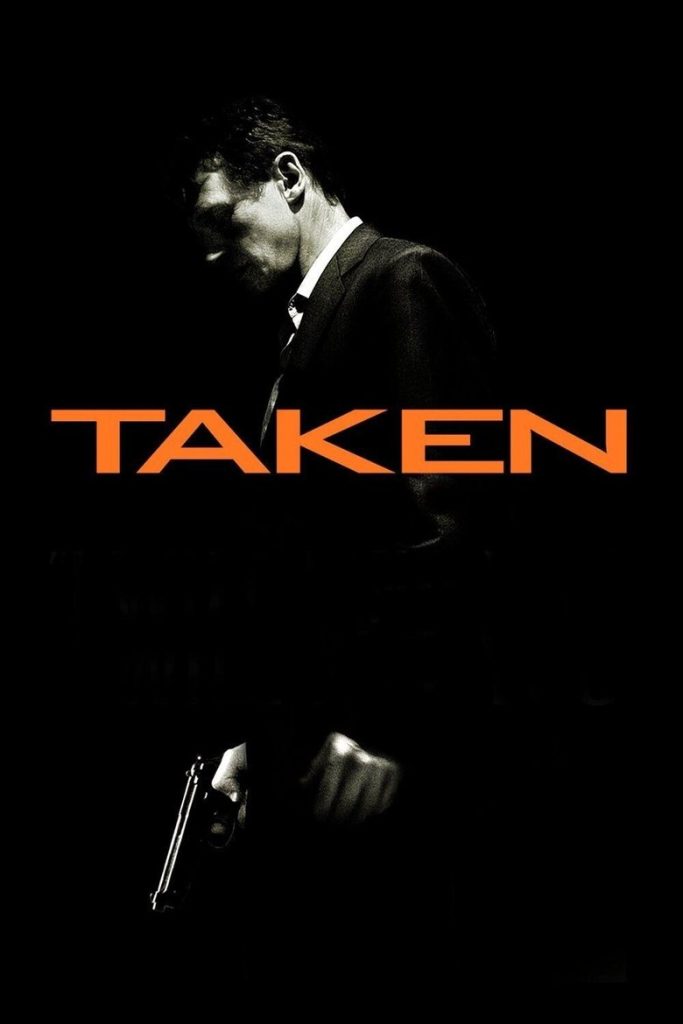
Taken is a 2008 action thriller film about a retired CIA operative who uses his specialized skills to rescue his teenage daughter after she is kidnapped by human traffickers while traveling in Europe. The movie follows his desperate race against time across Paris as he confronts criminals and uses extreme measures to find her. It combines intense action sequences with themes of parental protection and the dangers of international travel.
Parent Guide
Intense action thriller with kidnapping theme and violent confrontations
Content breakdown
Frequent action violence including shootings, fights, and perilous situations
Kidnapping theme, human trafficking plot, and sustained tension
Some strong language typical of action films
References to sexual exploitation but no explicit scenes
Brief social drinking scenes
High-stakes rescue mission with parental desperation
Parent tips
This film contains intense action violence including shootings, hand-to-hand combat, and perilous situations that may be disturbing for younger viewers. The kidnapping theme and human trafficking plot create sustained tension and fear throughout the movie. Parents should be aware that while the violence isn't excessively graphic, the realistic portrayal of criminal activities and the emotional intensity of a parent's desperate search could be overwhelming for sensitive children.
Parent chat guide
Parent follow-up questions
- How did the dad feel when he couldn't find his daughter?
- What are some safe things to do when you're in a new place?
- Who are people we can ask for help if we feel scared?
- Why do you think the dad used violence to solve problems?
- What could the daughter have done differently to stay safe?
- How do you think the characters felt during the scary parts?
- What real-world safety lessons can we learn from this movie?
- How does the movie show the consequences of violence?
- What are better ways to handle dangerous situations than what the characters did?
- How does this film portray international crime and law enforcement?
- What ethical questions does the father's vigilante approach raise?
- How realistic do you think the rescue scenario is compared to real trafficking cases?
🎭 Story Kernel
At its core, 'Taken' is a stark exploration of the toxic legacy of expertise. Bryan Mills's 'particular set of skills' isn't just a cool tagline; it's a lifetime of compartmentalized violence that has already cost him his family. The film posits that such skills are a curse, not a gift—they render him a ghost in his daughter's life until the very moment she needs a monster. His quest isn't just to rescue Kim; it's a desperate, bloody attempt to weaponize his personal failure as a father into a solution, asking if a man can ever truly come home from the life he chose. The driving force is paternal guilt weaponized into hyper-competence.
🎬 Visual Aesthetics
The film employs a cold, utilitarian visual language. Early scenes in Los Angeles are shot with a flat, almost documentary-like clarity, reflecting Bryan's sterile, controlled life. Upon arriving in Paris, the palette shifts to murky blues and sickly yellows, immersing us in the grimy underbelly. The action is famously brutal and efficient, devoid of stylized flair. Shaky, tight close-ups during fights emphasize impact and desperation over choreography. The camera often stays at Bryan's shoulder, making us complicit in his grim, methodical interrogations, visually reinforcing his single-minded focus where the world blurs into obstacles and targets.
🔍 Details & Easter Eggs
💡 Behind the Scenes
Liam Neeson's iconic phone monologue was largely improvised. The script simply indicated he made a threat, but Neeson, drawing on his dramatic intensity, delivered the now-legendary lines on the spot. The film was shot on a relatively modest budget of $25 million, with much of the Paris filming using practical locations to enhance grit. Director Pierre Morel, a former cinematographer, insisted on handheld, visceral camerawork for the action sequences to maximize a sense of raw, immediate danger, a style that defined the subsequent 'geri-action' genre boom.
Where to watch
Choose region:
- Disney Plus
- YouTube TV
- Amazon Video
- Apple TV
- Google Play Movies
- YouTube
- Fandango At Home
Trailer
Trailer playback is unavailable in your region.