
Teen Titans Go! vs. Teen Titans (2019)
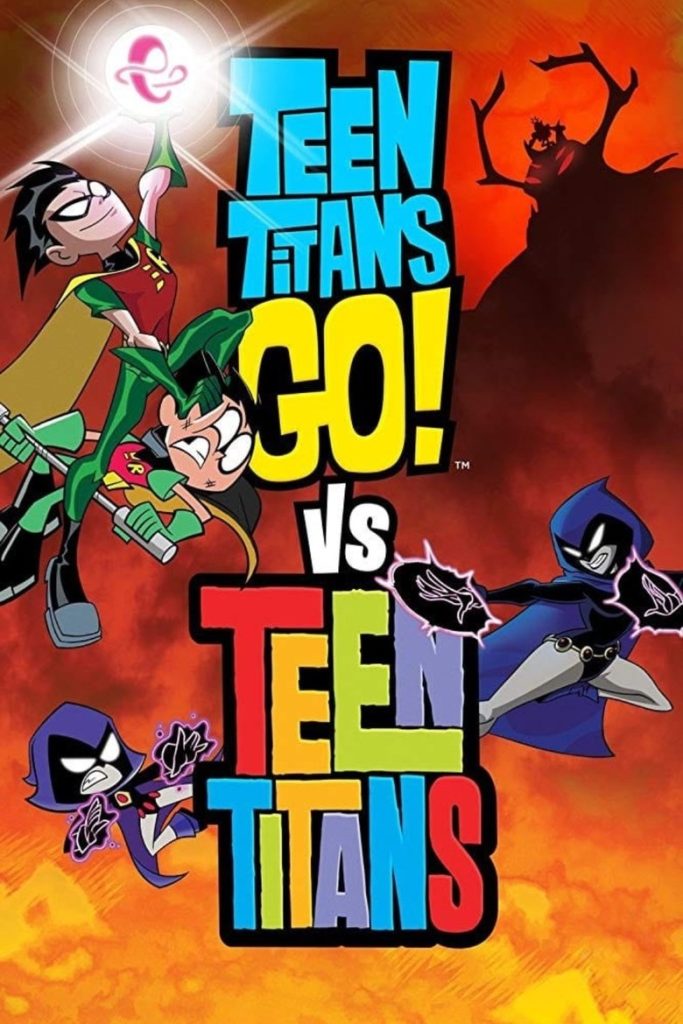
Story overview
This animated superhero crossover film brings together two versions of the Teen Titans from different eras. When villains from both worlds team up, the comedic modern Titans must work with their more serious 2003 counterparts to save the multiverse. The movie features action-packed battles, time travel elements, and humorous clashes between the different Titan teams as they face unusual threats including Santa Claus.
Parent Guide
A family-friendly superhero crossover with cartoon action and lighthearted humor, suitable for most children who enjoy animated superhero content.
Content breakdown
Cartoon-style superhero battles with energy blasts, physical confrontations, and mild peril. No realistic violence or graphic content.
Some villain characters might be slightly intimidating to very young viewers, but the overall tone is comedic and non-threatening.
No offensive language or inappropriate dialogue noted.
No sexual content or nudity present.
No depiction of substance use.
Some moments of tension during battles and confrontations, but overall maintained in a lighthearted superhero context.
Parent tips
This film is a fun, action-packed crossover that combines superhero action with lighthearted comedy. The animation style is bright and colorful, with fast-paced sequences typical of superhero cartoons. Parents should be aware that while the tone is generally comedic, there are superhero battles and confrontations with villains that might be intense for very young viewers.
The movie includes some mild peril and cartoon violence typical of superhero animation, but nothing graphic or realistic. The humor is family-friendly with some slapstick comedy and playful rivalry between the different Titan teams. The multiverse concept and time travel elements might be confusing for younger children but provide good discussion opportunities for older kids.
Parent chat guide
After the movie, discuss how the characters learned to appreciate each other's strengths despite their different approaches. You could also talk about the concept of alternate versions of characters and what makes each version unique. For older children, the multiverse concept provides an opportunity to discuss different perspectives and how people can work together even when they have different styles or backgrounds.
Parent follow-up questions
- What was your favorite funny part in the movie?
- Which Titan character did you like the most?
- What colors did you see in the movie?
- How did the characters work together?
- Was there anything that made you laugh?
- What was different about the two Titan teams?
- How did the characters solve their problems together?
- What did you think about the idea of different versions of the same characters?
- What makes a good team member?
- Which villain did you find most interesting and why?
- How did the movie show teamwork between very different groups?
- What did you think about the multiverse concept in the story?
- How did the characters' different personalities help them solve problems?
- What makes superhero stories appealing to you?
- How does this movie compare to other superhero stories you've seen?
- How did the movie use humor to address the differences between the Titan teams?
- What does the multiverse concept add to superhero storytelling?
- How did the film balance action with character development?
- What themes about cooperation and understanding did you notice?
- How does this crossover compare to other media crossovers you've experienced?
🎭 Story Kernel
At its core, 'Teen Titans Go! vs. Teen Titans' is about identity crisis in the age of endless reboots. The conflict isn't just between two Titan teams—it's about competing versions of the same characters wrestling with their own legitimacy. The 2003 Titans represent seriousness and dramatic weight, while the Go! Titans embody irreverent comedy and self-awareness. The movie cleverly explores how different interpretations of the same characters can both be 'real,' ultimately arguing that authenticity comes from embracing one's unique qualities rather than conforming to expectations. The villain's plan to erase one version highlights the franchise's own anxieties about fan reception and creative direction.
🎬 Visual Aesthetics
The film masterfully blends two distinct animation styles: the clean, angular lines and exaggerated expressions of 'Teen Titans Go!' contrast sharply with the more detailed, anime-inspired aesthetic of the 2003 series. During crossover scenes, the visual clash becomes part of the storytelling—characters literally look out of place in each other's worlds. The color palette shifts dramatically between universes: Go!'s bright, saturated colors versus the original's moodier, more atmospheric tones. Action sequences cleverly parody both styles, with the Go! Titans using absurd, physics-defying moves while the original Titans employ more traditional superhero choreography.
🔍 Details & Easter Eggs
💡 Behind the Scenes
This crossover was particularly significant because it reunited the entire original 2003 voice cast for the first time in over a decade, with Scott Menville (Robin), Tara Strong (Raven), Hynden Walch (Starfire), Greg Cipes (Beast Boy), and Khary Payton (Cyborg) reprising their roles alongside their Go! counterparts. The production team faced the unique challenge of maintaining two distinct animation pipelines simultaneously, requiring careful coordination to preserve each series' visual identity. Director Jeff Mednikow noted they deliberately avoided making either version 'superior,' instead treating both as equally valid interpretations of the characters.
Where to watch
Choose region:
- HBO Max
- HBO Max Amazon Channel
- Amazon Video
- Apple TV
- Google Play Movies
- YouTube
- Fandango At Home
- Spectrum On Demand
Trailer
Trailer playback is unavailable in your region.