
The Anthrax Attacks: In the Shadow of 9/11 (2022)
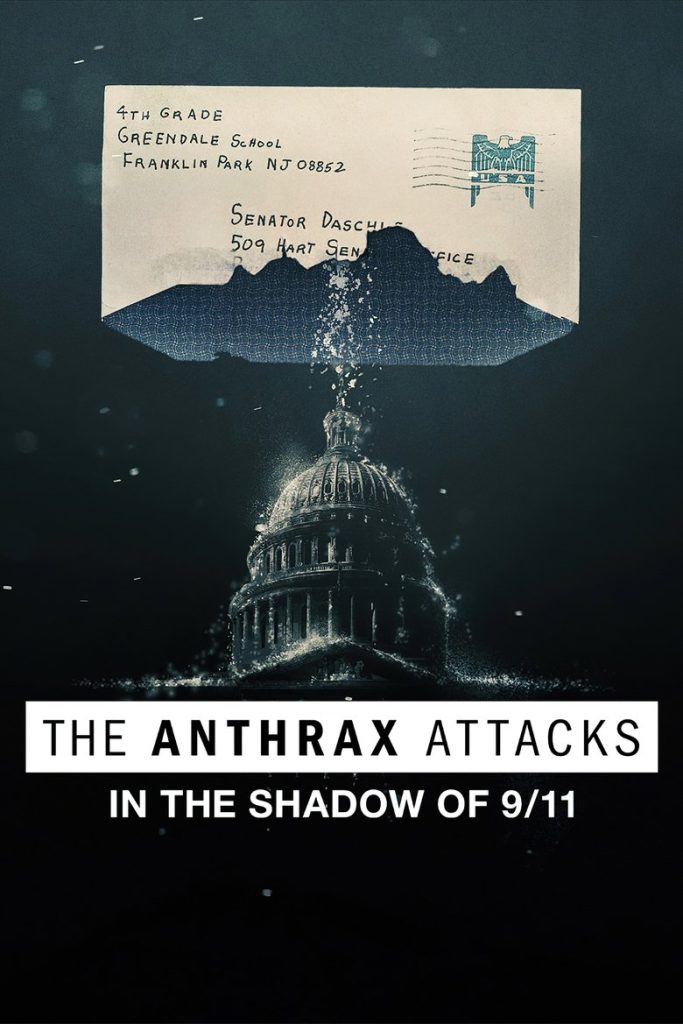
Story overview
This 2022 documentary examines the anthrax attacks that occurred in the United States shortly after the 9/11 terrorist attacks. It follows the FBI's investigation into letters containing deadly anthrax spores that caused panic, illness, and fatalities. The film explores the forensic challenges, public fear, and investigative complexities surrounding these bioterrorism events.
Parent Guide
This documentary about real bioterrorism attacks contains mature themes including terrorism, death, and national security investigations. Best suited for mature teens with parental guidance.
Content breakdown
Discusses biological attacks that caused illness and death. Contains descriptions of anthrax exposure symptoms and fatalities. Shows crime scene photos and evidence related to the attacks. No graphic violence depicted, but serious consequences are discussed.
Deals with real bioterrorism events that caused public panic and fatalities. Contains discussions of biological weapons, illness, and death. May be disturbing for viewers sensitive to terrorism topics or those with health anxiety. Includes crime scene evidence and discussions of national security threats.
Occasional mild language related to the seriousness of the subject matter. No strong profanity noted in typical documentary style.
No sexual content or nudity present in this documentary.
No substance use depicted or discussed.
High emotional intensity due to discussions of real-life terrorism, death, and national crisis. Contains themes of fear, uncertainty, and public panic. May evoke anxiety about safety and security issues.
Parent tips
This documentary deals with real-life bioterrorism events and their aftermath. It contains discussions of biological attacks, illness, death, and national security investigations. The content may be disturbing for sensitive viewers or those with anxiety about terrorism. Consider watching with older teens to provide context about historical events and discuss government responses to crises.
Parent chat guide
Parent follow-up questions
—
—
- What do you know about 9/11 and its aftermath?
- How do you think investigators solve complex cases like this?
- What would you do if you felt scared during a national crisis?
- How did the anthrax attacks change America's approach to biosecurity?
- What ethical considerations arise in terrorism investigations?
- How does media coverage impact public perception during crises?
- What forensic techniques were most important in this investigation?
🎭 Story Kernel
The film explores how America's post-9/11 trauma created a perfect storm for investigative missteps, revealing that the anthrax attacks weren't just a bioterrorism case but a psychological autopsy of a nation's paranoia. It demonstrates how the FBI's tunnel vision on Middle Eastern suspects blinded them to the domestic threat right under their noses—a disgruntled government scientist. The documentary shows how institutional pressure for quick answers compromised scientific integrity, with investigators forcing evidence to fit preconceived narratives rather than following where the science led. Ultimately, it's about how fear distorts truth-seeking mechanisms in a democracy.
🎬 Visual Aesthetics
The documentary employs a muted, desaturated color palette that mirrors the grim subject matter, with archival footage often appearing grainy and washed-out to emphasize the era's uncertainty. Director Dan Krauss uses tight close-ups on documents, lab equipment, and envelopes to create claustrophobic tension, making microscopic threats feel overwhelmingly present. The editing juxtaposes sterile laboratory scenes with chaotic news footage from 2001, visually contrasting scientific precision with public panic. Reenactments are shot with documentary-style handheld cameras, avoiding dramatization while maintaining visceral immediacy. The visual language consistently reinforces the theme of invisible threats becoming devastatingly tangible.
🔍 Details & Easter Eggs
💡 Behind the Scenes
Director Dan Krauss spent three years negotiating with the FBI for access to case files, with some materials remaining classified during production. The documentary features never-before-seen lab footage from the US Army Medical Research Institute of Infectious Diseases. Several scientists interviewed had never spoken publicly before, requiring extensive background checks. The film's score by Mark Orton uses theremin-like electronic tones to evoke both scientific precision and existential dread. Real anthrax spores were never used during production—all lab scenes employ scientifically accurate substitutes.
Where to watch
Choose region:
- Netflix
- Netflix Standard with Ads
Trailer
Trailer playback is unavailable in your region.