
The Aristocats (1970)
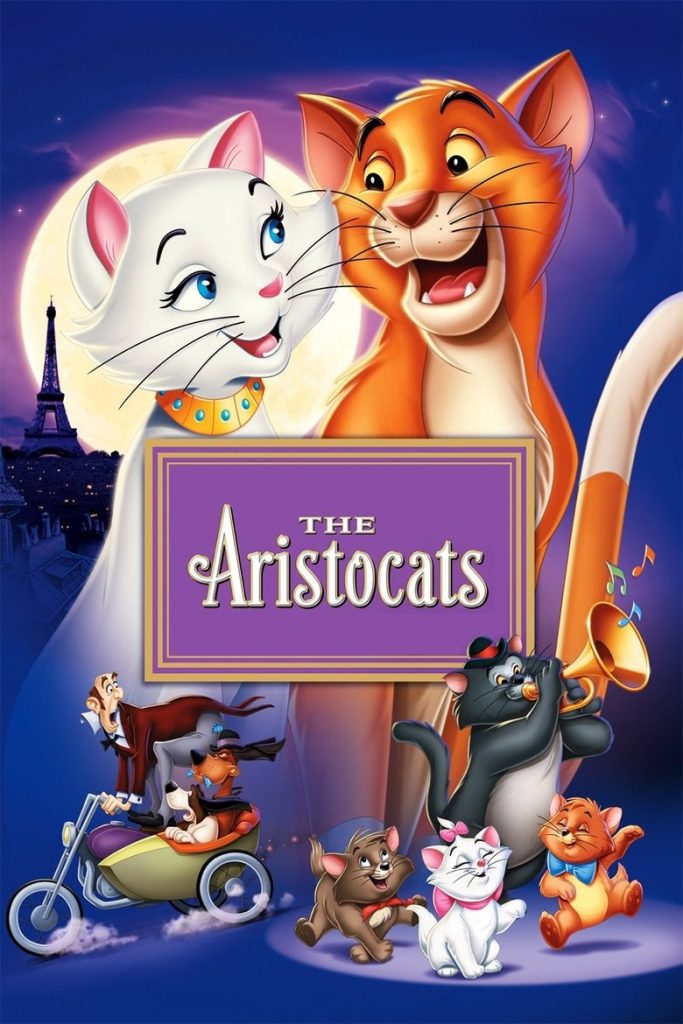
Story overview
The Aristocats is a charming animated adventure about a family of sophisticated cats who inherit a fortune from their wealthy owner. When the jealous butler kidnaps them to steal the inheritance, they must rely on help from street-smart alley cats to find their way home. The film combines gentle humor, memorable music, and themes of friendship across social backgrounds in a lighthearted story suitable for family viewing.
Parent Guide
A gentle, classic Disney film with minimal concerning content suitable for most children.
Content breakdown
Cartoonish peril including kidnapping plot, characters tied up briefly, and very mild slapstick humor. All situations are resolved quickly without real danger.
Mild suspense during kidnapping scenes and brief moments where characters appear in danger. Nothing graphic or intense.
No offensive language. Some mild insults like 'riffraff' and 'alley cat' used in non-malicious ways.
No sexual content. Some mild flirtation between cat characters portrayed innocently.
Characters occasionally smoke pipes and cigars, reflecting 1970 norms. Not portrayed as positive or negative, just background detail.
Mild emotional moments when characters are separated or in brief peril. Happy resolution with reunion and celebration.
Parent tips
This G-rated Disney classic from 1970 offers gentle entertainment with minimal concerning content. The kidnapping plot is handled in a cartoonish, non-threatening manner, and the peril scenes are brief and resolved quickly. Parents should be aware that some characters smoke pipes and cigars occasionally, reflecting the era's norms, and there's very mild cartoon slapstick violence. The film's themes of class differences and teamwork provide good discussion opportunities for children.
Parent chat guide
Parent follow-up questions
- Which cat was your favorite and why?
- What was the funniest part of the movie?
- How did the cats help each other?
- What songs did you like best?
- Would you want a pet like Duchess?
- Why do you think Edgar wanted to get rid of the cats?
- How were Thomas O'Malley's friends different from the aristocats?
- What did you learn about helping others?
- Which character showed the most bravery?
- How did music help the cats in the story?
- What does this movie say about judging people by their background?
- How were problems solved without violence in the story?
- What responsibilities come with inheriting something valuable?
- How did the different cat characters complement each other?
- What modern values might be different from this 1970 film?
- How does the film portray class differences through animal characters?
- What commentary might the film be making about wealth and entitlement?
- How does the jazz music reflect the characters' personalities?
- What aspects of the animation style reflect its 1970 production?
- How does the film handle the theme of found family versus biological family?
🎭 Story Kernel
Beneath its charming surface, 'The Aristocats' explores the tension between inherited privilege and authentic merit. Duchess and her kittens are born into luxury, yet their survival hinges on the street-smart alley cats and a jazz-loving mouse. The villainous butler Edgar's greed exposes how fragile aristocratic status can be when disconnected from genuine community. The film ultimately suggests that true nobility isn't about bloodlines or wealth, but about character, loyalty, and finding your 'tribe'—whether in a mansion or on the rooftops of Paris. It's a surprisingly subversive message wrapped in Disney velvet.
🎬 Visual Aesthetics
The film's visual language is a love letter to turn-of-the-century Parisian Impressionism. Backgrounds often dissolve into soft, painterly washes of color—muted blues and greys for the city at night, warm golds and reds for interior scenes. Character animation contrasts sharply: the aristocats move with refined, ballet-like grace, while the alley cats are all loose-limbed, rubbery physicality. Scenes like the 'Ev'rybody Wants to Be a Cat' musical number explode in psychedelic, abstract patterns, visually breaking from reality to celebrate pure, anarchic joy. The camera frequently adopts low angles, making the feline world feel expansive and immersive.
🔍 Details & Easter Eggs
💡 Behind the Scenes
The voice of Duchess was provided by Eva Gabor, continuing Disney's tradition of elegant, European-accented heroines. The song 'Ev'rybody Wants to Be a Cat' was almost cut; executives feared it was too 'wild' and contemporary. It was saved by the animators' passionate advocacy. Phil Harris, voicing the charismatic O'Malley, largely ad-libbed his laid-back, scat-singing delivery, defining the character's cool jazz vibe. The film was the last to receive Walt Disney's personal approval before his death, though he was not deeply involved in its production.
Where to watch
Choose region:
- Disney Plus
- Amazon Video
- Apple TV
- Google Play Movies
- YouTube
- Fandango At Home
Trailer
Trailer playback is unavailable in your region.