The Ballad of Buster Scruggs (2018)
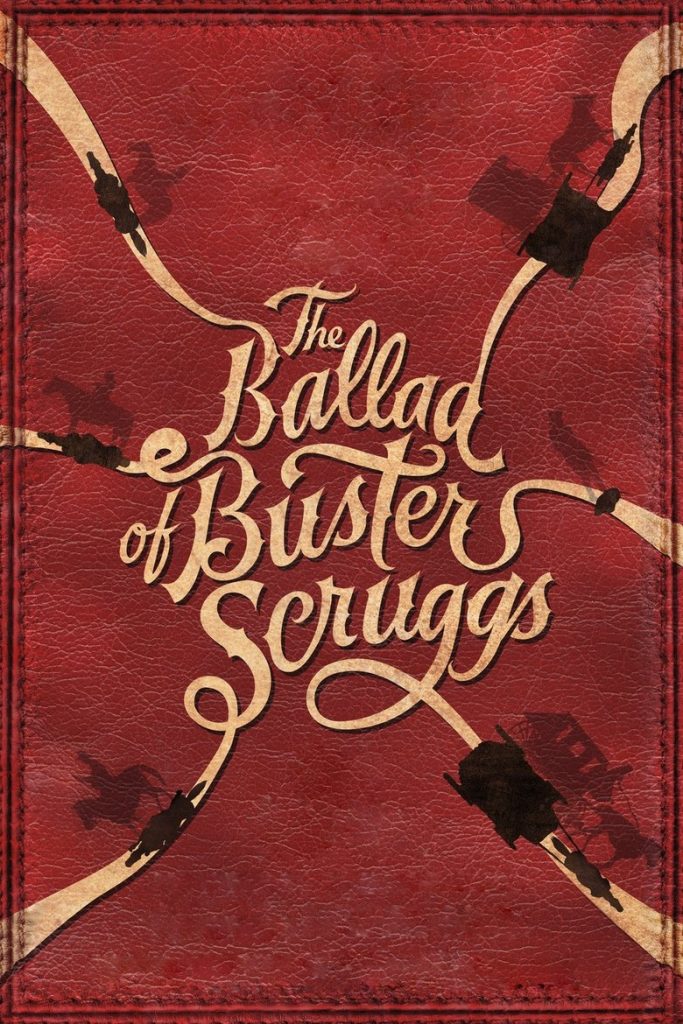
Story overview
The Ballad of Buster Scruggs is a 2018 Western anthology film consisting of six distinct stories set in the American frontier. It blends dark comedy, drama, and musical elements while exploring themes of fate, morality, and human nature. The film presents a series of vignettes ranging from humorous to tragic, all connected by the Western setting and the unpredictable nature of frontier life.
Parent Guide
This R-rated Western anthology contains strong violence, mature themes, and language throughout its six distinct stories. The content varies significantly between segments, with some being relatively light while others are intensely violent and disturbing.
Content breakdown
Contains frequent and graphic frontier violence including shootings, hangings, stabbings, and perilous situations. Some violence is stylized while other instances are realistically brutal.
Includes disturbing scenes of violence and death, some with darkly humorous elements. The anthology format means intensity varies between stories, with some segments being quite dark.
Contains some strong language and period-appropriate cursing throughout various segments, though not constant.
Contains some suggestive dialogue and mild sexual references, but no explicit sexual content or nudity.
Includes some drinking and tobacco use typical of Western settings, but not a central focus.
Varies significantly between stories, ranging from lighthearted to tragic. Some segments deal with mortality and harsh frontier realities that may be emotionally affecting.
Parent tips
This film is rated R for strong violence, language, and thematic elements. The anthology format means content varies significantly between stories, with some segments being relatively lighthearted while others contain intense violence and mature themes. Parents should be aware that the film includes graphic depictions of frontier violence, including shootings, hangings, and other perilous situations that may be disturbing to younger viewers.
Parent chat guide
Parent follow-up questions
- What did you think about the different stories in the movie?
- Which character did you like the most?
- What was your favorite part of the movie?
- How did the music make you feel?
- What did you learn about the old West?
- How were the six stories different from each other?
- What challenges did the characters face in the frontier?
- How did the movie show that life can be unpredictable?
- Which story made you think the most and why?
- What did you notice about how people solved problems in the old West?
- What themes did you notice connecting the different stories?
- How did the film balance humor with more serious moments?
- What did you think about how the movie portrayed frontier justice?
- How did the anthology format affect your viewing experience?
- What messages about human nature did you take from the film?
- How does the film use the Western genre to explore deeper philosophical questions?
- What commentary does the film make about fate and mortality through its varied narratives?
- How effective was the anthology structure in conveying the film's themes?
- What did you think about the balance between dark comedy and tragedy in different segments?
- How does the film challenge or reinforce traditional Western tropes?
🎭 Story Kernel
The film explores how different characters confront mortality and the illusion of control in a harsh, indifferent West. Each vignette presents a distinct philosophical stance toward death: Buster Scruggs' cheerful fatalism, the prospector's solitary perseverance, the impresario's cruel pragmatism, the wagon train's desperate hope, Alice's romantic disillusionment, and the passengers' final resignation. The driving force isn't plot but existential reckoning—characters are pawns to fortune's whims, whether through sudden violence, economic necessity, or cosmic irony. Ultimately, it's about the stories we tell ourselves to make death bearable, only to have reality strip those narratives away.
🎬 Visual Aesthetics
The Coens employ painterly tableaux reminiscent of 19th-century Western art, with deliberate compositions that feel both expansive and claustrophobic. Each segment has a distinct visual signature: Buster's segment uses bright, saturated colors and dynamic wide shots for musical comedy; the prospector's story relies on majestic landscape shots emphasizing human insignificance; the wagon train adopts a muted, earthy palette. Camera movements are often static or slowly panning, creating a detached, observational quality. The final coach sequence uses increasingly tight framing to mirror the characters' trapped fate, with the transition to the afterlife visualized through a literal glowing doorway.
🔍 Details & Easter Eggs
💡 Behind the Scenes
The film originated as a planned six-episode Netflix series before being reconceived as an anthology film. Many segments were shot in different states: Nebraska stood in for the Oregon Trail, New Mexico for the desert prospector sequence. Liam Neeson's role as the impresario was originally written for James Franco. The haunting final song 'When a Cowboy Trades His Spurs for Wings' won the Coens their first competitive Oscar. Tim Blake Nelson performed all his own singing and guitar playing as Buster Scruggs.
Where to watch
Choose region:
- Netflix
- Netflix Standard with Ads
Trailer
Trailer playback is unavailable in your region.