
The Band Concert (1935)
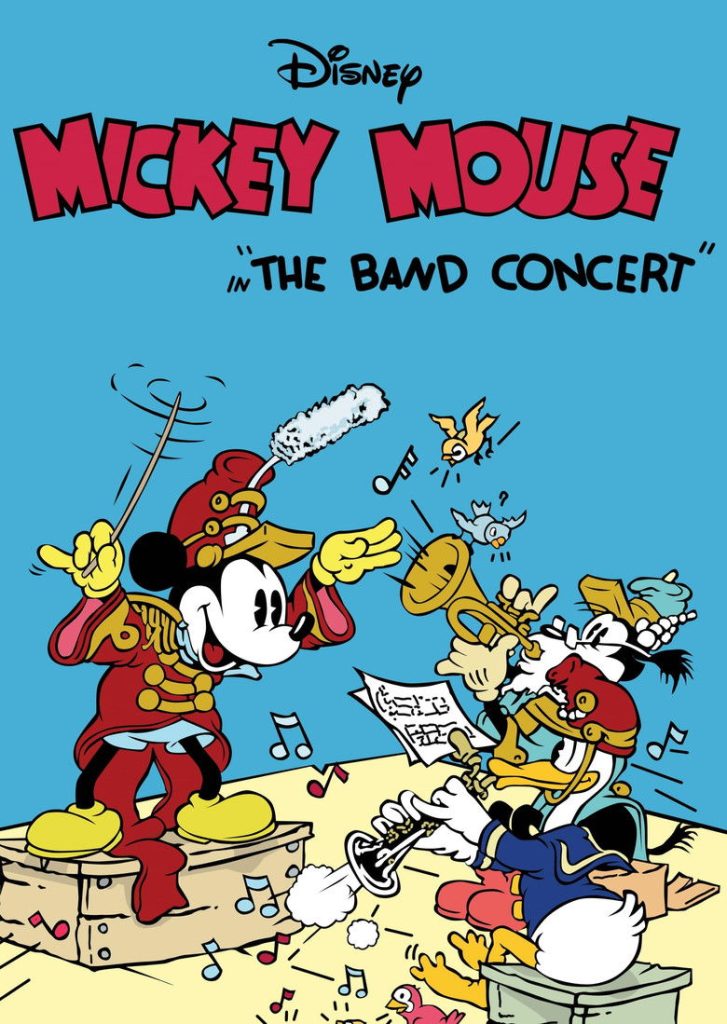
Story overview
This classic animated short features Mickey Mouse leading a band performance that faces multiple comedic disruptions. Donald Duck repeatedly interrupts with his own musical antics, followed by a bee causing additional chaos. The film culminates with the band persevering through a sudden tornado while continuing to play their music.
Parent Guide
A classic animated short with gentle humor and mild peril during weather sequences.
Content breakdown
Cartoonish tornado sequence where characters are swept up but unharmed.
Brief tornado scene might be intense for very young viewers, presented in exaggerated cartoon style.
No problematic language.
No sexual content or nudity.
No substance use depicted.
Mild frustration from interruptions and brief weather-related tension.
Parent tips
This 9-minute animated film from 1935 is a lighthearted comedy suitable for most children. The humor comes from slapstick disruptions and exaggerated weather events rather than any concerning content. Parents should be aware that some younger viewers might find the tornado sequence briefly intense, though it's presented in a cartoonish style without real danger to characters.
The film provides opportunities to discuss perseverance, teamwork, and handling interruptions gracefully. The musical elements can also spark conversations about different types of music and instruments.
Parent chat guide
For younger viewers, you might focus on identifying emotions: 'How do you think Mickey felt when Donald kept interrupting?' For older children, you could discuss broader themes: 'What does this film show us about continuing with important tasks even when things don't go as planned?'
Parent follow-up questions
- What was your favorite part of the movie?
- How did Mickey feel when Donald kept playing different music?
- What sounds did you hear in the movie?
- Have you ever seen a tornado in real life or in other shows?
- What would you do if someone interrupted you while you were doing something important?
- Why do you think Donald kept interrupting the concert?
- How did the band members work together during the storm?
- What would you have done differently if you were Mickey?
- What instruments did you notice in the band?
- Have you ever had to keep going even when things got difficult?
- What does this film show about handling distractions?
- How does the music contribute to the story and mood?
- What might be the message about perseverance in this short film?
- How does the animation style from 1935 compare to modern cartoons?
- Have you experienced situations where you needed to adapt to unexpected changes?
- What commentary might this film be making about artistic integrity versus popular appeal?
- How does the film use humor to address frustration and perseverance?
- What historical context might be relevant to this 1935 production?
- How does the musical structure enhance the narrative progression?
- What broader life lessons about adaptability can be drawn from this story?
🎭 Story Kernel
At its core, 'The Band Concert' explores the tension between artistic integrity and uncontrollable chaos. Mickey Mouse, as the conductor, represents the human desire for order and cultural preservation—he's determined to complete Rossini's 'William Tell Overture' despite every possible interruption. The real driver isn't musical perfection but stubborn persistence in the face of absurdity. Donald Duck embodies pure, anarchic energy that challenges structured society, while the tornado becomes nature's ultimate critique of human pretensions. The film suggests that art isn't about flawless execution but about continuing to create amid life's disruptions—a surprisingly profound message for a cartoon about a duck with a flute.
🎬 Visual Aesthetics
The animation employs brilliant visual counterpoint—while Mickey's band maintains rigid formations, Donald's chaotic movements create visual dissonance. The color palette shifts subtly from the warm, earthy tones of the bandstand to the cool, threatening grays of the approaching storm. Director Wilfred Jackson uses exaggerated squash-and-stretch animation for Donald's antics versus more restrained, realistic movements for Mickey, visually reinforcing their conflict. The tornado sequence showcases early Disney's mastery of fluid dynamics, with instruments and musicians whirling in perfect chaotic patterns that somehow remain comically readable. The final shot of the soaked but triumphant band playing from a tree branch creates a perfect visual punchline about resilience.
🔍 Details & Easter Eggs
💡 Behind the Scenes
This 1935 short was Mickey Mouse's first appearance in color Technicolor, though many remember it in black-and-white due to later re-releases. The tornado sequence was so complex it required Disney's animators to develop new techniques for depicting swirling masses. Interestingly, the film features no dialogue beyond musical sounds—a bold choice that makes its physical comedy universal. Walt Disney personally insisted on using Rossini's overture despite concerns about classical music in a cartoon, believing it elevated the art form. The short's success proved him right, becoming one of Mickey's most celebrated appearances.
Where to watch
Choose region:
- Disney Plus