The Battle of Algiers (1966)
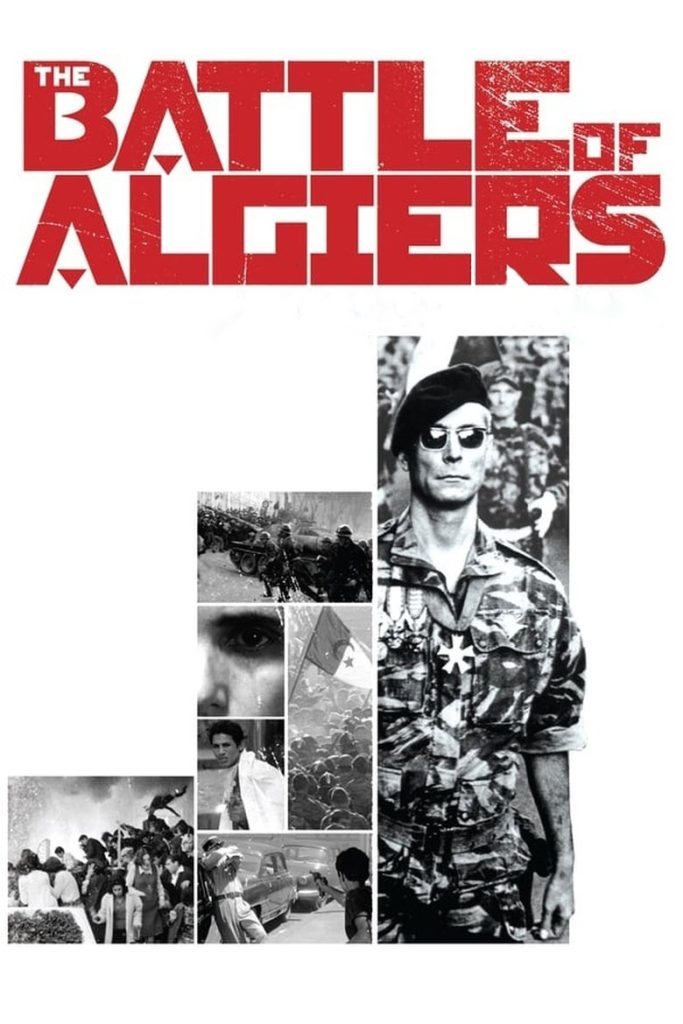
Story overview
This historical war drama depicts the Algerian struggle for independence from French colonial rule in the 1950s. The film shows the escalating conflict between French military forces and Algerian resistance fighters, with both sides employing increasingly violent tactics. It presents a complex portrayal of colonial occupation, revolutionary struggle, and the human cost of political violence without taking a simplistic moral stance.
Parent Guide
Intense historical war drama with realistic violence and complex political themes suitable only for mature older teens.
Content breakdown
Frequent and realistic war violence including bombings, shootings, torture scenes, civilian casualties, and military operations. Violence is graphic and central to the film's themes.
Realistic depictions of urban warfare, terrorist attacks, torture, and the psychological impact of conflict. The documentary style enhances the disturbing nature of the violence.
Occasional strong language in subtitles related to the conflict. No excessive profanity but includes wartime terminology and political rhetoric.
No sexual content or nudity present in the film.
No notable substance use depicted.
High emotional intensity due to realistic war violence, moral complexity, and the human cost of political conflict. The film doesn't provide emotional relief or clear resolution.
Parent tips
This film contains intense war violence including bombings, shootings, torture, and civilian casualties that may be disturbing for younger viewers. The realistic black-and-white documentary style makes the violence feel particularly immediate and authentic. Parents should be aware that the film doesn't shy away from showing the brutal realities of colonial conflict and revolutionary violence.
While the film has educational value for understanding historical conflicts and anti-colonial movements, it requires mature perspective to process its complex moral questions. The violence isn't glorified but shown as part of the tragic cycle of occupation and resistance. This is best suited for older teens who can discuss the historical context and ethical questions raised.
The film's unflinching portrayal of torture, terrorism, and military repression makes it inappropriate for children and younger teens. Even mature viewers may find some scenes emotionally challenging due to their realism and historical authenticity.
Parent chat guide
During viewing, be available to pause and discuss difficult scenes if needed. Ask questions about why characters make certain choices and how the film presents both sides of the conflict. Help your teen recognize the film's documentary style and how it affects their emotional response.
After watching, focus on processing the film's complex themes. Discuss how the film portrays violence as a political tool, the human cost of conflict, and whether the ends justify the means in revolutionary struggles. Connect the historical events to contemporary issues of occupation, resistance, and political violence.
Parent follow-up questions
- What did you see in the movie?
- Were there any loud noises that scared you?
- Did you see people being unkind to each other?
- What colors did you see in the movie?
- How did the movie make you feel?
- What was the fighting about in this movie?
- Why were the two groups angry with each other?
- What happens when people use violence to solve problems?
- How did the black-and-white pictures make you feel?
- What would you do if you saw people fighting like this?
- What historical event is this movie showing?
- Why do you think both sides used violence?
- What makes this movie different from action movies with fighting?
- How does the movie show regular people affected by the conflict?
- What questions do you have about what you saw?
- How does the film present the moral complexity of colonial resistance?
- What techniques does the film use to create its documentary-like realism?
- How does the violence serve the film's political and historical arguments?
- What contemporary parallels can you draw from this historical conflict?
- How does the film challenge simplistic notions of heroes and villains in war?
🎭 Story Kernel
The film's core theme is the brutal symmetry of colonial violence and revolutionary resistance, presented with chilling objectivity. It explores how both the French military and Algerian FLN fighters become trapped in escalating cycles of brutality that dehumanize everyone involved. The characters are driven not by individual heroism but by collective necessity—Ali La Pointe's transformation from petty criminal to revolutionary martyr, Colonel Mathieu's coldly pragmatic counterinsurgency tactics, and the ordinary Algerians who become both victims and agents of history. The movie refuses easy moralizing, showing how terrorism and state violence feed each other in a deadly feedback loop where ideology becomes secondary to survival.
🎬 Visual Aesthetics
Pontecorvo's documentary-style cinematography creates an urgent, newsreel authenticity that makes the violence feel horrifyingly immediate. The handheld camera work and grainy black-and-white photography strip away Hollywood glamour, placing viewers in crowded casbah alleyways and chaotic street confrontations. Key visual motifs include the recurring close-ups of faces in crowds—both French and Algerian—showing fear, determination, and collective rage. The bombing sequences are particularly masterful in their clinical horror: we see bombs being placed in mundane locations (a milk bar, a dance hall) followed by devastating aftermath shots that emphasize civilian casualties over political rhetoric. The camera never flinches from the human cost on both sides.
🔍 Details & Easter Eggs
💡 Behind the Scenes
Remarkably, director Gillo Pontecorvo cast mostly non-professional actors who had actually lived through the battle, including Saadi Yacef (who plays FLN leader Jaffar) who was a real FLN military commander during the conflict. The French banned the film until 1971, and it was famously screened at the Pentagon in 2003 as a case study in counterinsurgency. Pontecorvo and cinematographer Marcello Gatti used documentary techniques like hidden cameras to film in actual Algiers locations, sometimes without permits, creating unprecedented authenticity. Ennio Morricone's score blends French military marches with Algerian folk rhythms to musically represent the cultural collision at the heart of the conflict.
Where to watch
Choose region:
- HBO Max
- HBO Max Amazon Channel
- Criterion Channel
- Amazon Video
- Apple TV Store
- Google Play Movies
- YouTube
- Fandango At Home
- Shout! Factory TV
- Mometu
- Tubi TV
- Kanopy
- Plex
- Plex Channel
Trailer
Trailer playback is unavailable in your region.