
The Best of Enemies (2019)
Story overview
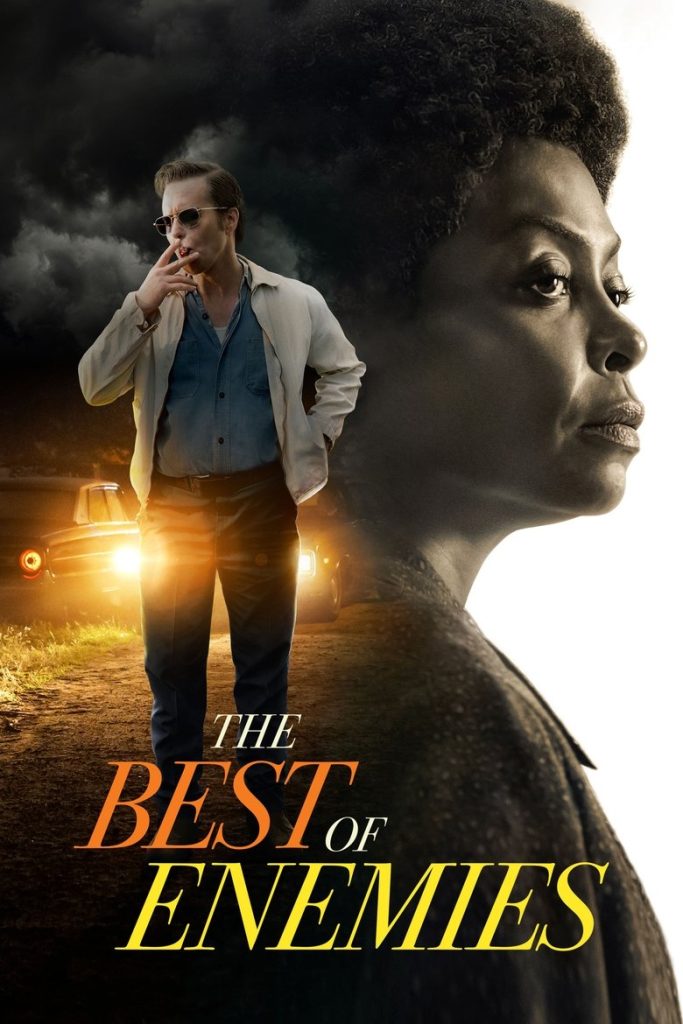
The Best of Enemies is a 2019 historical drama based on true events. It depicts the tense relationship between a civil rights activist and a Ku Klux Klan leader who are forced to work together during a school desegregation crisis in 1971 North Carolina. The film explores themes of racial prejudice, personal transformation, and the power of dialogue to bridge deep divides. It shows how two opposing figures gradually develop mutual understanding through difficult conversations.
Parent Guide
A historical drama dealing with mature themes of racism and social conflict that requires parental guidance for younger viewers due to emotional intensity and brief strong language.
Content breakdown
Historical racial tensions and confrontations without graphic violence
Depictions of racial prejudice and social conflict may be emotionally intense
Brief strong language consistent with PG-13 rating
No sexual content or nudity
No substance use depicted
Intense racial confrontations and emotional dialogue about prejudice
Parent tips
This PG-13 rated drama deals with mature themes of racism, prejudice, and social conflict that may require parental guidance for younger viewers. The film includes historical depictions of racial tension and brief strong language that earned its rating. While there's no graphic violence, the emotional intensity of racial confrontations and the historical context of segregation may be challenging for some children.
Parents should be prepared to discuss America's civil rights history and the reality of racial discrimination that still exists today. The film provides opportunities to talk about empathy, understanding different perspectives, and how people can change their views through meaningful dialogue.
Parent chat guide
You might explore how the film shows that meaningful change often requires uncomfortable conversations and personal risk. Consider discussing how the historical events relate to current social issues and what your child thinks about the characters' journeys from enemies to understanding.
Parent follow-up questions
- What did you notice about how the characters treated each other at the beginning?
- How did the characters' feelings change during the movie?
- What does it mean to be fair to everyone?
- Can you think of a time when you had to work with someone different from you?
- What did you learn about being kind to others?
- Why do you think the characters had such different opinions at first?
- What helped the main characters start to understand each other better?
- How does working together change how people feel about each other?
- What does this movie teach us about treating people fairly?
- How can we stand up for what's right when we see unfairness?
- What historical factors contributed to the racial tensions shown in the film?
- How did the characters' personal experiences shape their initial prejudices?
- What risks did the characters take by engaging in dialogue with each other?
- How does the film show that change can be slow and difficult?
- What lessons from this historical event apply to modern society?
- How does the film portray the psychological mechanisms behind prejudice and bias?
- What role did institutional structures play in maintaining the racial divide shown?
- How effective is dialogue versus confrontation in creating social change?
- What does the film suggest about the relationship between personal transformation and systemic change?
- How does this historical narrative connect to contemporary discussions about race and equality?
🎭 Story Kernel
At its core, 'The Best of Enemies' explores how systemic prejudice is dismantled not through grand gestures, but through the terrifying, intimate act of seeing another human being's full humanity. The film argues that the most radical change occurs in quiet living rooms and school gymnasiums, not on protest lines. C.P. Ellis is driven by a desperate need for belonging and purpose that the Klan falsely provides, while Ann Atwater's motivation stems from protecting her community's future. Their transformation isn't about becoming friends, but about recognizing that their shared struggle for dignity outweighs their manufactured differences.
🎬 Visual Aesthetics
The film employs a deliberate visual segregation that slowly dissolves. Early scenes use harsh, contrasting lighting—blinding sun at Klan rallies versus the warm, dim interiors of Black homes—creating visual tribes. As characters evolve, the camera lingers in medium shots during their debates, forcing us to sit with their discomfort. The climactic school integration vote uses a muted, documentary-style palette, stripping away Hollywood gloss to emphasize the raw human drama. Most powerfully, the film shows hands—clenched in fists, pointing in accusation, then eventually hesitantly shaking—making the physical journey toward connection palpable.
🔍 Details & Easter Eggs
💡 Behind the Scenes
Sam Rockwell and Taraji P. Henson spent weeks separately researching their roles, with Henson meeting Ann Atwater's family and Rockwell studying the psychology of former Klan members. The Durham locations were carefully chosen for historical accuracy, though some interiors were shot in Georgia. Director Robin Bissell insisted on using minimal musical scoring during dialogue scenes, forcing the actors' performances to carry the emotional weight—a decision that creates the film's unsettling, authentic tension.
Where to watch
Choose region:
- Netflix
- Netflix Standard with Ads
- Amazon Video
- Fandango At Home
Trailer
Trailer playback is unavailable in your region.