
The Best of Youth (2003)
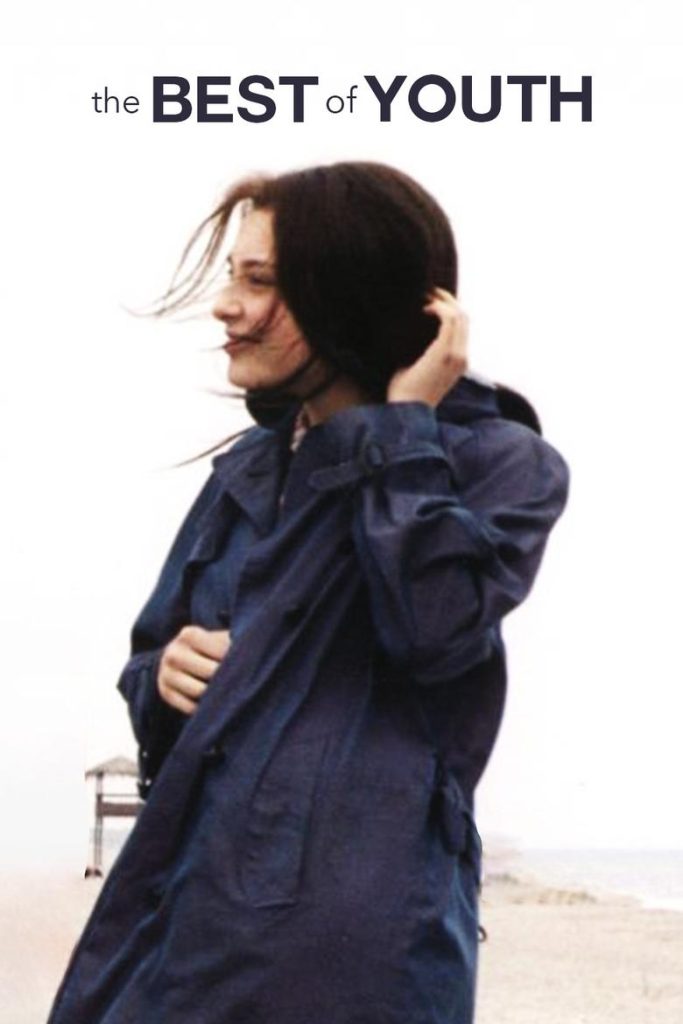
Story overview
This Italian historical drama follows two brothers from a Roman family whose lives take different directions after a pivotal summer encounter in 1966. Their personal journeys unfold against the backdrop of major postwar Italian historical events spanning several decades. The film explores family dynamics, personal growth, and how individuals navigate changing social and political landscapes.
Parent Guide
Mature historical drama with complex themes best suited for older teenagers; requires parental guidance for younger viewers.
Content breakdown
Some tense situations and historical conflict references, but no graphic violence depicted.
Contains depictions of mental health struggles and institutional treatment that may be disturbing; historical events include social unrest.
Some strong language and adult dialogue; subtitled from Italian.
Contains sexual situations and partial nudity consistent with R-rated dramas; not graphic but present.
Some social drinking and smoking depicted as part of cultural setting.
High emotional content dealing with family conflicts, mental health, life choices, and historical trauma over decades.
Parent tips
This is a lengthy, mature drama (over 6 hours) with an R rating for adult themes. The film deals with complex historical events, emotional family relationships, and adult life challenges. While not graphically violent, it contains mature content including some sexual situations, strong language, and depictions of mental health struggles that require parental discretion.
Given the film's length and sophisticated themes, it's best suited for older teenagers who can appreciate historical context and character-driven storytelling. Parents should be prepared to discuss Italy's postwar history, mental health treatment, and the film's exploration of how personal choices intersect with larger societal changes.
Parent chat guide
After viewing, focus conversations on how the brothers' different paths reflect personal values and historical circumstances. Discuss how the film portrays resilience, family bonds, and the passage of time. Encourage critical thinking about how individuals respond to societal changes and personal challenges.
Parent follow-up questions
- What did you notice about the brothers in the movie?
- How did the family members show they cared about each other?
- What places did you see in Italy?
- What colors or sounds did you remember from the movie?
- How did the movie make you feel?
- How were the two brothers different from each other?
- What challenges did the characters face in their lives?
- Why do you think the movie showed so many different time periods?
- How did the characters help each other when things were difficult?
- What did you learn about families from watching this movie?
- How did historical events affect the characters' lives and choices?
- What values were important to each brother, and how did they change over time?
- How did the film show the passage of time and aging?
- What did you notice about how the characters handled difficult emotions?
- How did family relationships evolve throughout the story?
- How does the film explore the tension between personal freedom and family responsibility?
- What commentary does the film make about Italian society and historical changes?
- How do the brothers represent different approaches to life and values?
- What did you think about the film's portrayal of mental health and treatment?
- How does the extended runtime contribute to the storytelling and character development?
🎭 Story Kernel
At its core, 'The Best of Youth' is a profound meditation on how personal history is shaped by national trauma, and vice versa. It's not about the grand sweep of Italy's 20th century, but about how that sweep is felt in the intimate spaces of a family. The driving force isn't ambition or love, but the quiet, persistent struggle to maintain one's moral compass and familial bonds against the relentless currents of political extremism, institutional failure, and personal tragedy. The characters are propelled by the need to find meaning and connection in a world that constantly threatens to fracture both, asking whether individual goodness can survive collective madness.
🎬 Visual Aesthetics
The film's visual language is one of patient observation, mirroring its epic scope. Director Marco Tullio Giordana employs a classical, unfussy style—steady camerawork, natural lighting, and compositions that often frame characters within domestic or institutional spaces, emphasizing their relationship to their environment. The color palette subtly shifts with the decades, from the warmer, sun-drenched tones of the 1960s to the cooler, more muted hues as the story progresses into the 90s, visually charting the characters' loss of youthful idealism. Key moments are often understated; Nicola's discovery of Giorgia's fate is conveyed through a slow, devastating zoom on his face, proving emotional cataclysm needs no pyrotechnics.
🔍 Details & Easter Eggs
💡 Behind the Scenes
Originally conceived as a television miniseries for RAI, its critical acclaim led to a theatrical release, where it became a surprise arthouse hit. The six-hour runtime allowed for an unprecedented depth of character development, with the script meticulously tracing Italian history from 1966 to 2000. Actor Luigi Lo Cascio (Nicola) and Alessio Boni (Matteo) underwent extensive preparation to age convincingly over four decades. The film's title is taken from a poem by Pier Paolo Pasolini, a figure whose spirit of political and artistic inquiry haunts the narrative. Its sweeping yet intimate portrait of Italy resonated deeply, winning the Un Certain Regard award at Cannes in 2003.
Where to watch
Choose region:
- Amazon Video
- Fandango At Home
Trailer
Trailer playback is unavailable in your region.