
The Big Lebowski (1998)
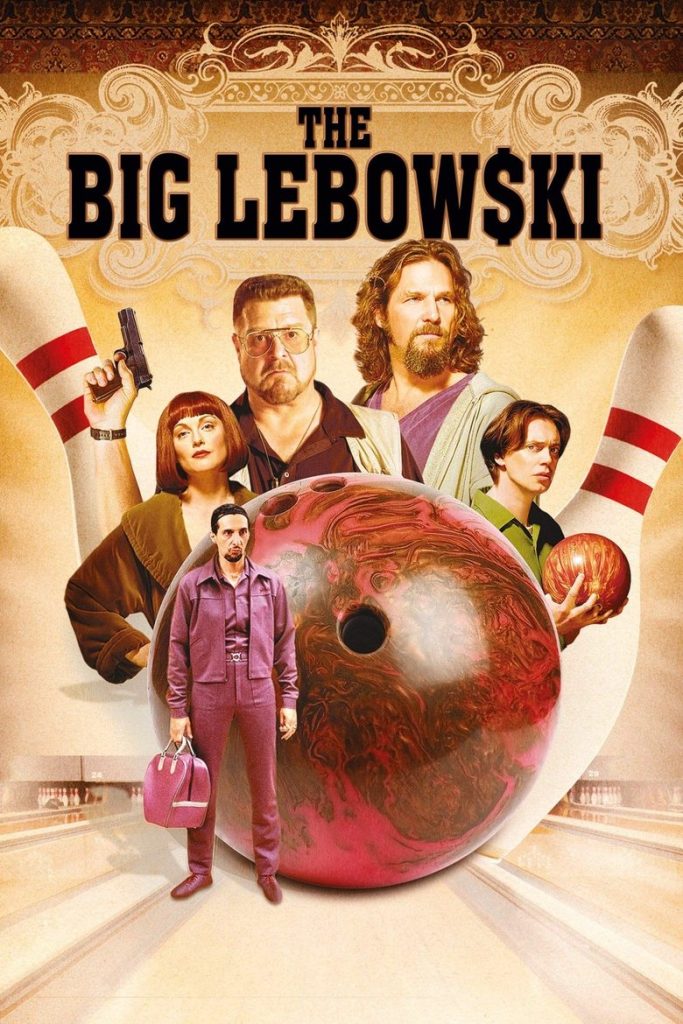
Story overview
The Big Lebowski is a 1998 comedy-crime film about Jeffrey 'The Dude' Lebowski, a laid-back bowler in Los Angeles who gets mistaken for a wealthy man with the same name. This case of mistaken identity pulls him into a bizarre series of events involving various eccentric characters and a complicated money scheme. The film follows his surreal adventures as he tries to navigate this confusing situation while maintaining his relaxed lifestyle.
Parent Guide
An R-rated comedy with strong language, adult humor, and mature themes that requires parental guidance for older teens.
Content breakdown
Some physical altercations, threats, and perilous situations, though mostly played for comedy rather than intense drama.
Surreal and bizarre situations might be confusing or mildly unsettling, but no traditionally scary horror elements.
Frequent strong profanity, crude language, and sexual references throughout the dialogue.
Sexual references, innuendo, and some suggestive content, though no explicit nudity or graphic scenes.
Frequent drinking, marijuana use, and references to other drugs, often portrayed casually though sometimes with negative consequences.
Generally lighthearted tone despite adult themes, with emotional moments being brief and often undercut by humor.
Parent tips
This R-rated film contains strong language throughout, including frequent profanity and crude humor. There are scenes depicting substance use (primarily alcohol and marijuana), some sexual content and references, and occasional violence including a brief scene of physical assault. The plot involves adult themes like crime, deception, and nihilism that may be confusing or inappropriate for younger viewers.
Parents should be aware that while the film is a comedy, its humor is often dark, absurd, and relies heavily on adult situations and dialogue. The characters frequently engage in questionable behavior and make poor decisions. The film's nonlinear storytelling and surreal elements might be difficult for some viewers to follow.
Parent chat guide
During viewing, you might pause to discuss how the characters' choices affect their situations, or talk about the difference between movie humor and respectful behavior. Note how the film portrays substance use negatively despite some characters treating it casually.
After watching, discuss what made the story confusing or entertaining, and how the characters' approaches to problems differed from better solutions. Talk about the film's messages about friendship, persistence, and dealing with unexpected situations.
Parent follow-up questions
- What was your favorite part of the movie?
- How did the characters help each other?
- What made you laugh in the movie?
- What would you do if you got mixed up with someone else's problem?
- How do you think the characters felt when things got confusing?
- Why do you think the characters kept getting into trouble?
- What did you think about how the friends treated each other?
- What would you have done differently if you were in that situation?
- How did the movie show that telling the truth is important?
- What made some parts of the movie funny or silly?
- What do you think the movie was saying about friendship and loyalty?
- How did the characters' choices create more problems for them?
- What did you notice about how the movie showed adults making mistakes?
- Why do you think the filmmakers included so many confusing elements in the story?
- How did the humor in this movie compare to other comedies you've seen?
- What themes about identity and mistaken assumptions did you notice in the film?
- How did the film use absurdity and surreal elements to make its points?
- What did you think about the portrayal of substance use and its consequences?
- How did the film's nonlinear storytelling affect your understanding of the plot?
- What social commentary might be embedded in the characters' interactions and situations?
🎭 Story Kernel
The film is a postmodern riff on the hardboiled detective genre, replacing a cynical PI with Jeff 'The Dude' Lebowski, a blissfully passive slacker. The plot's convoluted kidnapping scheme—involving a millionaire's trophy wife, nihilists, and a pornographer—serves as a MacGuffin to explore the Dude's unwavering commitment to 'abiding.' While everyone else chases money, identity, or meaning in a hollow, capitalist LA, the Dude's only true quest is for rug replacement and bowling league harmony. His inertia becomes a philosophical stance against the aggressive, performative masculinity embodied by Walter Sobchak. The real conflict isn't about the ransom; it's between the Dude's Zen-like detachment and a world demanding pointless engagement.
🎬 Visual Aesthetics
The Coens craft a sun-bleached, hazy Los Angeles that feels like a dream the Dude can't quite wake from. The camera often adopts a laid-back, observational style, mirroring the protagonist's detachment, but punctuates this with sudden, hyper-stylized sequences like the Busby Berkeley-inspired bowling dream or the Gutterballs musical number. The color palette is dominated by earthy browns, dusty yellows, and the creamy beige of White Russians, creating a consistently mellow, slightly grimy atmosphere. Action is deliberately clumsy and anti-climactic—the botched car heist, the thrown bowling ball—underscoring the film's rejection of genre conventions. Visual motifs like rolling balls and circular camera movements subtly reinforce the film's themes of cyclical futility and returning to one's lane.
🔍 Details & Easter Eggs
💡 Behind the Scenes
Jeff Bridges developed the Dude's signature look and lazy gait, with the robe and jelly shoes being his own contributions. John Turturro's Jesus Quintana, despite only about seven minutes of screen time, became iconic; his purple outfit and licking of a bowling ball were his ideas. The famous dream sequences were partly inspired by the work of psychedelic artist Abdul Mati Klarwein. Much of the film was shot in real LA locations, with the Dude's bungalow being in Echo Park. The Coen brothers have stated the plot was intentionally convoluted, a 'Rube Goldberg' machine of events, to emphasize that the story was never the point.
Where to watch
Choose region:
- Philo
- Amazon Video
- Apple TV
- Google Play Movies
- YouTube
- Spectrum On Demand
- Plex
- Fandango At Home
Trailer
Trailer playback is unavailable in your region.