
The Boat That Rocked (2009)
Story overview
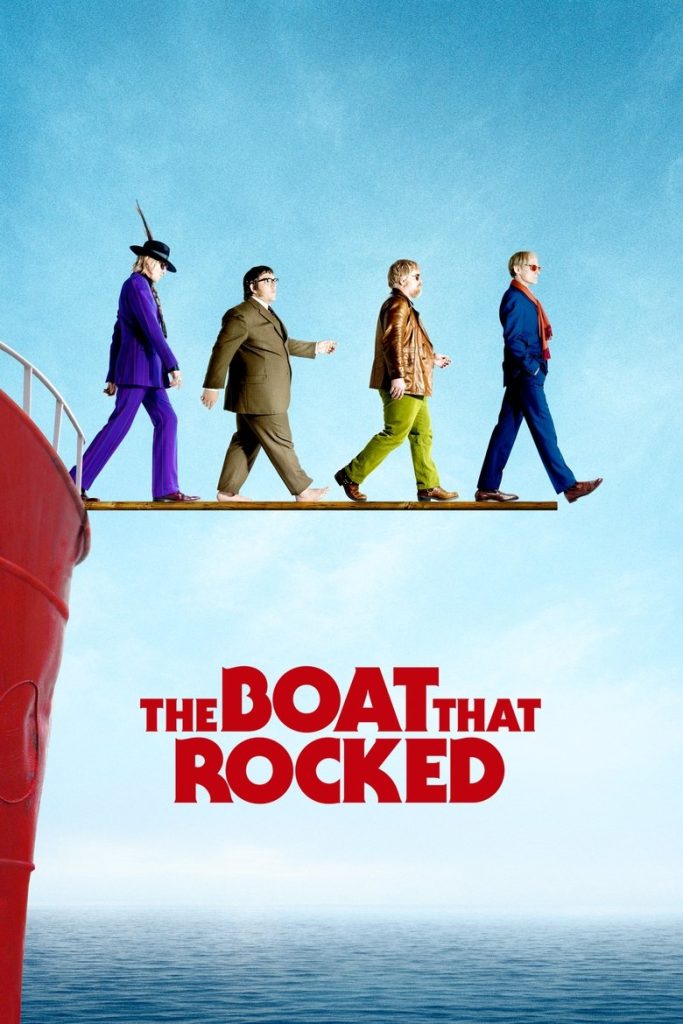
The Boat That Rocked is a 2009 comedy-drama film set in 1966 about a pirate radio station broadcasting rock and pop music from a ship in the North Sea to the UK, where the BBC played limited pop music. The story follows a young man who joins the eccentric crew of DJs as they defy government attempts to shut them down. It celebrates rebellious spirit, music, and counterculture while exploring themes of freedom, friendship, and generational conflict.
Parent Guide
R-rated comedy-drama with strong language, sexual content, and substance use. Best for mature teens with parental guidance.
Content breakdown
Some peril during storm sequences and government confrontation. No graphic violence.
Mild tension during enforcement attempts and storm scenes. Nothing graphically disturbing.
Frequent strong language including profanity throughout the film.
Sexual references, innuendo, and implied sexual activity. No graphic nudity.
Regular depiction of alcohol and tobacco use by characters. Some party scenes.
Generally lighthearted comedic tone with moments of tension and sentimental reflection.
Parent tips
This film is rated R primarily for language, sexual content, and substance use. It features frequent strong language including profanity, sexual references and innuendo throughout, scenes with implied sexual activity, and regular depiction of alcohol and tobacco use. The rebellious counterculture themes and portrayal of authority defiance may require discussion with younger viewers.
Parents should note the film contains no graphic violence but includes some peril during storm scenes and government confrontation sequences. The overall tone is comedic and nostalgic, but the adult content makes it unsuitable for young children. Consider the maturity level of your teen when deciding appropriateness.
Parent chat guide
Consider discussing the characters' rebellious actions versus responsible behavior, and how the film portrays authority figures. The themes of freedom of expression versus regulation remain relevant today. For older teens, conversations could extend to media ethics, censorship, and the evolution of music distribution.
Parent follow-up questions
- What was your favorite song in the movie?
- How did the people on the boat work together?
- What did you think about the big waves during the storm?
- Why do you think the characters liked playing music so much?
- How did the movie make you feel when people were happy?
- Why do you think the government wanted to stop the radio station?
- How did the different DJs have their own special styles?
- What does it mean to be 'rebellious' in a good or bad way?
- How did the characters show they were good friends to each other?
- What would you do if you wanted to share something important but weren't allowed?
- How does this film show the generation gap between young people and authorities in the 1960s?
- What are the pros and cons of the characters breaking rules to share music?
- How does the film use humor to deal with serious situations?
- What does this story teach us about standing up for what you believe in?
- How might this story be different if it happened today with internet instead of radio?
- How does the film portray the tension between cultural expression and government control?
- What commentary does the film make about mainstream versus alternative media?
- How are the adult themes (language, sexuality, substance use) handled in relation to the historical context?
- What does the film suggest about the power of music in social movements?
- How do the characters' personal journeys reflect larger societal changes of the era?
🎭 Story Kernel
The film is less about pirate radio's battle with the BBC and more about the generational clash between institutional control and individual expression. The characters are driven by a primal need to be heard and to connect in an era of stifling authority. The boat becomes a microcosm of a counterculture utopia, where misfits find family through shared passion. The central conflict isn't just legal—it's existential, questioning whether joy and spontaneity can survive systematic eradication. The sinking of the ship isn't a defeat but a baptism, forcing the spirit of rebellion to swim ashore and permeate the mainstream it once broadcasted to from a distance.
🎬 Visual Aesthetics
The film employs a warm, saturated palette of browns, oranges, and sea-blues, visually separating the vibrant, chaotic life aboard the boat from the cold, grey austerity of the government offices. Camera work is intimate and handheld during the boat's revelry, creating a sense of lived-in chaos, while static, wide shots emphasize the sterile emptiness of the authorities. The climactic sinking is shot with a grim beauty—the record player continuing to spin underwater symbolizes the indomitable nature of the music and the idea it represents, even as the physical vessel is destroyed.
🔍 Details & Easter Eggs
💡 Behind the Scenes
The film is loosely inspired by the real pirate radio station Radio Caroline. Many exterior shots of the boat, the 'Radio Rock', were filmed on a replica ship built for production, while interiors were shot on a soundstage. Actor Philip Seymour Hoffman (as The Count) reportedly immersed himself in 1960s radio DJ culture, studying tapes of famous pirates like John Peel. The soundtrack, a major character itself, features over 50 classic rock and pop tracks from the era, with securing the rights being a significant production challenge and cost.
Where to watch
Choose region:
- HBO Max
- HBO Max Amazon Channel
- Cinemax Amazon Channel
- Cinemax Apple TV Channel
- Amazon Video
- Apple TV
- YouTube
- Fandango At Home
Trailer
Trailer playback is unavailable in your region.