
The Boondock Saints (1999)
Story overview
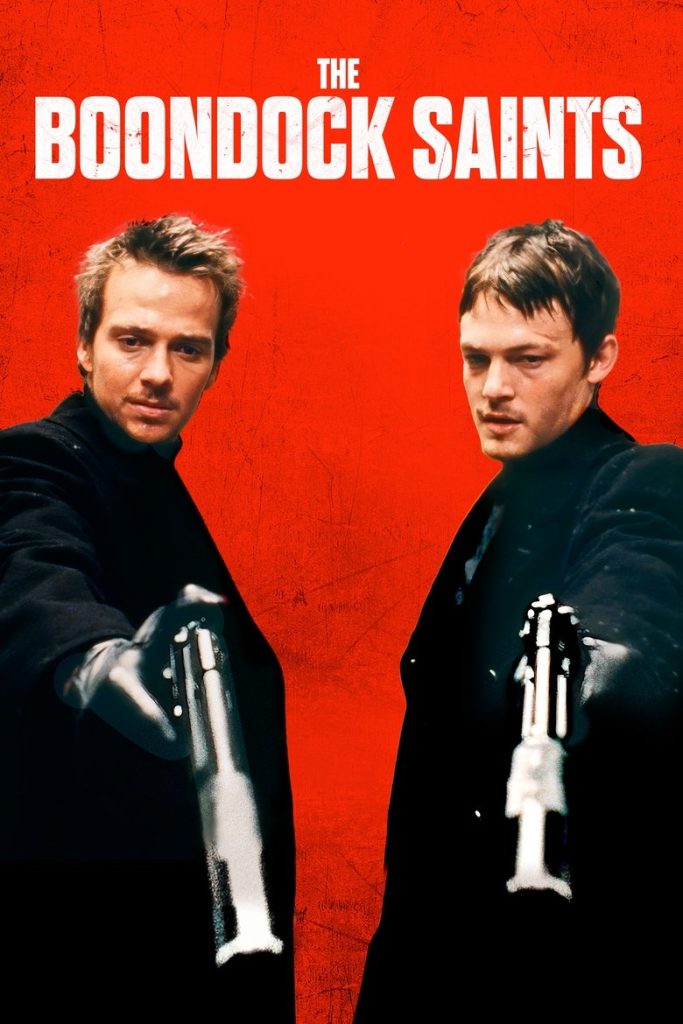
The Boondock Saints is a 1999 action thriller about two Irish-American brothers in Boston who become vigilantes after a violent encounter with Russian mobsters. They believe they're on a divine mission to rid their neighborhood of criminals, leading to escalating confrontations with both the mafia and law enforcement. The film blends gritty urban crime drama with dark humor and stylized violence as the brothers' actions spark media attention and police investigations.
Parent Guide
Mature action thriller with strong violence and language, suitable only for older teens with parental guidance and discussion.
Content breakdown
Frequent intense violence including shootings, beatings, and criminal confrontations with some graphic elements.
Tense situations involving criminal activity and moral ambiguity may be disturbing.
Pervasive strong language throughout the film.
Limited sexual references and situations.
Scenes include drinking and smoking in social contexts.
High-stakes situations and moral conflicts create sustained tension.
Parent tips
This film contains frequent strong violence including shootings, beatings, and graphic depictions of criminal activity. The R rating reflects intense action sequences, pervasive strong language, and mature themes about vigilantism and moral ambiguity. Parents should be aware that the protagonists engage in criminal behavior that's portrayed as justified, which may require discussion about real-world consequences and ethical decision-making.
Parent chat guide
Parent follow-up questions
- What did you think about the brothers in the movie?
- How did the movie make you feel?
- What was your favorite part?
- Did anything seem scary or confusing?
- What would you do if you saw something wrong happening?
- Why do you think the brothers decided to fight crime themselves?
- How did the police react to what the brothers were doing?
- What are some better ways to help your community than what the brothers did?
- How did the movie show that violence has consequences?
- What did you learn about making difficult choices from this movie?
- Do you think the brothers were right to take justice into their own hands? Why or why not?
- How does the movie portray the difference between revenge and justice?
- What responsibility do citizens have when they see criminal activity?
- How might the brothers' actions have affected innocent people around them?
- What alternatives to violence could the characters have considered?
- How does the film use religious imagery to justify the brothers' actions, and what message does that send?
- What commentary does the movie make about urban crime and law enforcement effectiveness?
- How does the film balance dark humor with serious violence, and what effect does that have?
- What ethical questions does the vigilante premise raise about community responsibility?
- How might different socioeconomic backgrounds influence viewers' reactions to the brothers' mission?
🎭 Story Kernel
At its core, 'The Boondock Saints' is a darkly comedic exploration of moral absolutism versus systemic corruption. The MacManus brothers aren't driven by complex revenge or personal tragedy in the traditional sense; they're propelled by a sudden, divinely-inspired conviction that they've been chosen to purge evil. This isn't about nuanced justice—it's about the intoxicating, messy simplicity of declaring oneself judge, jury, and executioner. The film interrogates the audience's own bloodlust, making us complicit as we cheer their escalating violence, then questions that complicity through the increasingly unhinged detective, Smecker, who represents the law's impotent frustration.
🎬 Visual Aesthetics
The film's visual language is a grimy, green-tinted love letter to Boston's underbelly, shot with a restless, almost documentary-style energy. Director Troy Duffy employs crash zooms, dutch angles, and frantic editing not for slickness, but to mirror the chaotic, improvisational nature of the brothers' missions. The color palette is dominated by murky greens and browns, making the sudden bursts of crimson blood starkly visceral. Action scenes are brutally practical—clumsy, loud, and devoid of Hollywood grace, which oddly heightens their impact. The recurring imagery of the saints' prayer and tattoo symbolizes their self-mythologizing in real-time.
🔍 Details & Easter Eggs
💡 Behind the Scenes
The film's journey is legendary. First-time director Troy Duffy famously secured a deal with Miramax based on his script and a meeting with Harvey Weinstein, with his band even slated to do the soundtrack. The deal famously fell apart in a very public manner, documented in the indie film 'Overnight.' It was eventually shot on a shoestring budget in Toronto doubling for Boston. Willem Dafoe improvised much of Detective Smecker's flamboyant mannerisms, including the scene where he reconstructs the shootout in his mind. The film was a critical and commercial dud on release but found massive cult life on DVD, driven largely by college audiences and word-of-mouth.
Where to watch
Choose region:
- Amazon Prime Video
- Peacock Premium
- Amazon Prime Video with Ads
- Peacock Premium Plus
- The Roku Channel
- Pluto TV
- Tubi TV
- Amazon Video
- Apple TV
- Google Play Movies
- YouTube
- Fandango At Home
Trailer
Trailer playback is unavailable in your region.