
The Boss Baby: Family Business (2021)
Story overview
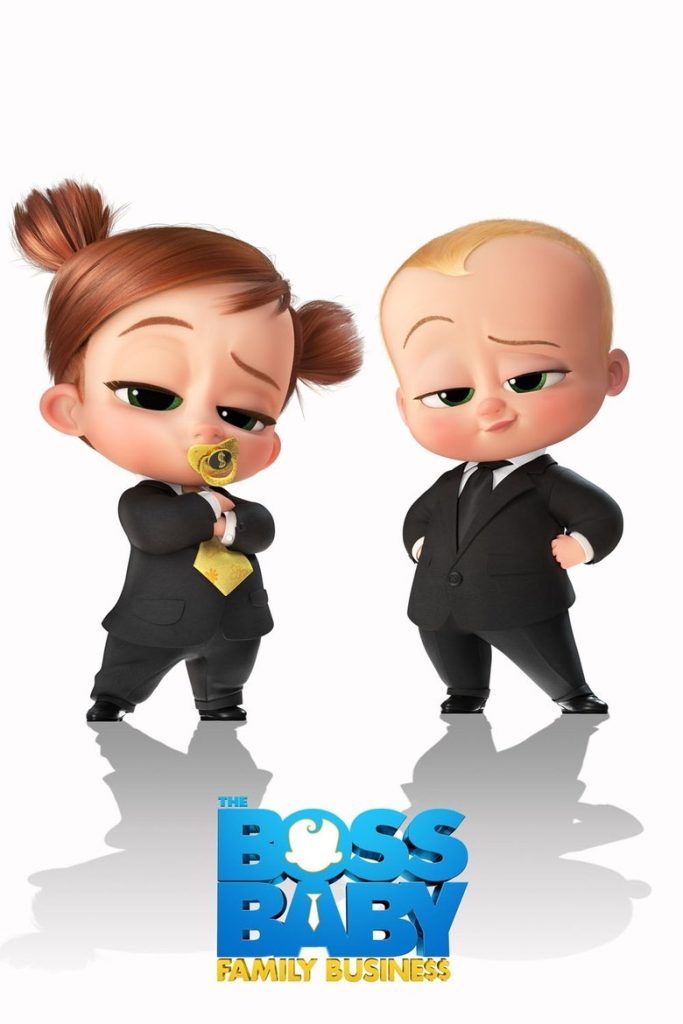
The Boss Baby: Family Business is an animated family comedy that follows the Templeton brothers, Tim and his younger brother Ted (the former Boss Baby), as adults. Tim is now a married stay-at-home dad with two daughters, while Ted is a wealthy CEO. When a new, highly intelligent baby with a mysterious agenda arrives, the brothers must reunite and go undercover in a secret baby organization to uncover a plot that threatens the balance between babies and adults. The film explores themes of family bonds, sibling rivalry, and the challenges of parenting, all wrapped in humorous and adventurous scenarios.
Parent Guide
A family-friendly animated comedy with mild action and themes suitable for most children, though some scenes may be intense for very young viewers.
Content breakdown
Cartoonish action sequences include chases, mild confrontations, and characters in brief peril, all presented in a humorous, non-graphic style.
Some scenes involve suspenseful moments or mysterious plots that might be slightly unsettling for sensitive children, but nothing graphic or prolonged.
No offensive language; dialogue is family-appropriate with mild, playful banter.
No sexual content or nudity; the focus is on family and adventure themes.
No depiction of substance use; the content is clean and suitable for children.
Emotional moments related to family bonds and sibling rivalry are present but handled lightly with comedic elements.
Parent tips
This PG-rated animated film is generally suitable for children, but parents should be aware of some mild elements. The movie includes cartoonish action sequences with characters in peril, such as chases and comedic confrontations, which might be intense for very young viewers. There are also themes of sibling rivalry and family dynamics that could prompt discussions about cooperation and empathy. The humor is mostly family-friendly, with some slapstick and baby-related jokes that appeal to both kids and adults.
Parent chat guide
Parent follow-up questions
- What was your favorite funny part in the movie?
- How did the brothers help each other?
- What do you think babies and grown-ups can learn from each other?
- Did any parts of the movie make you feel scared or happy?
- What would you do if you had a super-smart baby in your family?
- Why do you think Tim and Ted had to work together in the movie?
- What challenges did the characters face, and how did they solve them?
- How does the movie show that families can be different but still loving?
- What message do you think the movie has about teamwork?
- If you could join the baby organization, what job would you want?
- How does the movie portray the balance between childhood and adulthood?
- What themes about family and responsibility did you notice in the story?
- How did the characters' past experiences influence their actions in the film?
- What does the movie suggest about the importance of communication in families?
- If you were to advise the characters, what would you suggest they do differently?
- How does the film use humor to address serious themes like family dynamics?
- What commentary does the movie offer on modern parenting and sibling relationships?
- How do the characters' arcs reflect real-life challenges of growing up?
- In what ways does the film subvert or reinforce stereotypes about babies and adults?
- What broader societal messages can be inferred from the plot about cooperation and innovation?
🎭 Story Kernel
At its core, 'The Boss Baby: Family Business' explores how adult responsibilities and childhood trauma can fracture family bonds, using the absurd premise of baby spies as a metaphor for rediscovering wonder and connection. The film cleverly examines how Tim and Ted's unresolved childhood competition manifests in their parenting styles—Tim's overprotective nurturing versus Ted's corporate efficiency—ultimately arguing that both approaches contain value when blended with genuine emotional presence. The driving force isn't saving the world from evil babies, but saving the Templeton brothers from becoming strangers to each other and their children.
🎬 Visual Aesthetics
The animation employs a dual visual language: warm, rounded, pastel-drenched scenes for domestic life contrast sharply with the cold, angular, neon-lit environments of BabyCorp headquarters. Camera work mimics corporate espionage films during action sequences—low angles for authority shots, quick cuts for comedy—while family moments use softer focus and steadier framing. Most interesting is how color palettes shift with character perspectives; when adults drink the magic formula to see babies as they truly are, the world temporarily adopts the exaggerated, candy-colored aesthetic of childhood imagination before settling into a hybrid reality.
🔍 Details & Easter Eggs
💡 Behind the Scenes
Alec Baldwin recorded his Boss Baby lines separately from other cast members, often improvising corporate jargon that writers later incorporated into the script. The film's director, Tom McGrath, previously worked on the Madagascar franchise and brought his experience with exaggerated physical comedy to the baby action sequences. Several background characters are visual cameos of DreamWorks Animation staff members, particularly in the BabyCorp headquarters scenes. The musical score intentionally mimics 1960s spy film motifs during action sequences as an homage to the original film's James Bond-inspired aesthetic.
Where to watch
Choose region:
- Peacock Premium
- Peacock Premium Plus
- Amazon Video
- Apple TV
- Google Play Movies
- YouTube
- Fandango At Home
Trailer
Trailer playback is unavailable in your region.