
The Boy and the Heron (2023)
Story overview
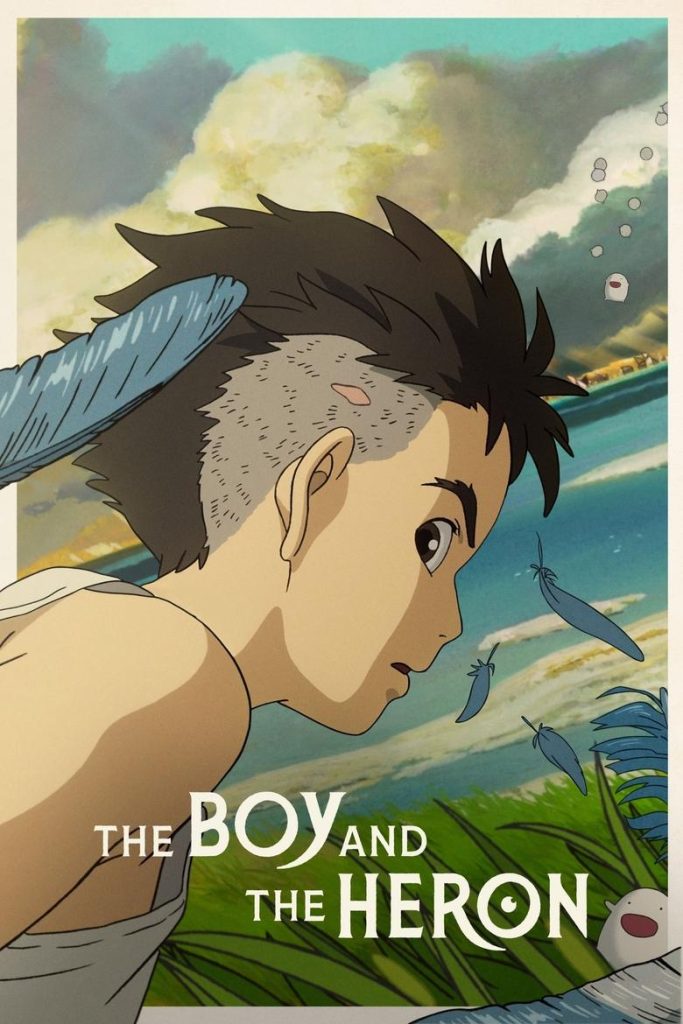
The Boy and the Heron follows teenage Mahito as he copes with his mother's death during World War II, moving to the countryside with his stepmother who resembles his late mother. A mysterious gray heron appears, calling Mahito the 'long-awaited one' and drawing him into a strange, fantastical world. The film explores themes of grief, adaptation, and magical realism through Mahito's journey in this new environment.
Parent Guide
A thoughtful animated film exploring grief and fantasy with emotional depth best suited for mature children and teens.
Content breakdown
Wartime backdrop without graphic violence; some tense moments with mysterious creatures and emotional peril.
Themes of parental death and grief; mysterious, sometimes unsettling fantasy elements; atmospheric tension.
No concerning language noted in the provided information.
No sexual content or nudity indicated.
No substance use shown based on provided details.
Strong themes of loss, grief, and adaptation; emotional weight throughout the narrative.
Parent tips
This PG-13 animated film deals with mature themes including parental loss, wartime backdrop, and emotional turmoil that may be intense for younger viewers. While visually beautiful, the story contains fantasy elements that could be confusing or unsettling for children under 10. The 124-minute runtime requires sustained attention, so consider your child's ability to engage with slower-paced, thoughtful storytelling.
Parents should note that the film's exploration of grief and its magical realism approach might raise questions about death, family dynamics, and coping with change. The wartime setting provides historical context but isn't graphically violent. The heron character creates an atmosphere of mystery that could be either intriguing or unsettling depending on the viewer.
Parent chat guide
Encourage children to express what they found confusing or moving about the story, and relate it to their own experiences with change or loss when appropriate. Discuss how different family structures (like having a step-parent) can be portrayed in media versus real life. Help them distinguish between the film's magical elements and realistic aspects of coping with difficult situations.
Parent follow-up questions
- What was your favorite animal in the movie?
- How did the boy feel when he moved to a new home?
- What colors did you see in the countryside scenes?
- Was the bird friendly or scary to you?
- What would you do if you saw a talking bird?
- Why do you think the heron kept following the boy?
- How might moving to a new place feel when you're sad?
- What makes something 'magical' in a story versus real life?
- How do people show they care about each other in the movie?
- What would you ask the heron if you could talk to it?
- How does the movie show different ways people cope with loss?
- What might the fantasy elements represent about the boy's feelings?
- How does the wartime setting affect the characters' lives?
- What responsibilities come with being called 'the long-awaited one'?
- How do family relationships change when new members join?
- How does the film use magical realism to explore psychological themes?
- What commentary might the movie make about逃避现实 versus facing reality?
- How do cultural differences affect the portrayal of grief and family?
- What makes this coming-of-age story unique compared to others?
- How does the animation style contribute to the emotional tone?
🎭 Story Kernel
At its core, the film is a profound exploration of how one navigates a world defined by loss and impending destruction. Mahito’s journey into the tower isn't just a search for his mother, but a confrontation with the malice inherent in human history and the creative impulse. Miyazaki moves beyond the whimsy of his earlier works to ask a difficult question: how do you live in a world that is destined to burn? The film rejects the comfort of a perfect, static fantasy world, instead choosing the chaotic, painful, and fleeting reality of life. It is a dialogue between an aging creator and his successor, emphasizing that legacy cannot be forced; it must be built anew by those who follow, even if the materials are tainted by the past.
🎬 Visual Aesthetics
The visual language is a masterclass in hand-drawn surrealism, blending the tactile grit of 1940s Japan with a dreamscape that feels both ancient and fragile. The animation of fire is particularly striking—visceral and terrifying, yet strangely beautiful, serving as the catalyst for Mahito’s trauma. The character designs, from the grotesque, multi-layered anatomy of the Grey Heron to the unsettlingly uniform Parakeet army, utilize shape and color to evoke a sense of otherness. Symbolism is dense; the tower itself acts as a crumbling monument to the ego of the creator. The fluidity of the Warawara and the stark, painterly backgrounds create a contrast between the innocence of potential life and the heavy, stagnant weight of a world nearing its end.
🔍 Details & Easter Eggs
💡 Behind the Scenes
This film marks Hayao Miyazaki’s return from a decade-long retirement following 2013’s The Wind Rises. It was produced over seven years, with a deliberate pace of roughly one minute of animation completed per month. In an unprecedented move, Studio Ghibli released the film in Japan with zero trailers, plot synopses, or voice cast reveals, relying solely on a single poster of the Heron. It is the first Studio Ghibli film to be released in IMAX and won the Academy Award for Best Animated Feature, further cementing Miyazaki’s legacy as a global cinematic titan.
Where to watch
Choose region:
- HBO Max
- HBO Max Amazon Channel
- Amazon Video
- Apple TV
- Google Play Movies
- YouTube
- Fandango At Home
- Spectrum On Demand
Trailer
Trailer playback is unavailable in your region.