
The Butler (2013)
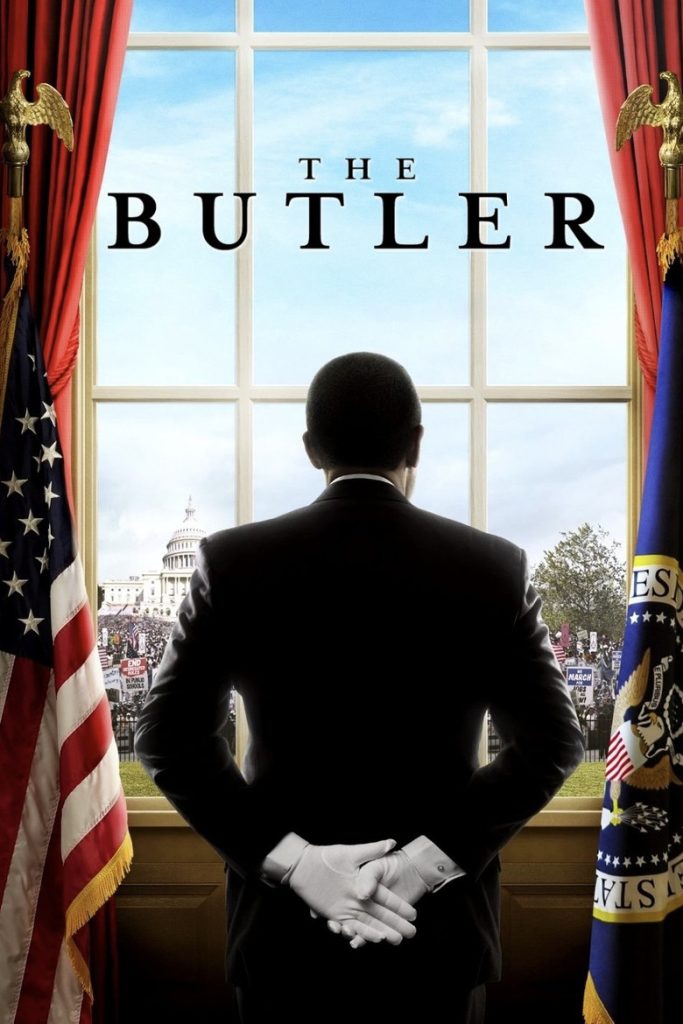
Story overview
The Butler is a historical drama that follows the life of a White House butler who served through eight presidential administrations. The film portrays his personal journey and family life against the backdrop of major civil rights events in 20th-century America. It explores themes of racial inequality, social change, and the struggle for dignity in challenging times.
Parent Guide
Historical drama with mature themes suitable for teens with parental guidance.
Content breakdown
Includes historical depictions of racial violence, protests, and civil rights era conflicts.
Contains emotionally intense scenes of racial discrimination and historical injustice.
May include some period-appropriate racial terms and mild profanity.
No significant sexual content or nudity.
Social drinking in some scenes.
Deals with heavy themes of racial inequality and personal sacrifice.
Parent tips
This PG-13 rated drama deals with mature themes including racial discrimination and historical violence. The film includes scenes depicting civil rights era conflicts, protests, and racial tensions that may be emotionally challenging for younger viewers. Parents should be prepared to discuss America's civil rights history and the film's portrayal of institutional racism with their children.
Parent chat guide
Parent follow-up questions
- What did you notice about how people treated each other in the movie?
- How did the main character help people?
- What colors or sounds did you remember from the movie?
- What did you think about how the characters treated each other differently?
- Why do you think some people in the movie were treated unfairly?
- How did the main character's job change over time?
- What historical events did you recognize from the movie?
- How did the film show people working for change?
- What challenges did the main character face in his work and personal life?
- How does the film portray the evolution of civil rights in America?
- What perspectives on historical events does the film present?
- How does the personal story intersect with larger historical narratives?
🎭 Story Kernel
The film is less about Cecil Gaines's service and more about the profound, quiet erosion of self that occurs when one's identity is defined by silent observation. His journey from the cotton fields to the White House isn't a triumph of the American Dream, but a study in compartmentalization. He must fracture himself: the public servant who is a neutral fixture of the rooms of power, and the private man whose son is on the front lines of the very movements his employers debate as policy. The core tension isn't between father and son, but between the dignity of service and the cost of that service to one's own soul and familial bonds. It asks what it means to 'serve' a country that does not fully serve you or your family.
🎬 Visual Aesthetics
Director Lee Daniels employs a visual language of stark contrasts to mirror Cecil's internal and external worlds. The White House is shot with a crisp, steady, almost sterile formality—wide shots of symmetrical, opulent rooms where Cecil moves with silent precision. This contrasts sharply with the handheld, warmer, and more chaotic cinematography of his home life and the civil rights protests. The color palette is key: the cool blues and grays of officialdom versus the warm browns and vibrant colors of the Black community and the visceral reds of violence. Costuming is a silent narrative; Cecil's increasingly immaculate butler's uniform becomes a literal and metaphorical armor, while his son Louis's wardrobe evolves with each era of the movement, from neat suits to dashikis.
🔍 Details & Easter Eggs
💡 Behind the Scenes
Forest Whitaker prepared for the role by studying with a real former White House butler, learning specific protocols for serving presidents. Oprah Winfrey, who plays Cecil's wife Gloria, insisted on a modest salary to keep the film's budget feasible, demonstrating her commitment to the project. The film's narrative is loosely inspired by the life of Eugene Allen, a White House butler who served eight presidents. However, the central father-son conflict is a fictionalized dramatic device; Allen's son served in Vietnam but was not a prominent civil rights activist, highlighting how the film uses composite characters to explore broader thematic conflicts.
Where to watch
Choose region:
- Peacock Premium
- Starz Apple TV Channel
- Peacock Premium Plus
- MovieSphere+ Amazon Channel
- Amazon Video
- Apple TV
- Google Play Movies
- YouTube
Trailer
Trailer playback is unavailable in your region.