The Casagrandes Movie (2024)
Story overview
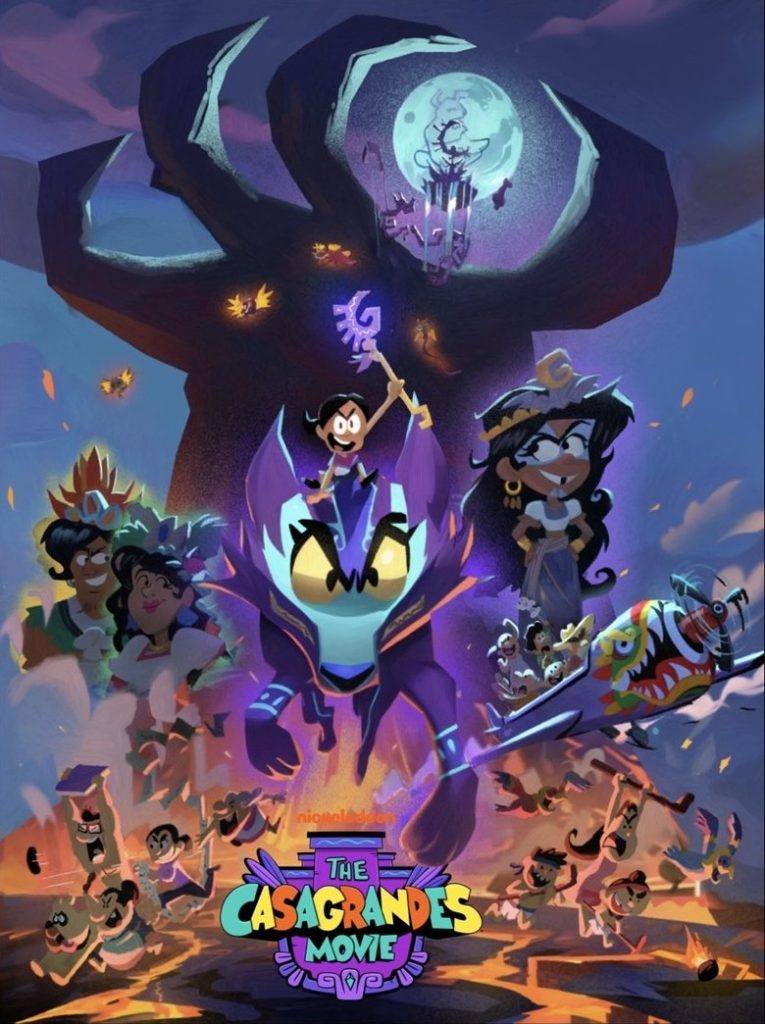
In this animated family adventure, 12-year-old Ronnie Anne travels to Mexico for a birthday celebration. During the trip, she accidentally releases a demigod who had been trapped inside a mountain. Ronnie Anne must work with her family to correct this unexpected situation and restore balance. The story combines cultural elements with lighthearted comedy as the family navigates this magical challenge together.
Parent Guide
A family-friendly animated adventure with mild fantasy elements and positive messages about responsibility and cultural appreciation.
Content breakdown
Contains fantasy peril related to magical elements and a released demigod, but no physical violence between characters.
Magical elements and the concept of a trapped/released demigod might be slightly intense for very young or sensitive children.
No offensive language expected in this family-oriented content.
No sexual content or nudity in this family film.
No depiction of substance use.
Some tension related to the magical situation, but overall positive and uplifting family themes.
Parent tips
This movie is rated TV-Y7, indicating it's suitable for children age 7 and up with parental guidance. The content includes mild fantasy peril and magical elements that might be intense for very young viewers. The story presents positive themes of family cooperation, cultural appreciation, and taking responsibility for one's actions. Parents should be aware that the magical elements and demigod character could be confusing or slightly frightening for sensitive children under 7.
Parent chat guide
Parent follow-up questions
- What was your favorite part of the movie?
- How did the family help each other?
- What colors did you see in Mexico?
- Was there anything that made you feel happy?
- What would you do if you saw something magical?
- Why was it important for Ronnie Anne to fix her mistake?
- How did the family work together to solve the problem?
- What did you learn about Mexican culture from the movie?
- What would you have done differently than the characters?
- How did the characters show they cared about each other?
- What does the movie teach about taking responsibility for our actions?
- How did the cultural setting add to the story?
- What challenges did the family face and how did they overcome them?
- What does the demigod character represent in the story?
- How did the characters grow or change during their adventure?
- What cultural themes did you notice in the movie and how were they presented?
- How does the movie balance fantasy elements with family dynamics?
- What messages does the film convey about intergenerational relationships?
- How does the setting in Mexico influence the story's themes?
- What does the resolution suggest about problem-solving as a family unit?
🎭 Story Kernel
At its core, the film explores the friction between individual autonomy and the weight of generational expectations. Ronnie Anne’s desire for a 'summer of me' serves as a catalyst for a larger discourse on heritage. By accidentally awakening Punguari, an ancient demi-god, the narrative draws a sharp parallel between Ronnie Anne’s teenage angst and the deity’s own resentment toward her mother’s restrictive protection. It’s a story about the necessity of trust within a family unit; Maria must learn to let go, while Ronnie Anne must realize that independence doesn't mean isolation. The film effectively uses the 'coming-of-age' trope to bridge the gap between contemporary Mexican-American identity and the deep-rooted folklore of the Purépecha people, ultimately suggesting that true power comes from embracing one's roots rather than fleeing from them.
🎬 Visual Aesthetics
The film elevates the television series' aesthetic through a more cinematic lens, utilizing a rich, saturated palette that pays homage to the landscapes of Michoacán. The character designs maintain their signature thick-lined 2D charm but are enhanced by dynamic lighting and fluid action sequences that the show’s budget rarely allowed. Symbolism is woven into the environment, particularly through the contrast between the mundane urban elements of Great Lakes City and the ethereal, neon-soaked ruins of the ancient temple. The visual representation of Punguari’s powers—swirling teals and magentas—creates a striking juxtaposition against the earthy tones of the Mexican countryside. This visual duality mirrors Ronnie Anne’s internal conflict: the vibrant, chaotic potential of her future versus the grounded, stable history of her ancestors.
🔍 Details & Easter Eggs
💡 Behind the Scenes
The Casagrandes Movie marks the feature-length conclusion to the series, which was a successful spin-off of The Loud House. Director Miguel Puga, who had been a long-time storyboard artist and director for the franchise, sought to infuse the film with authentic Mexican culture, drawing from his own heritage. The film features a notable voice cast including Izabella Alvarez and Paulina Chávez. Interestingly, the musical score was composed by Germaine Franco, who previously worked on Coco, ensuring that the film's sonic landscape was as culturally resonant as its visuals. The production was handled by Nickelodeon Animation Studio and released globally via Netflix.
Where to watch
Choose region:
- Netflix
- Netflix Standard with Ads
Trailer
Trailer playback is unavailable in your region.