
The Cat Returns (2002)
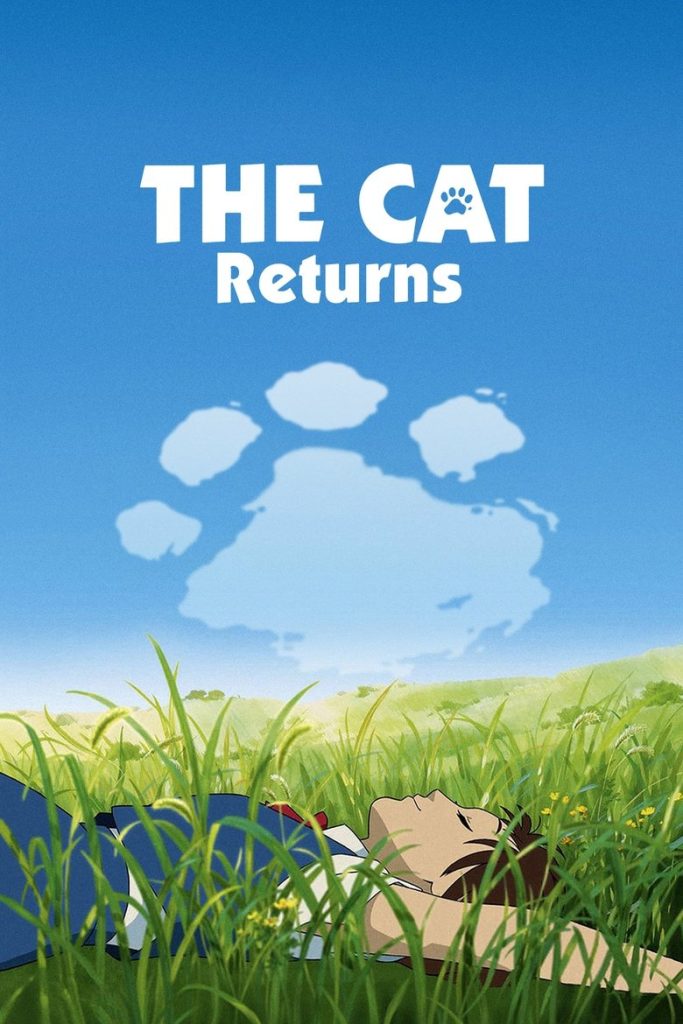
Story overview
The Cat Returns is a charming animated fantasy adventure about a young girl named Haru who rescues a cat from traffic, only to discover it's actually the Prince of the Cats. Her simple act of kindness leads to an extraordinary journey into the magical Kingdom of Cats, where she must navigate feline customs and unexpected challenges. This gentle story explores themes of kindness, courage, and finding one's voice through a whimsical, imaginative lens.
Parent Guide
A gentle, imaginative fantasy suitable for all ages, emphasizing kindness, courage, and positive values through whimsical storytelling.
Content breakdown
Some mild fantasy peril involving characters in non-threatening situations; no actual violence or harm occurs.
Mild fantasy elements that might briefly surprise very young viewers but are not frightening; everything is presented in a lighthearted, non-threatening manner.
No inappropriate language; all dialogue is family-friendly and age-appropriate.
No sexual content or nudity of any kind.
No depiction or reference to substance use.
Gentle emotional moments related to kindness and self-discovery; no intense or distressing emotional content.
Parent tips
This G-rated film is appropriate for all ages and offers a gentle introduction to fantasy storytelling. The animation is colorful and engaging, with no intense violence or frightening scenes that would trouble young viewers. Parents should note that while the story involves some mild peril and fantasy elements, everything is handled in a lighthearted, age-appropriate manner that emphasizes positive values like kindness and bravery.
The film's 75-minute runtime makes it ideal for younger attention spans, and the themes of helping others and standing up for oneself provide excellent conversation starters. The Japanese cultural elements are presented accessibly, offering a subtle introduction to different storytelling traditions without requiring prior knowledge.
Parent chat guide
After the movie, focus conversations on the film's positive messages about helping others and being true to oneself. Ask what your child liked most about the story and whether they've ever imagined talking animals or magical worlds. These discussions can help reinforce the film's themes while encouraging creative thinking.
Parent follow-up questions
- What was your favorite cat in the movie?
- How did Haru help the cat at the beginning?
- What colors did you see in the Kingdom of Cats?
- Would you like to visit a place where animals can talk?
- How did Haru feel when she helped someone?
- Why was it important that Haru helped the cat prince?
- What would you do if you visited a magical animal kingdom?
- How did Haru show bravery in the story?
- What makes someone a good helper like Haru?
- What was the most surprising thing about the cat world?
- What does this story teach us about kindness having unexpected consequences?
- How does Haru's character grow throughout her adventure?
- What might the cat kingdom represent in terms of learning new perspectives?
- How do the fantasy elements help tell a story about real-life values?
- What would be challenging about visiting a world with different rules?
- How does this film use fantasy to explore themes of identity and self-discovery?
- What cultural elements from Japanese storytelling do you notice in the film's approach to fantasy?
- How does Haru's journey reflect common coming-of-age themes in a unique way?
- What commentary might the film be making about responsibility and unintended consequences?
- How does the animation style contribute to the film's gentle, whimsical tone?
🎭 Story Kernel
At its heart, 'The Cat Returns' is a coming-of-age story about rejecting the seductive cage of a pre-ordained destiny. Haru, a shy and aimless girl, is thrust into the Cat Kingdom where she is offered a life of pampered luxury as the Prince's bride. The conflict isn't about escaping a villain, but resisting a seemingly perfect, effortless future. Her journey is driven by the quiet realization that being 'special' on someone else's terms means erasing her own identity. The film's true expression is that self-worth isn't granted by titles or kingdoms, but forged through small, brave choices to say 'no' and define your own path, even when it's messy and uncertain.
🎬 Visual Aesthetics
The film employs a distinct visual duality. The human world is rendered in soft, muted pastels and grounded, realistic animation, reflecting Haru's bland existence. In stark contrast, the Cat Kingdom bursts with exaggerated, almost Baroque opulence—whirling staircases, impossibly tall towers, and a warm, golden-hued palette that feels both inviting and claustrophobic. The camera work shifts accordingly: steady and mundane in the real world, becoming dynamic and dizzying in the Kingdom, using dramatic Dutch angles and sweeping movements during the chaotic chase sequences. This visual language masterfully externalizes Haru's internal disorientation and the overwhelming nature of the destiny being forced upon her.
🔍 Details & Easter Eggs
💡 Behind the Scenes
'The Cat Returns' originated as a 20-minute short film for the Ghibli Museum. Its positive reception led to a feature-length production. While a Studio Ghibli film, it was directed by Hiroyuki Morita, his directorial debut, not Hayao Miyazaki or Isao Takahata. The character of the Baron, voiced by Yoshihiko Hakamada in Japanese and Cary Elwes in English, first appeared in the earlier Ghibli film 'Whisper of the Heart,' making this a rare spin-off within the studio's catalog. The film's lighter, adventure-focused tone was a deliberate departure from Ghibli's often heavier thematic works.
Where to watch
Choose region:
- HBO Max
- HBO Max Amazon Channel
- Amazon Video
- Apple TV
- Google Play Movies
- YouTube
- Fandango At Home
Trailer
Trailer playback is unavailable in your region.