
The Chaos Class Failed the Class (1975)
Story overview
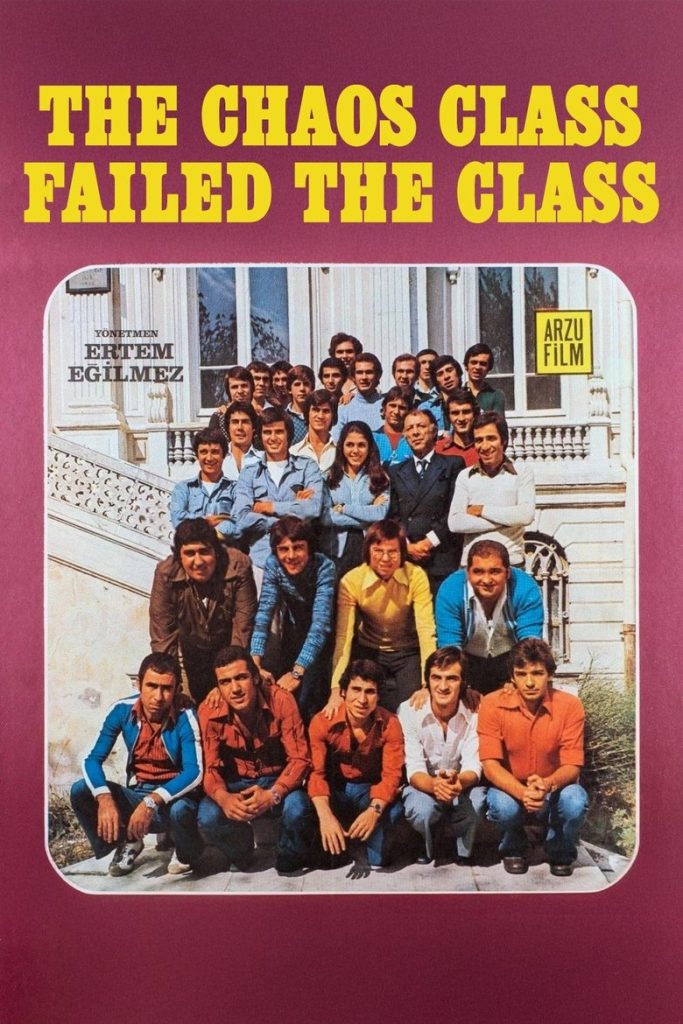
This 1975 Turkish comedy follows a young female teacher who begins working at an all-boys high school. The film humorously depicts the classroom dynamics and interactions between the teacher and her students. It explores themes of education, authority, and generational differences through lighthearted situations. The comedic tone focuses on the everyday challenges and amusing moments in a school environment.
Parent Guide
A lighthearted school comedy suitable for most children with mild, situational humor and positive messages about education.
Content breakdown
No violence or dangerous situations depicted.
No frightening or disturbing content present.
May contain mild school-appropriate language typical of classroom settings.
No sexual content or nudity present.
No depiction of substance use.
Light emotional moments related to school experiences and teacher-student relationships.
Parent tips
This comedy presents a generally family-friendly portrayal of school life with mild humor and relatable situations. Parents should be aware that the film reflects 1970s cultural norms and gender dynamics that may differ from contemporary perspectives. The movie's humor comes from classroom antics and student-teacher interactions rather than mature content, making it suitable for most school-aged children with parental guidance.
Parent chat guide
Parent follow-up questions
- What was your favorite funny part in the movie?
- How do you think the teacher felt when she first met her students?
- What do you like about your own teachers?
- Can you draw a picture of your favorite classroom scene?
- What would you do if you were in that classroom?
- Why do you think the students behaved the way they did?
- What did you learn about how schools were different in the 1970s?
- How did the teacher handle challenging situations?
- What would you do differently if you were the teacher?
- What makes a classroom environment fun and respectful?
- How does the film use humor to show teacher-student relationships?
- What cultural differences did you notice between this school and modern schools?
- How does the film balance comedy with showing the importance of education?
- What strategies did the teacher use to connect with her students?
- How might this story be different if it were set today?
- How does the film reflect 1970s attitudes toward gender and authority?
- What commentary does the movie make about educational systems?
- How effective is the film's humor in addressing serious topics about education?
- What cultural values are presented through the classroom dynamics?
- How does the film's historical context affect its message about youth and learning?
🎭 Story Kernel
The movie uses the titular 'Chaos Class' as a microcosm to critique rigid educational structures that prioritize conformity over genuine learning. The characters are driven not by academic ambition but by a collective rebellion against meaningless rules and standardized expectations. Their 'failure' becomes a paradoxical success—they learn collaboration, creativity, and resilience through their anarchic antics, while the system's 'successful' students are shown as hollow achievers. The film ultimately argues that true education happens in the messy, unscripted moments of human connection, not in sterile classrooms designed to produce compliant cogs in a societal machine.
🎬 Visual Aesthetics
The cinematography employs shaky, handheld camerawork during chaotic classroom scenes, immersing viewers in the disarray, while switching to static, symmetrical shots for authority figures to emphasize their rigid control. A muted, institutional color palette of beiges and grays dominates the school, punctuated by bursts of vibrant colors during the students' rebellious moments—like a spray-painted mural or colorful prank props. Visual symbolism is subtle but effective: recurring shots of broken clocks in classrooms hint at the irrelevance of rigid schedules, and the gradual deterioration of the teacher's perfectly organized desk mirrors the collapse of order.
🔍 Details & Easter Eggs
💡 Behind the Scenes
The film was shot in a decommissioned high school in Toronto, with the production team intentionally avoiding typical 'movie school' sets to enhance authenticity. Lead actor Jamie Lee, who plays the rebellious ringleader, improvised many of the classroom pranks based on real experiences from their own school days. The chaotic cafeteria food fight scene required three days of filming and used over 200 pounds of fake mashed potatoes, with several actors admitting they slipped and fell repeatedly during takes. Director Maria Chen cited 1980s teen comedies and documentary-style filmmaking as key influences for blending humor with social commentary.
Where to watch
Streaming availability has not been announced yet.