
The Children Act (2018)
Story overview
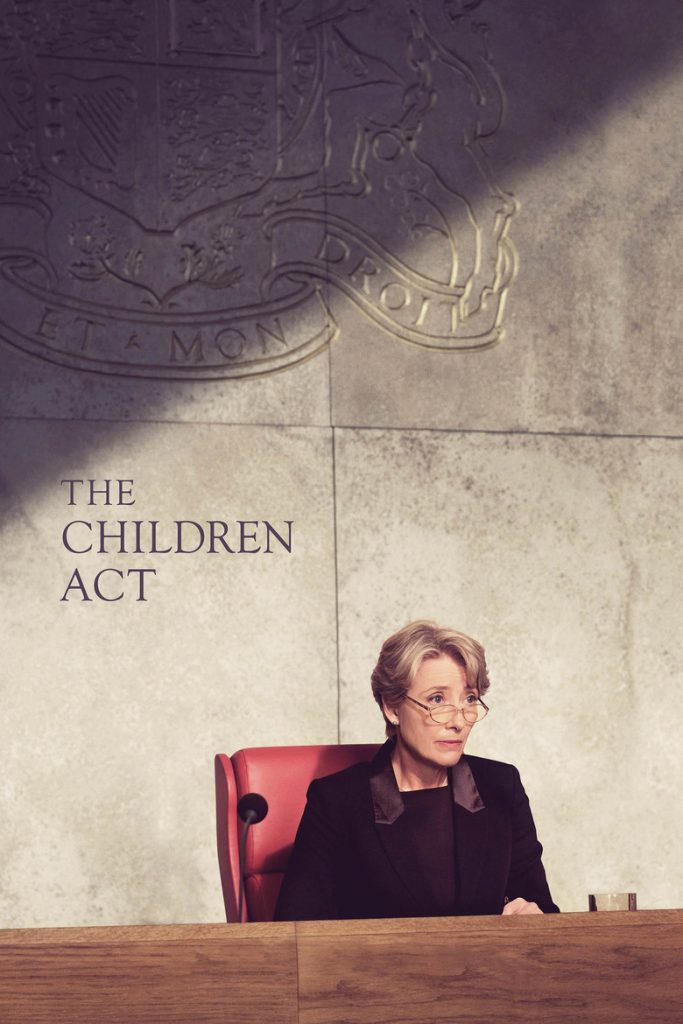
The Children Act is a 2018 British-American drama film directed by Richard Eyre, starring Emma Thompson, Stanley Tucci, and Fionn Whitehead. The story follows Fiona Maye, a High Court judge in London who is dealing with a personal marital crisis while simultaneously presiding over a critical legal case. She must decide whether to order a life-saving blood transfusion for a 17-year-old leukemia patient, Adam Henry, whose family refuses medical treatment due to their religious beliefs as Jehovah's Witnesses. The film explores complex themes of ethics, faith, law, and personal responsibility as Fiona navigates the emotional and moral dilemmas of the case while her own marriage unravels.
Parent Guide
A thoughtful, dialogue-driven drama exploring complex ethical and legal dilemmas surrounding medical treatment, religious freedom, and personal responsibility. Contains mature themes and emotional intensity but minimal graphic content.
Content breakdown
No physical violence. The peril is emotional and psychological - a teenager's life is at stake due to medical decisions. Hospital scenes show illness but not graphic medical procedures.
Themes of terminal illness, life-and-death decisions, and marital breakdown may be emotionally disturbing. Scenes of a seriously ill teenager and discussions about mortality could be upsetting for sensitive viewers.
Occasional mild profanity (e.g., 'hell', 'damn'). No strong or frequent swearing.
Brief discussions of marital infidelity and relationship problems. No explicit sexual content or nudity. Some emotional intimacy between married characters.
Social drinking in restaurants and at home. Characters drink wine with meals. No drunkenness or substance abuse depicted.
High emotional intensity throughout. Themes include terminal illness, ethical dilemmas, religious conflict, marital crisis, and life-or-death decisions. Characters experience significant emotional distress and moral anguish.
Parent tips
This film deals with mature themes including terminal illness, religious conflict, marital breakdown, and ethical dilemmas. It contains emotional intensity and discussions about life-and-death decisions. The R rating primarily reflects the serious adult themes rather than graphic content. Best suited for mature teenagers who can handle complex moral questions and emotional situations. Parents should be prepared to discuss medical ethics, religious freedom, and the legal system with older children who watch this film.
Parent chat guide
Parent follow-up questions
—
—
- What did you think about the judge's job?
- How did the sick boy feel about his situation?
- Why were the parents and doctors disagreeing?
- What ethical principles were in conflict in this case?
- How did Fiona's personal life affect her professional judgment?
- What are the legal and moral responsibilities in life-or-death medical decisions?
- How does religious freedom intersect with medical necessity?
- What did you think about the ending and its implications?
🎭 Story Kernel
The film explores the collision between legal rationality and human emotion, centered on Fiona Maye, a High Court judge whose personal life unravels as she presides over a case involving a teenage Jehovah's Witness refusing a blood transfusion. It's not just about a medical dilemma; it's a meditation on duty versus desire, as Fiona's sterile marriage mirrors the cold logic of the law, while the boy, Adam, represents raw, unfiltered humanity. Her decision to save him legally becomes a personal entanglement, revealing how professional detachment can mask deep-seated loneliness, ultimately questioning whether justice can ever truly account for the heart's complexities.
🎬 Visual Aesthetics
The visuals are steeped in a muted, almost clinical palette dominated by grays and blues, reflecting Fiona's world of order and restraint. Camera work is static and composed during courtroom scenes, emphasizing her control, but becomes handheld and intimate in moments with Adam, mirroring her emotional unraveling. Symbolism abounds: the recurring motif of water (rain, rivers) suggests cleansing and emotional currents beneath the surface, while the stark contrast between the sterile courthouse and the vibrant, chaotic outside world highlights her isolation. The lighting often casts shadows on faces, underscoring hidden vulnerabilities.
🔍 Details & Easter Eggs
💡 Behind the Scenes
Based on Ian McEwan's novel, the film stars Emma Thompson, who immersed herself in real court observations to portray Judge Fiona Maye authentically. Filming took place in London, with key scenes shot at the Royal Courts of Justice to add realism. Director Richard Eyre emphasized naturalistic performances, allowing Thompson and co-star Stanley Tucci to improvise in domestic scenes, lending rawness to their marital tensions. The piano pieces were performed by Thompson herself, adding a layer of personal artistry to her character's solitary moments.
Where to watch
Choose region:
- Netflix
- Netflix Standard with Ads
- Fandango at Home Free
- Amazon Video
- Apple TV Store
- Google Play Movies
- YouTube
- Fandango At Home
Trailer
Trailer playback is unavailable in your region.