
The Children’s Train (2024)
Story overview
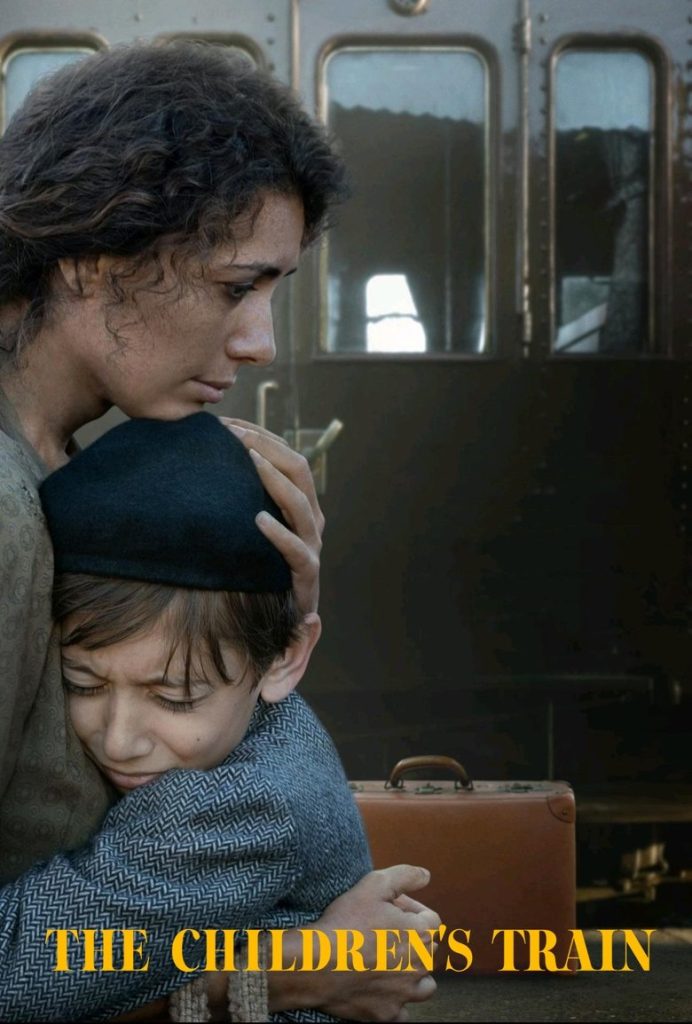
The Children's Train is a 2024 drama film that follows a group of children on a significant journey. While specific plot details aren't provided, the TV-14 rating suggests it deals with themes appropriate for teenage audiences. The film likely explores emotional growth, relationships, or historical events through the children's experiences. It appears to be a character-driven story focusing on youth perspectives.
Parent Guide
A drama about children's journeys with themes suitable for teenage audiences. The TV-14 rating suggests content may include mature elements requiring parental discretion.
Content breakdown
May include mild peril or tense situations appropriate to a children's journey narrative.
Could contain mildly disturbing themes or emotional situations related to separation or challenge.
May include mild language consistent with TV-14 rating.
No expected sexual content or nudity in a children-focused drama.
No expected substance use in a film about children's experiences.
Likely contains moderate emotional intensity dealing with separation, growth, or challenging situations.
Parent tips
This drama carries a TV-14 rating, indicating content may be unsuitable for children under 14 without parental guidance. Parents should consider their child's emotional maturity before viewing, as dramas often explore complex themes that younger viewers might find challenging. Previewing the film or watching together can help parents address any questions or concerns that arise during viewing.
Parent chat guide
Parent follow-up questions
- What was your favorite part of the movie?
- How did the children help each other?
- What colors or sounds did you notice?
- Was there anything that made you feel happy?
- What would you do if you were on a train adventure?
- What challenges did the children face on their journey?
- How did the characters show friendship in the movie?
- What did you learn about traveling from this film?
- Which character would you want to be friends with and why?
- What would you pack if you were going on a long train trip?
- What themes about growing up did you notice in the film?
- How did the children's perspectives change during their journey?
- What historical or cultural elements did you observe?
- How did the film show children taking responsibility?
- What would you do differently if you were in their situation?
- How does this film portray the transition from childhood to adolescence?
- What social or historical context might be influencing the children's experiences?
- How did the film handle complex emotions realistically?
- What commentary does the film make about youth agency and independence?
- How might this story relate to contemporary issues facing young people?
🎭 Story Kernel
At its heart, the film examines the 'Trains of Happiness' initiative, a post-WWII effort by the Italian Communist Party to relocate impoverished southern children to northern families. It moves beyond political history to explore the psychological toll of dual identity. Amerigo, the protagonist, represents a generation caught between the visceral, albeit destitute, love of a biological mother in Naples and the educational and material opportunities provided by his foster family in the North. The narrative expresses the agonizing trade-off of social mobility: the acquisition of a future at the expense of one's original sense of self. It is a meditation on the complexity of maternal love, which sometimes manifests as the painful act of letting go to ensure a child's survival in a fractured nation.
🎬 Visual Aesthetics
Director Cristina Comencini and cinematographer Italo Petriccione utilize a distinct color palette to differentiate Amerigo’s two worlds. Naples is depicted with earthy, cramped, and shadowed visuals, emphasizing the suffocating nature of poverty. In contrast, the Northern landscapes, though wintry and stark, are framed with more light and expansive compositions, symbolizing hope and new horizons. The train serves as a powerful visual metaphor for transition—a noisy, smoke-filled vessel that physically and emotionally severs the children from their past. Recurring close-ups on Amerigo’s face capture the silent internal conflict of a child trying to decode a world that has suddenly expanded, while the recurring motif of the violin visually bridges his raw talent with his eventual professional refinement and the life he left behind.
🔍 Details & Easter Eggs
💡 Behind the Scenes
The film is an adaptation of the internationally acclaimed 2019 novel by Viola Ardone. To maintain historical authenticity, the production utilized period-accurate trains and filmed on location in Naples and various northern Italian cities like Turin. The real-life 'Trains of Happiness' (I treni della felicità) were a massive logistical feat, moving approximately 70,000 children between 1945 and 1952. This initiative remains one of the most significant examples of civil solidarity in Italian history, and the film marks a major Netflix production aimed at bringing this specific cultural memory to a global audience.
Where to watch
Choose region:
- Netflix
- Netflix Standard with Ads
Trailer
Trailer playback is unavailable in your region.