
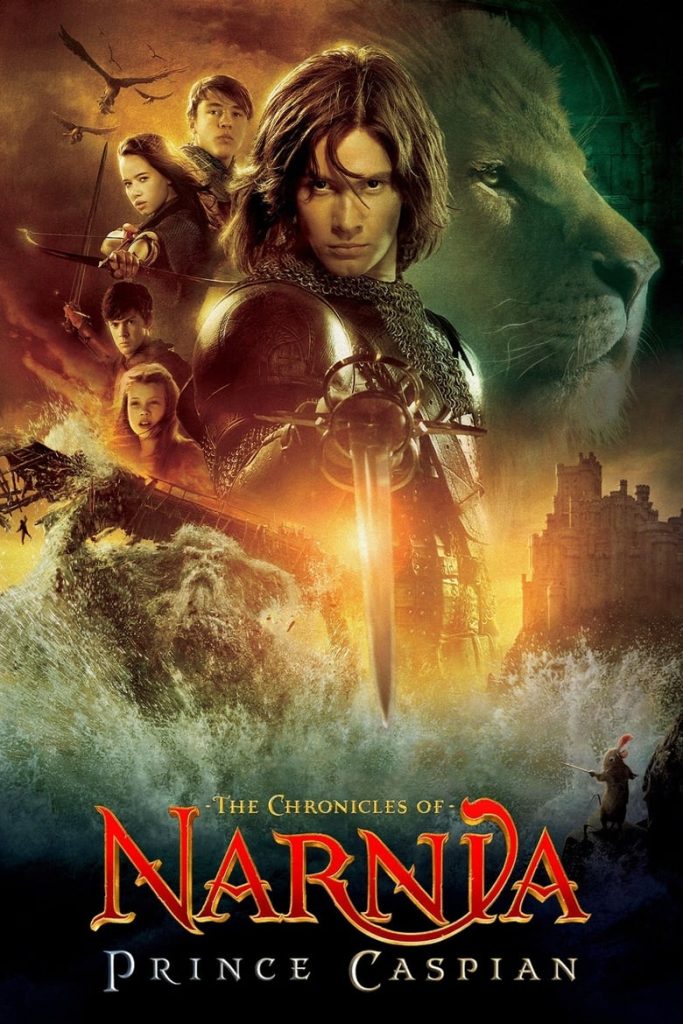
The Chronicles of Narnia: Prince Caspian (2008)
Story overview
One year after their previous adventures, the four Pevensie siblings return to Narnia to help Prince Caspian reclaim his throne from the tyrannical King Miraz. They join forces with talking animals, dwarves, and other Narnian creatures in a battle to restore peace and justice to the magical land.
Parent Guide
A fantasy adventure with epic battles and magical elements that's generally suitable for children ages 8 and up, though younger children may find some scenes intense.
Content breakdown
Contains fantasy battle sequences with swords, arrows, and magical combat. Characters are in peril throughout, including siege warfare, duels, and dangerous magical creatures. Some characters are injured or killed (though not graphically).
Features frightening fantasy creatures including minotaurs, werewolves, and other mythical beings. Intense battle scenes, dark magical moments, and suspenseful sequences where characters are in danger. The villain King Miraz is menacing.
Very mild language at most. Occasional insults like 'coward' or 'traitor' in the context of the story. No profanity.
No sexual content or nudity. Some mild romantic tension between Susan and Caspian is portrayed very innocently.
No substance use shown. Characters occasionally drink what appears to be wine or ale in medieval-style settings, but not emphasized.
Characters face separation from family, betrayal, loss, and the weight of leadership. Battle sequences create tension and excitement. Themes of faith, destiny, and sacrifice are emotionally resonant but not overwhelming.
Parent tips
This fantasy adventure features epic battles, magical creatures, and themes of courage and loyalty. While generally appropriate for family viewing, parents should be aware of intense battle sequences, perilous situations for characters, and some frightening fantasy creatures. The film explores themes of leadership, faith, and standing up against tyranny.
Parent chat guide
Parent follow-up questions
- Which animal character did you like best?
- What was your favorite magical part?
- How did the brothers and sisters help each other?
- Why was it important for Prince Caspian to become king?
- How did the characters show bravery?
- What lessons did the Pevensie children learn in Narnia?
- What makes a good leader according to the movie?
- How does the film show the importance of teamwork?
- What are the different ways characters showed courage?
- How does the film explore themes of faith and destiny?
- What parallels can you draw between Narnia's political conflict and real-world situations?
- How do the characters' personal journeys reflect coming-of-age themes?
🎭 Story Kernel
The film is fundamentally about the crisis of faith in a secular age. The Pevensies return to a Narnia where their own legend has been corrupted into myth, and Aslan is a distant memory. This drives the central conflict: Peter's prideful attempt to reclaim past glory through military force versus Lucy's quiet, persistent faith that Aslan will return. Caspian's arc mirrors this—he must choose between vengeance against his uncle and trusting in the 'old stories' to lead justly. The movie argues that belief isn't passive; it's the courageous choice to act on hope when all evidence suggests you're foolish, culminating in Lucy's solitary walk across the bridge to summon Aslan.
🎬 Visual Aesthetics
Director Andrew Adamson swaps the bright, storybook palette of 'The Lion, the Witch and the Wardrobe' for a grittier, earth-toned aesthetic. Narnia feels ancient and weathered. The camera lingers on ruins overgrown with moss, emphasizing time's erosion. Battle sequences are shot with a shaky, immersive realism—less choreographed fantasy, more chaotic medieval combat. Key symbolism lies in light: Lucy is often framed in soft, divine light when sensing Aslan, while the Telmarine castle is all cold stone and shadow. The resurrection of the river god is a visual crescendo, with water acting not as a cleansing force but as a terrifying, righteous weapon of nature reclaiming its dominion.
🔍 Details & Easter Eggs
💡 Behind the Scenes
Ben Barnes, who played Prince Caspian, wore colored contact lenses and spent hours in makeup to achieve his 'Telmarine' look, but also trained in horseback riding and sword-fighting for months. The massive battle scenes were filmed in New Zealand's pristine valleys, which later required extensive digital removal of modern roads and power lines to maintain the medieval illusion. A young actor named Simón Andreu was originally cast as Caspian but was replaced by Barnes early in production, leading to reshoots. The iconic stone table from the first film was repurposed and expanded to create the interior of Aslan's How, physically linking the two films' sacred spaces.
Where to watch
Choose region:
- Disney Plus
- Amazon Video
- Apple TV Store
- Google Play Movies
- YouTube
- Fandango At Home
Trailer
Trailer playback is unavailable in your region.