
The Color of Friendship (2000)
Story overview
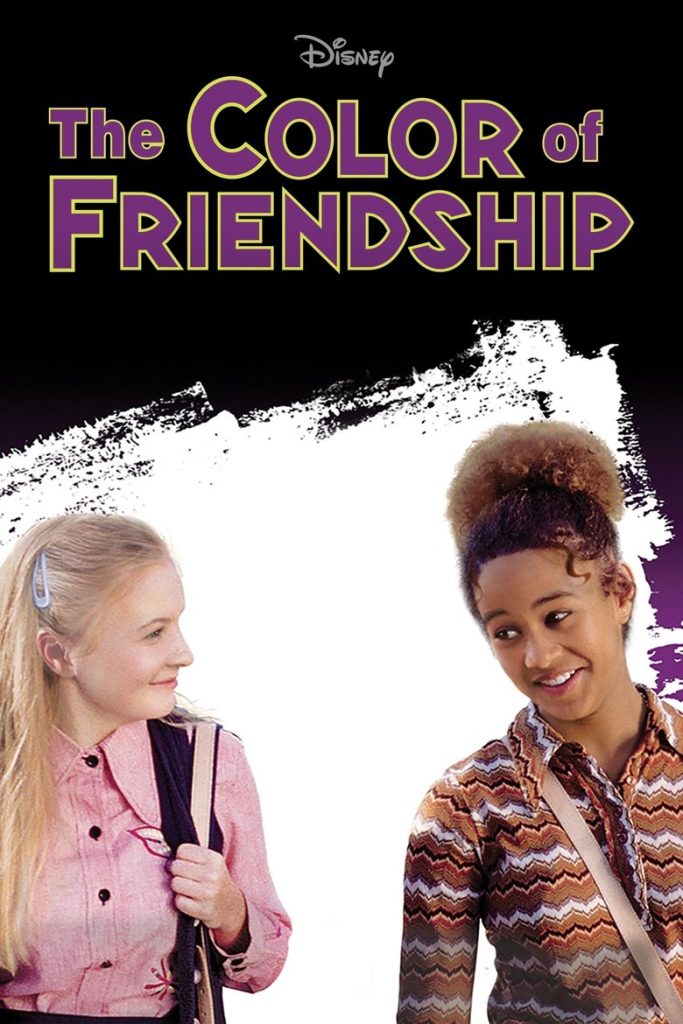
The Color of Friendship is a 2000 family drama TV movie based on true events. It follows Mahree Bok, a white South African teenager from a pro-apartheid family, who participates in a student exchange program and is placed with the Dellums family in Washington D.C. - an African American congressman's family. Both Mahree and the Dellums initially assume she'll be staying with a black South African family, leading to cultural clashes and misunderstandings. The film explores themes of racism, prejudice, friendship, and personal growth as Mahree confronts her own biases while living with a family who actively opposes the apartheid system her father enforces.
Parent Guide
Educational family drama addressing racism and prejudice with positive messages about friendship and personal growth. Suitable for children 8+ with parental guidance for historical context discussions.
Content breakdown
References to apartheid-era violence in South Africa (off-screen police actions, activist arrests). Tense moments when characters discuss racial tensions. No physical violence shown.
Emotional scenes involving racial prejudice and family conflict. Discussions of apartheid policies may be disturbing to sensitive viewers. No jump scares or horror elements.
No profanity or offensive language. Some period-appropriate racial terms in historical context.
No sexual content, nudity, or romantic scenes beyond typical teenage interactions.
No depiction of alcohol, drugs, or tobacco use.
Strong emotional themes around racism, family loyalty, and personal transformation. Characters experience shame, anger, and reconciliation. Uplifting resolution.
Parent tips
This film provides excellent opportunities to discuss: 1) Historical context of apartheid in South Africa, 2) How prejudice forms and how to overcome it, 3) Cultural differences and assumptions, 4) The power of friendship across racial divides, 5) How family beliefs can influence children's perspectives. Consider watching together with children 8+ and pausing to discuss key moments. The film shows positive character development and resolution.
Parent chat guide
Parent follow-up questions
- What colors did you see in the movie?
- Were the friends nice to each other?
- What was your favorite part?
- Why was Mahree surprised when she met the Dellums family?
- What does 'apartheid' mean?
- How did Mahree and Piper become friends?
- How did Mahree's father's job affect her beliefs?
- Why was it important that this story was based on true events?
- What would you do if you discovered your family's beliefs were unfair?
- How does the film handle the complexity of changing deeply held prejudices?
- What historical accuracy issues might exist in this dramatization?
- How do current racial issues compare to those shown in the film?
🎭 Story Kernel
At its core, 'The Color of Friendship' explores how prejudice is often rooted in ignorance rather than malice. The film isn't about changing apartheid policy—it's about changing one family's perception. Piper's journey from expecting a 'real African' to defending Mahree demonstrates how personal relationships can dismantle stereotypes faster than political speeches. What drives the characters isn't political ideology but human connection: Mahree seeks validation in a country that doesn't understand her background, while the Dellums family confronts their own assumptions about race and privilege. The film's power lies in showing how apartheid's poison extends beyond South Africa, infecting even well-meaning American liberals who think they're 'colorblind.'
🎬 Visual Aesthetics
The film employs a deliberate visual contrast between South Africa and Washington D.C. Early scenes in South Africa use warmer, golden tones that initially suggest nostalgia but gradually reveal themselves as representing the gilded cage of apartheid privilege. Washington scenes shift to cooler, more natural lighting that reflects uncomfortable truths. Notice how Mahree's conservative dresses clash visually with Piper's casual American wardrobe—this isn't just fashion but visual shorthand for cultural collision. The camera often frames characters through doorways and windows during tense conversations, emphasizing both physical and emotional barriers. Most strikingly, the film avoids dramatic camera movements, opting for steady shots that force viewers to sit with uncomfortable moments rather than providing cinematic escape.
🔍 Details & Easter Eggs
💡 Behind the Scenes
Based on a true story experienced by Congressman Ron Dellums' family, the film faced controversy for depicting a white South African as the vehicle for teaching about apartheid. Carl Lumbly, who plays Congressman Dellums, actually grew up in apartheid South Africa before emigrating. The film was shot in Toronto standing in for both Washington D.C. and South Africa. Disney Channel executives initially worried the subject matter was too heavy for their audience but were convinced by the true story's power. It became one of the most awarded Disney Channel Original Movies, winning an Emmy for Outstanding Children's Program and a Humanitas Prize.
Where to watch
Choose region:
- Disney Plus
- Amazon Video
- Google Play Movies
- YouTube
Trailer
Trailer playback is unavailable in your region.