
The Commandant’s Shadow (2024)
Story overview
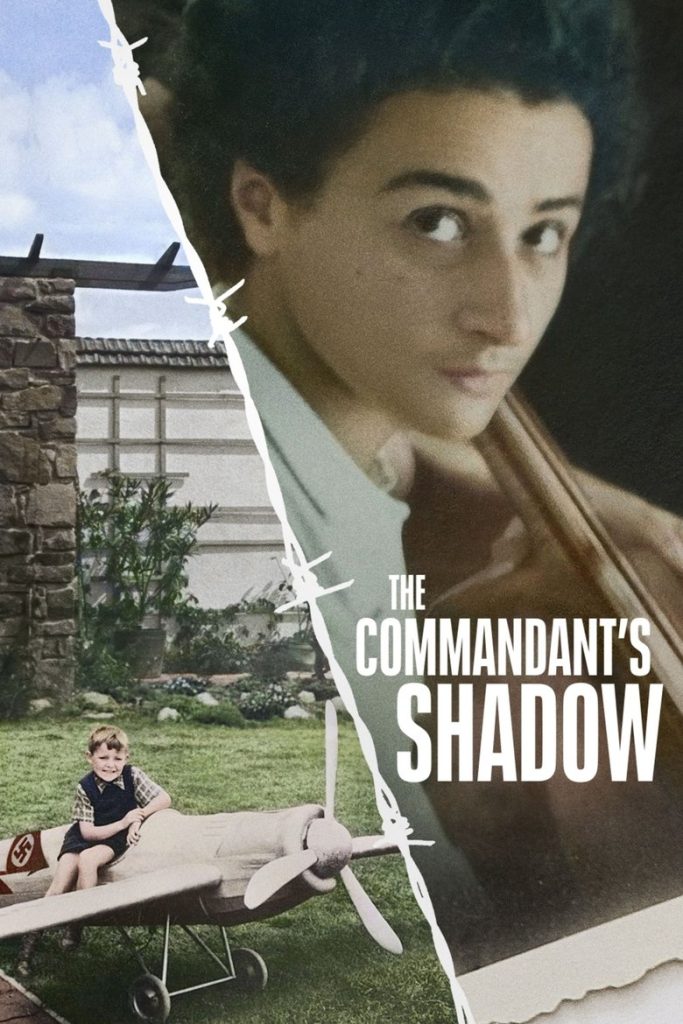
The Commandant's Shadow is a 2024 documentary exploring historical events related to war and command structures. As a history-focused film, it likely examines the impact of leadership decisions during conflict. The documentary format suggests it uses interviews, archival footage, or expert analysis to tell its story.
Parent Guide
A historical documentary about war and leadership suitable for mature middle schoolers and above with parental guidance.
Content breakdown
Likely includes discussions and depictions of wartime violence typical of historical documentaries.
Historical content about war may be emotionally disturbing or intense for sensitive viewers.
May include historical quotations or mature language appropriate to the subject matter.
No expected sexual content in a historical documentary of this nature.
No expected substance use content in a historical documentary.
Deals with serious historical events that may provoke strong emotional responses.
Parent tips
This documentary deals with war themes that may be emotionally challenging for younger viewers. Consider previewing the content or watching together to provide context and support. The PG-13 rating indicates some material may be inappropriate for children under 13, so use your judgment based on your child's maturity and sensitivity to historical conflict topics.
Parent chat guide
Parent follow-up questions
- What did you see in the movie?
- Were there any pictures that made you feel happy or sad?
- What do you think a leader does?
- Can you tell me about one person in the movie?
- What colors did you see in the movie?
- What was the main story the movie was trying to tell?
- How do you think the people in the movie felt?
- What did you learn about how people make decisions?
- Why do you think it's important to remember history?
- What questions do you have after watching?
- What historical period do you think this documentary covers?
- How does the film show different perspectives on events?
- What makes leadership challenging during difficult times?
- How do documentaries help us understand history better?
- What ethical questions does the film raise?
- How does the documentary approach historical accuracy and interpretation?
- What insights does the film provide about command responsibility?
- How does this historical examination relate to contemporary leadership challenges?
- What filmmaking techniques did the documentary use to convey its message?
- How might different audiences interpret this historical narrative differently?
🎭 Story Kernel
The film is a profound exploration of the 'banality of evil' seen through the generational trauma of both the victim and the perpetrator. It centers on Hans Jürgen Höss, who grew up in the shadow of the Auschwitz chimneys, and his journey from a state of sheltered ignorance to a face-to-face encounter with Anita Lasker-Wallfisch. The documentary moves beyond mere historical recounting to examine how silence functions as a domestic weapon. It asks whether reconciliation is possible when one side has spent a lifetime compartmentalizing the atrocities committed by their father. The narrative is driven by Kai Höss, Hans’s son, who acts as the moral conscience, pushing his father to acknowledge the horrific reality of his childhood home. It is a study of the burden of a name and the agonizing process of deconstructing a monstrous legacy.
🎬 Visual Aesthetics
Daniela Völker employs a restrained, observational aesthetic that avoids sensationalism, allowing the weight of the locations to speak. The cinematography often focuses on the physical proximity between the Höss family villa and the camp walls, visually reinforcing the impossible-to-ignore geography of the Holocaust. Archival footage is used not just for context, but as a jarring counterpoint to the mundane, modern-day domesticity of the subjects. The visual climax of the film—the meeting in Anita’s London living room—is shot with an intimate, almost claustrophobic focus, capturing every flicker of discomfort and grace. The use of natural light and quiet, static shots emphasizes the gravity of the dialogue, making the viewer a silent witness to a historic collision between two disparate legacies born from the same site of horror.
🔍 Details & Easter Eggs
💡 Behind the Scenes
The documentary was released shortly after Jonathan Glazer’s 'The Zone of Interest,' which also focuses on the Höss family. While Glazer’s film is a fictionalized psychological drama, 'The Commandant’s Shadow' provides the real-world historical resolution. Director Daniela Völker spent years gaining the trust of the Höss family, particularly Kai Höss, who is a pastor in the United States. The film includes rare footage of Rudolf Höss’s daughter, Brigitte, who lived in Northern Virginia for decades in relative anonymity, maintaining a complex and often defensive stance regarding her father’s actions until her death in 2023.
Where to watch
Choose region:
- HBO Max
- HBO Max Amazon Channel
Trailer
Trailer playback is unavailable in your region.