
The Commitments (1991)
Story overview
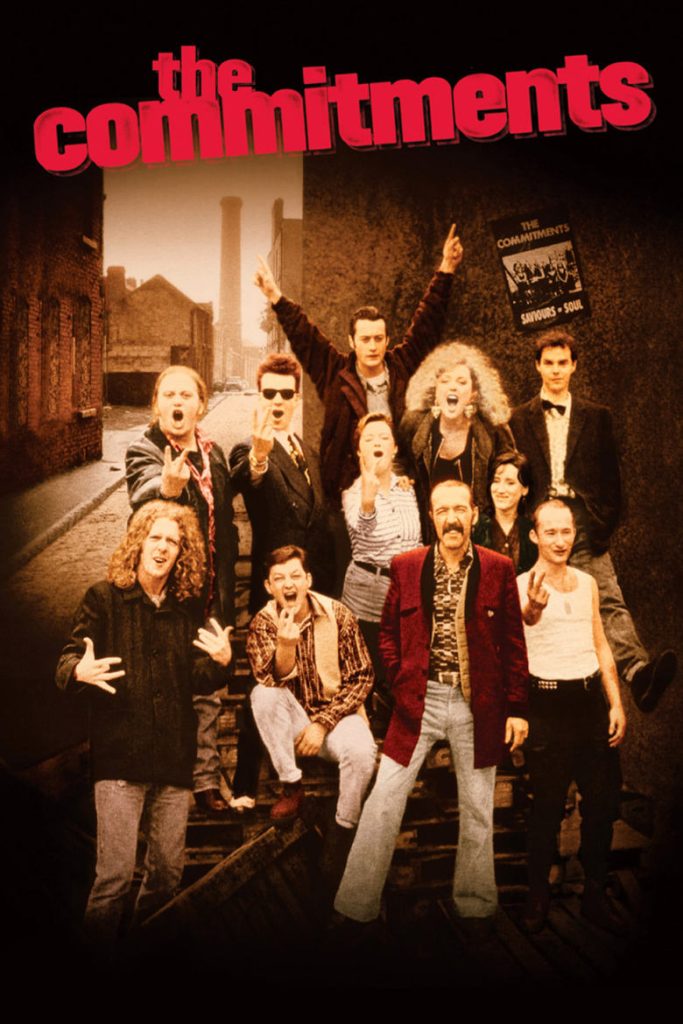
The Commitments is a 1991 comedy-drama film about a young Dublin music manager who forms a soul band with local working-class musicians. The movie follows their journey as they struggle to find success, dealing with personal conflicts and the challenges of the music industry. Through humor and heartfelt moments, it explores themes of ambition, friendship, and cultural identity in urban Ireland.
Parent Guide
This R-rated film contains strong language and mature themes suitable for teens and mature pre-teens with parental guidance.
Content breakdown
Some verbal arguments and confrontations between characters, but no physical violence.
No frightening or disturbing content.
Frequent strong profanity throughout the film, including multiple uses of strong expletives.
Some references to adult relationships and mild sexual innuendo, but no explicit content or nudity.
Some social drinking and smoking depicted in background scenes.
Characters experience frustration, disappointment, and interpersonal conflicts as they pursue their musical dreams.
Parent tips
This film is rated R primarily for strong language and some mature themes. Parents should be aware that it contains frequent profanity, including strong expletives, which may not be suitable for younger viewers. The movie also depicts working-class life with some references to adult situations and mild substance use, though these are not graphic. It's best suited for teens and mature pre-teens who can understand the context of the language and themes.
Parent chat guide
Parent follow-up questions
- What instruments did you see in the movie?
- Did you like the music in the film?
- How did the band members work together?
- What colors did you notice in the movie?
- How did the characters show they were friends?
- Why do you think the band members sometimes argued?
- What challenges did the band face in the movie?
- How did music help the characters express themselves?
- What does it mean to work as a team?
- What did you learn about Dublin from this film?
- How did the characters balance their dreams with reality?
- What role did music play in the characters' lives?
- How did the setting of Dublin influence the story?
- What conflicts arose within the band and how were they resolved?
- What does the film show about pursuing creative passions?
- How does the film portray working-class life in Dublin?
- What commentary does the movie make about the music industry?
- How do the characters' backgrounds influence their musical aspirations?
- What themes of identity and community are explored through the band?
- How does the film balance humor with more serious dramatic moments?
🎭 Story Kernel
The film isn't really about forming a soul band—it's about the fleeting, beautiful chaos of collective aspiration in a place that crushes dreams. Jimmy Rabbitte's drive isn't musical genius but a desperate need to prove Dublin's Northside has cultural worth beyond poverty. The band members are motivated by escape: from dead-end jobs, family expectations, and invisibility. Their explosive success isn't measured by fame but by the raw, temporary power they wield on stage. The inevitable collapse comes not from lack of talent, but because the very working-class solidarity that created them can't withstand individual ambition and old grudges. It's a tragedy disguised as a musical comedy—the soul they find is real, but too fragile to survive their own lives.
🎬 Visual Aesthetics
Director Alan Parker uses a gritty, documentary-like aesthetic—handheld cameras, natural lighting, and muted colors of 1990s Dublin's concrete and rain. This isn't a glamorous musical; the visual language is rooted in realism, making the bursts of performance energy feel stolen and urgent. The color palette is dominated by grays, browns, and washed-out tones, reflecting the economic depression, which makes the band's vibrant stage costumes (like the matching suits) pop as acts of defiance. Shots are often tight and crowded, emphasizing the claustrophobia of their tiny rehearsal spaces and the pressure-cooker dynamics. The film visually argues that soul music isn't an import but something that erupts from the cramped kitchens and pubs of Barrytown.
🔍 Details & Easter Eggs
💡 Behind the Scenes
Most of the young cast were unknown musicians, not actors, cast for their authentic musical talent. Glen Hansard (Outspan Foster) was a street busker; several others were in real bands. The audition process focused on musical performance over acting chops. The film was shot on location in Dublin's Northside, using real pubs and housing estates to capture the authentic atmosphere. Notably, the actors performed all the music live on set—there was no lip-syncing to pre-recorded tracks, which gives the concert scenes their raw, immediate energy. The Commitments' soundtrack became a global phenomenon, vastly outselling the film and introducing many to soul classics.
Where to watch
Choose region:
- Peacock Premium
- Peacock Premium Plus
- Shout! Factory Amazon Channel
- Pluto TV
- Shout! Factory TV
- Amazon Video
- Apple TV
- Google Play Movies
- YouTube
- Fandango At Home
Trailer
Trailer playback is unavailable in your region.