
The Da Vinci Code (2006)
Story overview
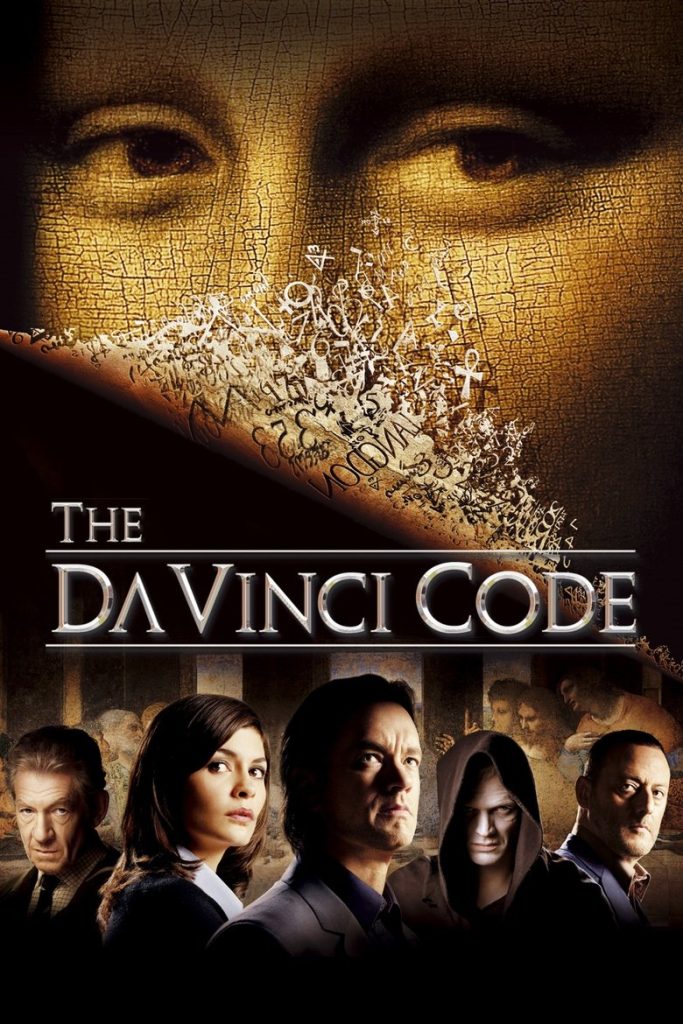
This 2006 thriller-mystery directed by Ron Howard follows Harvard symbologist Robert Langdon (Tom Hanks) as he investigates a murder at the Louvre Museum in Paris. Teaming with cryptologist Sophie Neveu (Audrey Tautou), they discover cryptic clues hidden in Leonardo da Vinci's paintings that unravel a centuries-old religious mystery involving secret societies and controversial theories about Christianity's history. The film explores themes of faith, history, and conspiracy while maintaining a suspenseful pace throughout its 149-minute runtime.
Parent Guide
A suspenseful mystery thriller with moderate violence and mature religious themes that may challenge younger viewers. Best for teens who can handle complex plots and philosophical questions.
Content breakdown
Several murder scenes (one shown with blood), gun violence including shootings, car chases with crashes, characters in perilous situations, self-flagellation scene with mild blood, and tense confrontations. Most violence isn't graphic but creates suspense.
Suspenseful atmosphere throughout, murder investigation themes, religious conspiracy elements that some may find unsettling, scenes in dark/crypt-like settings, and intense chase sequences. The religious controversy might disturb viewers with strong faith convictions.
Occasional mild profanity ('hell', 'damn'), religious exclamations, and tense dialogue. No strong or frequent swearing.
No sexual content or nudity. Brief romantic tension between main characters but no physical intimacy shown.
No substance use shown. Characters drink wine in social settings briefly.
Sustained suspense throughout, characters in constant danger, moral dilemmas about revealing secrets, and themes that challenge religious beliefs. The pacing creates consistent tension that might overwhelm sensitive viewers.
Parent tips
This PG-13 rated film contains moderate violence including murder scenes, gun violence, and perilous situations. The religious themes and conspiracy theories may challenge some families' beliefs. Consider watching together with teens to discuss historical accuracy versus fictional storytelling. The complex plot requires attention to follow, making it better suited for mature viewers who can handle suspense and philosophical questions.
Parent chat guide
Parent follow-up questions
—
—
- What did you think about the clues hidden in the paintings?
- Why do you think people keep secrets for so long?
- How did the characters work together to solve the mystery?
- How does the film's portrayal of religious history compare to what you've learned?
- What ethical questions does the movie raise about revealing secrets?
- Do you think the suspenseful scenes were effective or too intense?
- How does the film balance entertainment with controversial subject matter?
🎭 Story Kernel
The movie's core theme isn't religious revelation but the human desire for secret knowledge—the belief that truth must be hidden to be valuable. Characters are driven not by faith but by obsession: Silas by religious fanaticism, Teabing by academic arrogance, and Langdon by intellectual curiosity. The film critiques how institutions (church, academia) become gatekeepers of 'truth,' while suggesting that history itself is a narrative controlled by winners. Ultimately, it's less about Jesus' bloodline and more about our collective need for mysteries that make us feel like insiders.
🎬 Visual Aesthetics
Ron Howard employs a muted, desaturated palette of grays and browns, mirroring the dusty archives and ancient churches where the story unfolds. The camera often moves with deliberate slowness through corridors and crypts, creating a puzzle-box atmosphere. Action sequences are surprisingly restrained—more about intellectual pursuit than physical confrontation. Visual symbolism is literal: crosses, chalices, and Fibonacci sequences are presented as clues rather than metaphors. The film's aesthetic is that of a high-production-value scavenger hunt, where every frame feels like a page from an illuminated manuscript.
🔍 Details & Easter Eggs
💡 Behind the Scenes
Tom Hanks insisted on keeping Robert Langdon's iconic Harvard tweed jacket throughout filming, even in action scenes, to maintain academic authenticity. The Louvre scenes were filmed during actual museum closures, with crew members undergoing background checks to handle priceless art. Ian McKellen, playing Leigh Teabing, ad-libbed several of his character's most pompous historical monologues. The cryptex prop was so convincing that the production team had to clarify it wasn't a functional device after fans tried to recreate it.
Where to watch
Choose region:
- fuboTV
- Peacock Premium
- Paramount+ Amazon Channel
- Paramount+ Roku Premium Channel
- TNT
- TBS
- tru TV
- Peacock Premium Plus
- Paramount Plus Essential
- Paramount Plus Premium
- Amazon Video
- Apple TV Store
- Google Play Movies
- YouTube
- Fandango At Home
- Spectrum On Demand
Trailer
Trailer playback is unavailable in your region.