
The Deer Hunter (1978)
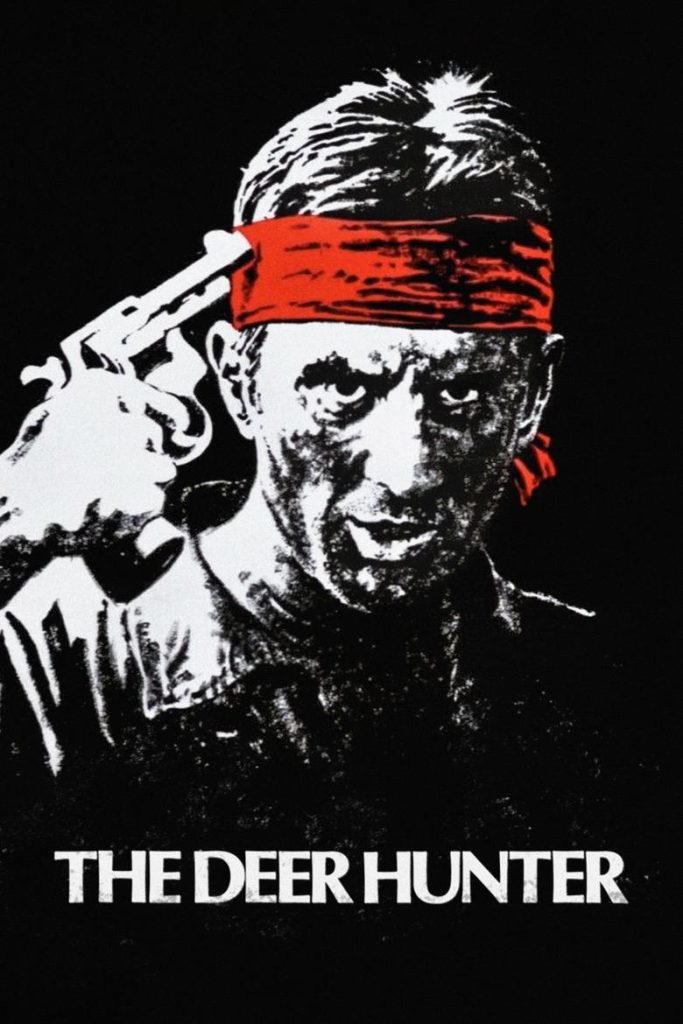
Story overview
The Deer Hunter follows a group of working-class friends from Pennsylvania who enlist to serve in the Vietnam War. Their experiences in combat are traumatic and chaotic, contrasting sharply with their expectations of noble service. The film explores how war profoundly changes these men and their relationships, particularly focusing on their struggles upon returning home.
Parent Guide
A powerful but intensely graphic war drama about the traumatic impact of combat on soldiers and their communities.
Content breakdown
Graphic and prolonged combat sequences, prisoner torture scenes, and depictions of battlefield injuries. Includes scenes of Russian roulette and other life-threatening situations.
Intense psychological trauma, emotional breakdowns, and disturbing depictions of wartime brutality. Scenes of captivity and torture may be particularly upsetting.
Strong language including profanity and wartime slang. Language reflects the stressful combat environment and emotional states of characters.
Some sexual content including references to relationships, brief scenes of intimacy, and partial nudity in non-sexual contexts like bathing.
Frequent and heavy drinking throughout the film, including celebratory drinking and alcohol used to cope with trauma. Some smoking depicted.
High emotional intensity throughout, dealing with trauma, loss, friendship under extreme stress, and the psychological impact of war.
Parent tips
This R-rated war drama contains intense and graphic depictions of combat violence, psychological trauma, and mature themes. The film's three-hour runtime includes extended sequences of wartime brutality, prisoner torture, and emotional breakdowns that may be deeply disturbing. Parents should be aware that the movie portrays the devastating impact of war on soldiers' mental health and relationships, with scenes of substance abuse, strong language, and sexual content.
Parent chat guide
Parent follow-up questions
- What did you notice about how the friends treated each other?
- How did the music make you feel during different parts?
- What colors or pictures do you remember most?
- Can you tell me about one happy moment you saw?
- What was something kind that happened in the movie?
- How do you think war changes people?
- What makes someone a good friend, even in hard times?
- Why do you think the soldiers felt differently after coming home?
- How did the movie show people helping each other?
- What did you learn about being brave from this story?
- How does the film show the difference between expectations and reality of war?
- What coping mechanisms did the characters use to deal with trauma?
- How did the community support or fail the returning soldiers?
- What does the film suggest about the lasting effects of traumatic experiences?
- How did the friendships evolve throughout the story?
- How does the film portray the psychological impact of combat on soldiers?
- What commentary does the movie make about patriotism versus the realities of war?
- How do the characters' pre-war lives contrast with their post-war experiences?
- What does the film suggest about resilience and recovery from trauma?
- How does the movie handle themes of loyalty and sacrifice in extreme circumstances?
🎭 Story Kernel
The Deer Hunter is not about Vietnam; it's about the disintegration of a specific American masculinity under trauma. The core theme is the violation of ritual. The pre-war Pennsylvania steel town life is built on sacred, repetitive rituals: the wedding, the deer hunt, the barroom singing. Vietnam shatters this order, replacing it with the grotesque, random ritual of Russian roulette. The film asks: when your foundational rituals of camaraderie, purpose, and control are replaced by a game of pure chance and mutual destruction, what self remains? The characters are driven by a desperate, often failed, attempt to re-establish the order and meaning of their old rituals, finding them now hollow or impossible.
🎬 Visual Aesthetics
Cimino's visual language creates a stark diptych. The first act in Pennsylvania is drenched in warm, golden-hued, almost mythic light—long, communal shots in the bar and church emphasize unity. The Vietnam sequences are a hellscape of sickly green, stark white, and violent red, using claustrophobic close-ups and chaotic handheld camerawork. The most powerful symbolism is the juxtaposition of the two 'hunting' scenes: the ordered, respectful deer hunt in the misty mountains versus the chaotic, predatory 'hunting' of prisoners in the river. The camera often lingers on faces in extreme close-up during the roulette scenes, making the audience complicit in the intimate horror.
🔍 Details & Easter Eggs
💡 Behind the Scenes
The infamous Russian roulette scenes were so psychologically intense that Robert De Niro, Christopher Walken, and John Savage reportedly did not speak to each other off-camera during that filming period. To achieve the authentic, exhausted look of the prisoners, the actors were allegedly deprived of sleep. The wedding sequence, which runs nearly an hour, was filmed in a real Cleveland community with non-actors, contributing to its documentary-like feel. Meryl Streep's role was significantly expanded during filming when Cimino saw her powerful, silent reactions to the male actors' performances.
Where to watch
Choose region:
- MGM Plus
- Amazon Video
- Apple TV
- Google Play Movies
- YouTube
- Fandango At Home
- Spectrum On Demand
Trailer
Trailer playback is unavailable in your region.