
The Dream Team (2012)
Story overview
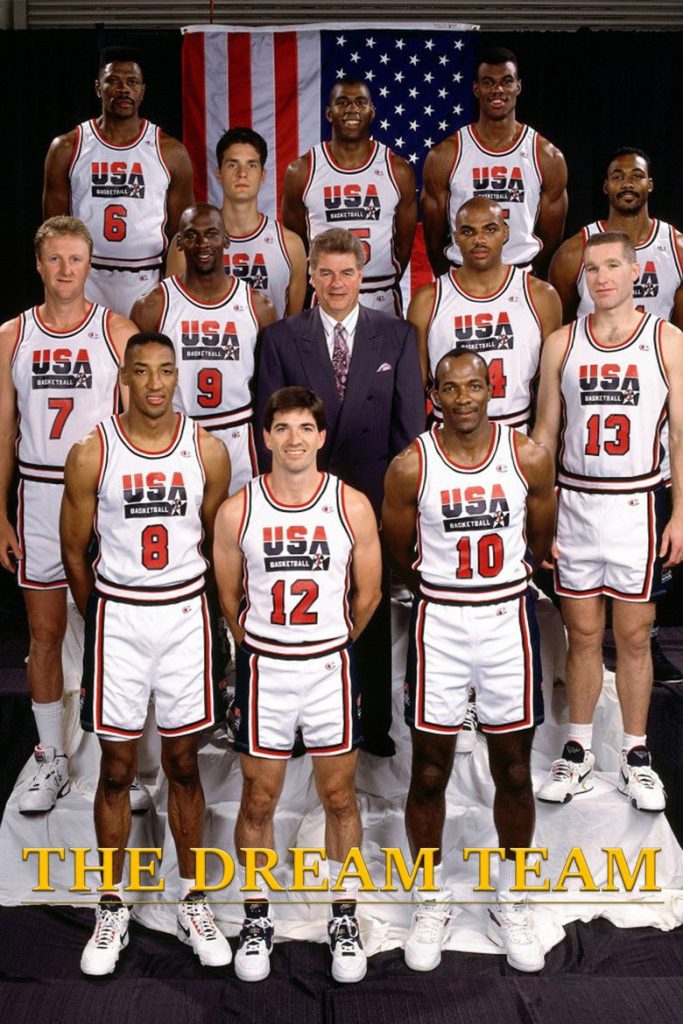
This documentary chronicles the legendary 1992 U.S. Olympic basketball team, known as the Dream Team, which featured iconic NBA stars like Michael Jordan, Larry Bird, and Magic Johnson. It explores their journey to the Barcelona Olympics, showcasing their dominance on the court and the global excitement they generated, with a focus on sports history and teamwork.
Parent Guide
A family-friendly documentary about a historic sports team, with no objectionable content. Ideal for basketball fans and those interested in sports history.
Content breakdown
No violence or peril depicted; it focuses on basketball games and interviews without any aggressive or dangerous scenes.
Nothing scary or disturbing; the content is uplifting and centered on athletic achievement.
No offensive language noted; the dialogue is clean and suitable for all ages.
No sexual content or nudity; the film is strictly about basketball and sportsmanship.
No depiction of substance use; the focus is on sports and competition.
Mild emotional intensity from the excitement of basketball games and the pride of representing the USA, but nothing overwhelming.
Parent tips
This film is suitable for most ages as a sports documentary. It highlights positive themes like teamwork, excellence, and sportsmanship. There is no concerning content, but younger children might find the runtime long or the basketball-focused discussion less engaging. Consider watching together to discuss the historical significance.
Parent chat guide
Parent follow-up questions
- Did you like seeing the basketball players?
- What was your favorite part of the movie?
- Can you name a color from the uniforms?
- What did you learn about the Dream Team?
- Why do you think they were so good at basketball?
- How do you think the players worked together as a team?
- How did the Dream Team change basketball internationally?
- What challenges might they have faced in the Olympics?
- Why is this team still famous today?
- Discuss the cultural impact of the Dream Team in the 1990s.
- How did the inclusion of professional athletes affect the Olympics?
- What can modern sports teams learn from the Dream Team's legacy?
🎭 Story Kernel
The film's core theme explores the paradox of sanity in an insane world. Four psychiatric patients—Billy's manic energy, Jack's repressed anger, Albert's obsessive-compulsive order, and Henry's catatonic withdrawal—function more effectively in the 'real world' than the supposedly sane characters. Their journey isn't about becoming 'normal' but about exposing how society's definitions of sanity are arbitrary and often hypocritical. The movie asks: Who's truly crazy—the men who acknowledge their mental states, or the corrupt psychiatrist and murderous police who hide their pathologies behind professional facades? Their escape becomes a reverse therapy session for everyone they encounter.
🎬 Visual Aesthetics
The visual language creates a deliberate contrast between institutional sterility and chaotic New York. The hospital scenes use muted blues and grays with static, symmetrical shots that mirror the patients' constrained lives. Once they escape, the palette explodes into the vibrant, messy colors of 1980s New York. Camera work becomes handheld and kinetic during their adventures, visually representing their liberation. The baseball stadium sequence uses wide shots to emphasize their smallness in a massive public space, then tight close-ups during the climax to show their growing competence. The visual journey mirrors their psychological one—from confined to expansive.
🔍 Details & Easter Eggs
💡 Behind the Scenes
Michael Keaton reportedly improvised many of Billy's manic speeches, particularly the baseball commentary scenes. The Yankee Stadium sequences were filmed during actual games with hidden cameras to capture authentic crowd reactions. Screenwriter Jon Connolly drew from his experiences visiting psychiatric facilities, wanting to portray patients as individuals rather than stereotypes. The film's original ending was darker, with Henry not recovering from his catatonia, but test audiences responded poorly, leading to the more hopeful final cut.
Where to watch
Choose region:
- Peacock Premium
- Peacock Premium Plus