
The Emperor’s New Groove (2000)
Story overview
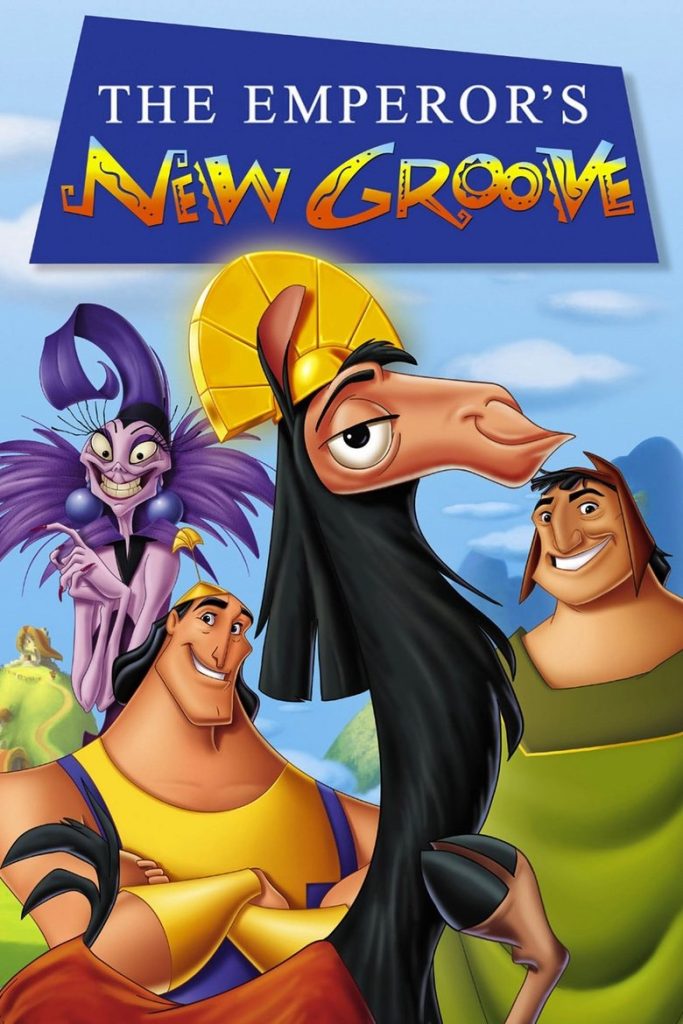
The Emperor's New Groove is a 2000 animated comedy about a self-centered emperor named Kuzco who is magically transformed into a llama by his former advisor Yzma. To regain his throne and human form, he must rely on the help of Pacha, a kind-hearted llama herder who represents everything Kuzco initially disregards. Their journey together becomes a humorous adventure filled with slapstick comedy and unlikely friendship as they navigate various challenges while being pursued by Yzma and her dim-witted henchman Kronk. The film combines physical comedy with character growth as Kuzco learns important lessons about humility and compassion.
Parent Guide
A family-friendly animated comedy with mild cartoon peril and positive messages about friendship and personal growth.
Content breakdown
Cartoonish slapstick comedy with falls, chases, and mild peril. Characters face comical threats but no real danger.
Mildly startling moments when characters transform or face exaggerated villains, but presented humorously.
No offensive language; mild insults like 'selfish' and 'jerk' in context of character development.
No sexual content or nudity; characters wear typical animated film costumes.
No substance use depicted; characters drink non-alcoholic beverages in social settings.
Mild emotional moments related to friendship and character growth; primarily comedic tone throughout.
Parent tips
This G-rated animated film is generally appropriate for most children, featuring primarily cartoonish humor and mild peril. The comedy relies heavily on slapstick and exaggerated situations rather than sophisticated dialogue, making it accessible to younger viewers. Parents should be aware that the main character starts as quite selfish and arrogant, which could prompt discussions about kindness and empathy. The transformation of a human into an animal might be momentarily startling for very young children, but it's presented in a humorous context without graphic details.
Parent chat guide
Parent follow-up questions
- What was your favorite funny part in the movie?
- How did Kuzco change from the beginning to the end?
- What makes someone a good friend?
- Why was it important for Kuzco and Pacha to work together?
- What would you do if you turned into an animal?
- Why do you think Kuzco was so selfish at the beginning?
- What did Kuzco learn from his adventure with Pacha?
- How did Pacha show patience even when Kuzco was difficult?
- What makes teamwork important when facing challenges?
- How can we help people who are having a hard time?
- What does the movie show about how power can change people?
- How does the humor help tell the story without being mean-spirited?
- What qualities make Pacha a good role model?
- How do the characters' different perspectives create both conflict and growth?
- What does the movie suggest about second chances and redemption?
- How does the film use comedy to address themes of arrogance and humility?
- What commentary does the movie make about leadership and responsibility?
- How do the character archetypes (selfish ruler, wise commoner, villainous advisor) serve the story?
- What does the transformation metaphor represent about personal change?
- How does the film balance entertainment with meaningful messages?
🎭 Story Kernel
At its core, 'The Emperor's New Groove' explores the transformative power of empathy through forced perspective reversal. Emperor Kuzco's journey from self-absorbed ruler to compassionate friend isn't just about becoming a llama—it's about shedding the metaphorical 'emperor's clothes' of entitlement. The film cleverly uses body-swap tropes to demonstrate that true leadership requires understanding others' experiences firsthand. Kuzco's initial motivation is pure self-preservation, but his gradual realization that Pacha's family and village matter becomes the emotional engine. The climax isn't about reclaiming the throne, but about choosing friendship over power—a subtle critique of traditional hero narratives.
🎬 Visual Aesthetics
The film's visual language employs exaggerated squash-and-stretch animation reminiscent of classic Warner Bros. cartoons, creating a unique comedic rhythm distinct from Disney's usual fairy-tale aesthetic. Earthy browns and greens dominate Pacha's village, contrasting sharply with Kuzco's gold-and-purple palace, visually reinforcing the class divide. Camera angles frequently position Kuzco (as llama) at ground level, literally lowering his perspective. The action sequences use rapid-fire cuts and visual gags rather than epic battles, emphasizing comedy over grandeur. Symbolism appears in subtle ways—Kuzco's transformation into a llama mirrors his stubborn, spitting personality before his emotional growth.
🔍 Details & Easter Eggs
💡 Behind the Scenes
Originally conceived as an Incan epic titled 'Kingdom of the Sun' with songs by Sting, the film underwent massive rewrites after test screenings failed. The radical shift to comedy resulted in Eartha Kitt's iconic Yzma performance—she recorded many lines in single takes. David Spade ad-libbed numerous sarcastic remarks that stayed in the final cut. The production team studied actual llama behavior for Kuzco's movements, blending animal realism with human expressions. This troubled production created one of Disney's most uniquely anarchic films.
Where to watch
Choose region:
- Disney Plus
- Amazon Video
- Apple TV
- Google Play Movies
- YouTube
- Fandango At Home
Trailer
Trailer playback is unavailable in your region.