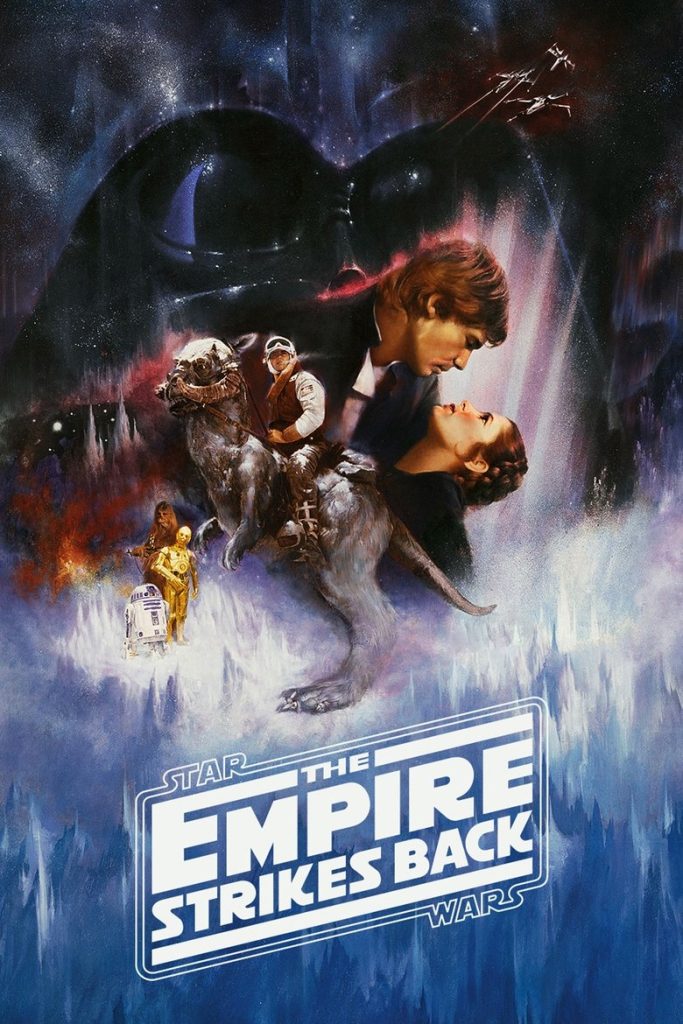
The Empire Strikes Back (1980)
Story overview
In this second chapter of the Star Wars saga, Luke Skywalker trains with Jedi Master Yoda to develop his abilities while the Rebel Alliance faces relentless pursuit from the Galactic Empire. Han Solo and Princess Leia navigate dangerous situations as they try to evade capture, with Darth Vader determined to turn Luke to the dark side. The film explores themes of friendship, sacrifice, and the struggle between good and evil through its space adventure setting.
Parent Guide
A classic space adventure with moderate action violence and some intense emotional moments that may require explanation for younger viewers.
Content breakdown
Laser gun battles, lightsaber fights, space combat, characters in perilous situations including capture and physical threats, but without graphic injury details.
Some frightening creatures and environments, intense confrontations, a shocking family revelation, and darker themes than the first film.
Occasional mild exclamations and space adventure-style dialogue without strong profanity.
No sexual content or nudity; includes some romantic tension expressed through dialogue.
No substance use depicted; characters occasionally drink in social settings typical of the space adventure genre.
Characters face betrayal, difficult choices, family conflicts, and serious consequences of their actions with emotional weight.
Parent tips
This film contains moderate action violence including laser battles, lightsaber duels, and space combat scenes that might be intense for younger viewers. Some scenes involve perilous situations where characters face capture, betrayal, and physical threats that could be frightening. The film's darker tone compared to the first Star Wars movie includes more serious themes about family relationships and moral choices that may require explanation for younger children.
Parents should be aware that the film features some frightening creatures and environments, including a swamp planet with strange beings and a frozen landscape with dangerous creatures. The emotional intensity increases as characters face difficult decisions and confrontations, with one particularly shocking revelation about family relationships that might be confusing or upsetting for some children. The PG rating reflects these elements that may require parental guidance.
Parent chat guide
During viewing, be available to answer questions about the action scenes or explain why characters make certain decisions. If children seem frightened during intense moments, you can pause to discuss what's happening and reassure them about the fictional nature of the story. Pay attention to their reactions during scenes involving the dark side of the Force or family revelations.
After watching, ask what they thought about the characters' choices and how they handled challenges. Discuss the difference between using abilities for good versus selfish purposes, and how friendships helped characters through difficult situations. You might explore what they learned about perseverance and making ethical decisions even when it's hard.
Parent follow-up questions
- Which character did you like the most?
- What was your favorite spaceship or creature?
- How did the friends help each other in the movie?
- What made you laugh or smile?
- Was there anything that surprised you?
- Why do you think Luke wanted to become a Jedi?
- How did Han and Leia work together when they were in trouble?
- What does it mean to be on the 'dark side'?
- What would you do if you had special abilities like the Force?
- How did the characters show bravery?
- What makes someone a good leader like Princess Leia?
- Why is training and practice important, like Luke's Jedi training?
- How do characters balance friendship with doing what's right?
- What does the movie show about facing fears?
- How do the different planets and environments affect the story?
- How does the film explore the theme of destiny versus choice?
- What ethical dilemmas do characters face in their relationships?
- How does the concept of the Force represent different approaches to power?
- What makes the villain compelling beyond just being 'evil'?
- How does the film handle themes of hope in difficult circumstances?
🎭 Story Kernel
At its core, 'The Empire Strikes Back' is a film about failure as the necessary crucible for growth. Unlike the triumphant hero's journey of 'A New Hope,' this installment systematically dismantles the Rebel Alliance's victory and Luke Skywalker's confidence. Every character experiences profound defeat: Han is captured, Leia's leadership fails to protect her fleet, and Luke's impulsive rush to save his friends results in the loss of his hand and his naïve belief in his own readiness. The driving force isn't a quest for a MacGuffin, but a desperate struggle for survival that forces the heroes to confront their limitations. The iconic 'I am your father' revelation isn't just a plot twist; it's the ultimate narrative failure, shattering Luke's identity and reframing his entire journey as a battle against his own bloodline.
🎬 Visual Aesthetics
The film's visual language masterfully conveys scale, dread, and intimacy. Director Irvin Kershner and cinematographer Peter Suschitzky employ a darker, more atmospheric palette—the sterile whites of Hoth, the oppressive grays of Cloud City, and the murky greens of Dagobah create a tangible sense of unease. The camera work is more deliberate and patient, lingering on character reactions, like the haunting close-up of Luke's face as Vader reveals their kinship. The action is grittier and more physically consequential; the Hoth battle shows the Rebellion as overwhelmed underdogs, while Luke's duel with Vader is less a flashy swordfight and more a brutal, one-sided beating in a cold, industrial setting, emphasizing the Dark Lord's terrifying power.
🔍 Details & Easter Eggs
💡 Behind the Scenes
The film's iconic settings were grueling to shoot. The Hoth sequences were filmed on a glacier in Norway, where temperatures dropped so low that the cameras frequently jammed. The Dagobah swamp set was built at Elstree Studios and was notoriously humid and filled with real decomposing plant matter, creating an authentic, foul smell that actors had to endure. Composer John Williams wrote 'The Imperial March' for this film, creating what is arguably cinema's most recognizable villain theme. Notably, director Irvin Kershner was initially hesitant to take the job, feeling daunted by following George Lucas, but was persuaded by the opportunity to focus on deeper character development.
Where to watch
Choose region:
- Disney Plus
- Amazon Video
- Apple TV
- Google Play Movies
- YouTube
- Fandango At Home
Trailer
Trailer playback is unavailable in your region.