
The End (2004)
Story overview
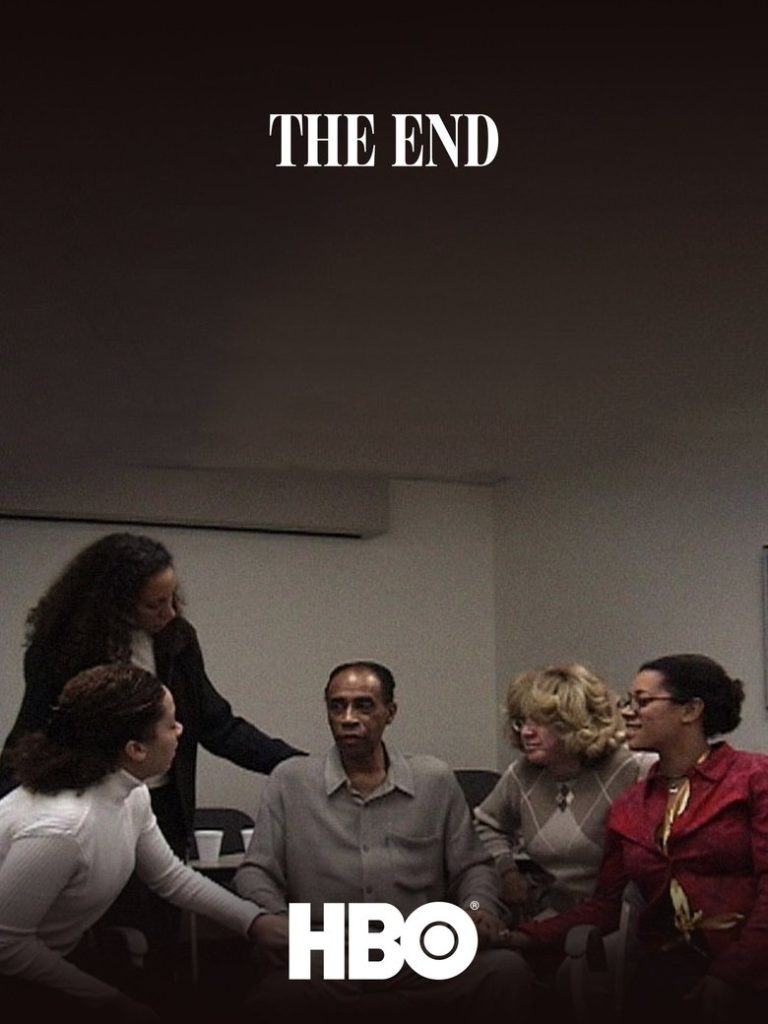
This documentary explores the final stages of life through the experiences of five hospice patients and their families, offering a sensitive and realistic look at end-of-life care, grief, and the emotional challenges surrounding death.
Parent Guide
A thoughtful documentary about hospice care and the end of life, suitable for mature discussions with older children and teens.
Content breakdown
No violence or peril depicted; the focus is on medical care and emotional support.
Scenes of terminally ill patients and discussions of death may be emotionally disturbing, especially for sensitive viewers.
No offensive language noted; the tone is respectful and documentary-style.
No sexual content or nudity.
No substance use depicted.
High emotional intensity due to themes of terminal illness, grief, and family dynamics surrounding death.
Parent tips
This film deals directly with death and dying, which may be emotionally intense for younger viewers. Consider watching it with children to provide context and support, and be prepared to discuss themes of mortality, loss, and family caregiving.
Parent chat guide
Parent follow-up questions
—
- What does it mean to be in hospice?
- How do families help when someone is very sick?
- What are some ways we show love to people who are ill?
- How does this documentary show different ways people cope with grief?
- What role do healthcare workers play in end-of-life care?
- Why is it important to talk about death as a natural part of life?
- How does the film portray the ethical and emotional aspects of end-of-life decisions?
- What insights does it offer about the healthcare system's approach to terminal illness?
- How can media representations of death influence societal attitudes toward mortality?
🎭 Story Kernel
At its core, 'The End' is less about the literal apocalypse and more about the quiet, personal endings we all face. The protagonist's journey isn't to save the world, but to reconcile with his own life's narrative before the curtain falls. The film posits that our greatest fear isn't extinction, but insignificance—the terror that our lives might not add up to a coherent story. What drives the characters isn't heroism, but a desperate need for meaning-making, for one final edit to their life's script before the credits roll. The collapsing city around them merely externalizes the internal decay they've been ignoring.
🎬 Visual Aesthetics
The film employs a decaying color palette that progresses from warm, saturated tones in flashbacks to increasingly desaturated grays and blues as the end approaches. Cinematographer uses shallow depth of field to isolate characters against crumbling backgrounds, emphasizing their psychological isolation. Long, unbroken takes during emotional confrontations create a visceral sense of real-time unraveling. The most striking visual motif is the recurring shot of abandoned everyday objects—a child's bicycle, a coffee cup, a book—slowly being reclaimed by dust and vines, serving as silent elegies for normalcy.
🔍 Details & Easter Eggs
💡 Behind the Scenes
Director shot the entire film in chronological order to mirror the characters' deteriorating reality. The lead actor actually fasted for the final week of shooting to achieve the gaunt, hollowed appearance. Most exterior scenes were filmed in Detroit's abandoned Packard Plant, with minimal set dressing. The haunting score was created using only instruments found decaying in the locations—a rusted piano, broken violins—recorded on-site. Supporting cast members weren't told the film's complete plot, receiving only their scene's context to maintain genuine confusion and fear.
Where to watch
Choose region:
- HBO Max
- HBO Max Amazon Channel
- Cineverse
- Tubi TV
- Amazon Video
- Google Play Movies
- YouTube
- Fandango At Home