
The Endless Trench (2019)
Story overview
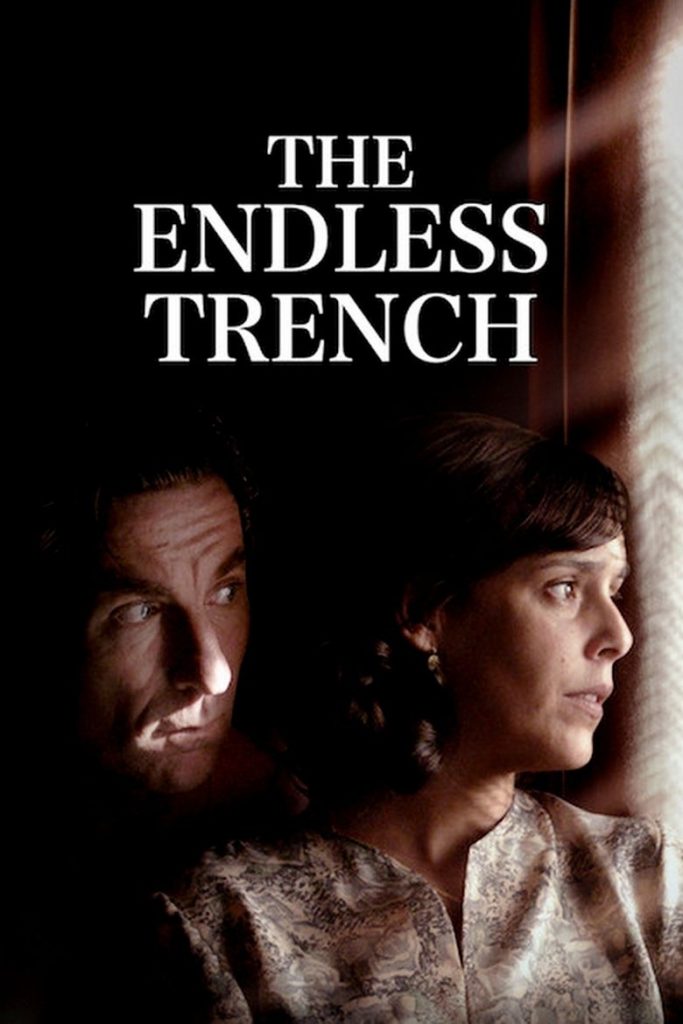
Set in a small village in Andalusia, Spain, in 1936, 'The Endless Trench' follows newlyweds Higinio and Rosa as the Spanish Civil War erupts. Fearing reprisals from rebel forces, Higinio hides in a hole dug beneath their house, initially intended as a temporary refuge but which becomes his prolonged sanctuary. The film explores themes of fear, survival, love, and the psychological toll of confinement during wartime, spanning years as Higinio remains hidden while Rosa navigates the dangers outside.
Parent Guide
A tense, emotional drama set during the Spanish Civil War, focusing on a man hiding in his home to avoid political violence. It contains strong emotional intensity and mature themes, with minimal explicit content but significant psychological peril. Recommended for mature audiences due to its historical context and slow-burn tension.
Content breakdown
No graphic violence is shown on-screen, but there are intense scenes of peril, including threats of execution, gunshots heard off-screen, and characters in constant fear for their lives. The tension is psychological rather than visual.
The film is disturbing due to its themes of war, confinement, and psychological stress. Scenes of hiding in dark, cramped spaces and the constant threat of discovery create a claustrophobic and anxious atmosphere. It may be unsettling for sensitive viewers.
Minimal strong language; occasional use of mild profanity in Spanish (subtitled in English). No frequent or aggressive cursing.
Implied sexual content between married characters, with no explicit nudity or graphic scenes. Focus is on emotional intimacy rather than physical depiction.
No depiction of substance use, smoking, or drinking.
High emotional intensity throughout, driven by fear, love, isolation, and the strain of prolonged hiding. Characters experience anxiety, despair, and resilience, which may be overwhelming for younger viewers.
Parent tips
This historical drama-thriller deals with mature themes of war, confinement, and psychological stress. It is rated TV-MA for intense emotional content and thematic elements. Best suited for older teens and adults due to its slow-paced, tension-driven narrative and complex historical context. Parents should be prepared to discuss the Spanish Civil War, the impact of fear on relationships, and the ethical dilemmas of survival.
Parent chat guide
Parent follow-up questions
—
- What did Higinio do to stay safe?
- How did Rosa help Higinio?
- What is a hideout?
- Why was Higinio afraid of the rebel faction?
- How did the war affect their daily life?
- What does 'confinement' mean in this story?
- What psychological effects did hiding have on Higinio and Rosa?
- How does the film portray the impact of war on ordinary people?
- What ethical choices did the characters face, and were they justified?
🎭 Story Kernel
The Endless Trench is less about the Spanish Civil War's political terror and more about the psychological architecture of fear. It explores how survival can become a form of self-imprisonment. Higinio's 30-year hiding isn't driven by ideology but by primal terror—a fear so consuming it rewires his entire existence. The real conflict isn't between Republicans and Nationalists, but between the human need for freedom and the paralyzing safety of confinement. Rosa's complicity reveals how love can enable pathology, making their home a shared delusion where protection becomes oppression. The film asks: when does hiding become living, and when does living become another form of hiding?
🎬 Visual Aesthetics
Directors Aitor Arregi and Jon Garaño masterfully use claustrophobic framing to mirror Higinio's mental state. The camera rarely leaves the house, creating a visual prison for the audience. Warm interior lighting contrasts with the cold, dangerous world outside, making the home feel both safe and suffocating. Time's passage is shown through subtle changes—wallpaper fading, furniture aging, Rosa's hair graying—while Higinio remains frozen. The trench metaphor becomes visual through low-angle shots that make ceilings feel like earth pressing down. When Higinio finally emerges, the wide shots of the Basque countryside feel both liberating and terrifying in their vastness.
🔍 Details & Easter Eggs
💡 Behind the Scenes
Antonio de la Torre (Higinio) and Belén Cuesta (Rosa) underwent psychological preparation to portray the couple's deteriorating mental state over three decades. The film was shot chronologically to help actors naturally age into their roles. Most interior scenes were filmed in an actual early-20th-century Basque farmhouse to maintain authenticity. Director Jon Garaño researched numerous real-life 'moles'—people who hid for decades after the Civil War—discovering cases where people remained hidden into the 1970s, which informed the film's psychological realism.
Where to watch
Choose region:
- Netflix
- Netflix Standard with Ads
Trailer
Trailer playback is unavailable in your region.