
The Fab Five (2011)
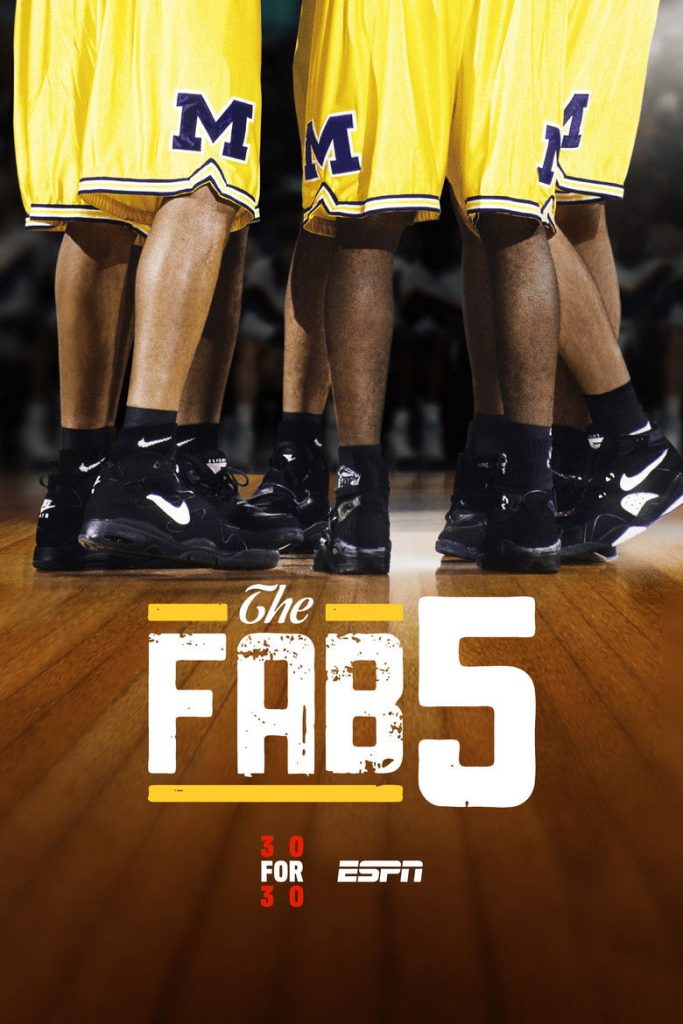
Story overview
The Fab Five is a 2011 documentary that chronicles the story of five University of Michigan basketball recruits—Jalen Rose, Chris Webber, Juwan Howard, Jimmy King, and Ray Jackson—who revolutionized college basketball in the early 1990s. It explores their recruitment, cultural impact through fashion and attitude, two NCAA championship game appearances, the infamous 'timeout' incident in 1993, and the subsequent scandal that overshadowed their achievements.
Parent Guide
A sports documentary focusing on basketball history, cultural impact, and personal narratives. Educational for sports fans, with themes suitable for discussion with older children.
Content breakdown
No violence depicted. Includes competitive basketball gameplay with typical sports contact.
Mildly intense discussions of scandal and disappointment in sports, which might be unsettling for sensitive viewers. No graphic or frightening imagery.
Occasional mild language (e.g., 'damn', 'hell') in interviews or archival footage, consistent with sports documentaries. No strong profanity.
No sexual content or nudity.
No depiction or discussion of substance use.
Moderate emotional intensity from themes of triumph, pressure, and scandal. Includes moments of excitement in games and disappointment in outcomes.
Parent tips
This documentary is suitable for older children and teens interested in sports history. It discusses competitive pressure, teamwork, and consequences of actions. Parents may want to preview or watch together to discuss themes like sportsmanship, media scrutiny, and handling disappointment. No explicit content, but includes mild language typical in sports contexts.
Parent chat guide
Parent follow-up questions
—
- What was your favorite part of the basketball game?
- Why do you think the players wore baggy shorts?
- How did the Fab Five work together as a team?
- What does 'scandal' mean in this story?
- Why is it important to follow rules in sports?
- How did the Fab Five influence basketball culture beyond the court?
- What ethical lessons can be learned from the timeout incident and scandal?
- How does media coverage affect athletes' legacies?
- Discuss the balance between individual talent and team dynamics.
🎭 Story Kernel
At its core, 'The Fab Five' is about the collision of cultural identity with institutional power. The film explores how five Black basketball players from the University of Michigan used their visibility not just to dominate the sport, but to challenge the racial and cultural norms of 1990s America. Their flamboyant style—baggy shorts, black socks, trash talk—wasn't mere fashion; it was a deliberate assertion of identity in a predominantly white space. The documentary reveals their internal conflicts too—the pressure to perform, the media scrutiny, and the complex relationship with coach Steve Fisher, who both enabled and struggled to control their cultural impact. Ultimately, it's about young men discovering that their self-expression could reshape an entire sport's aesthetic and social landscape.
🎬 Visual Aesthetics
The documentary employs a dynamic visual language that mirrors the team's energy. Archival footage is intercut with contemporary interviews using tight close-ups that capture emotional nuance—particularly in Jalen Rose's candid reflections. The color palette shifts between the vibrant, saturated tones of 90s game footage and the more subdued, intimate lighting of present-day interviews, creating a temporal dialogue. Slow-motion replays of iconic plays aren't just highlights; they're visual emphasis on moments of cultural defiance. The editing rhythm accelerates during game sequences, mirroring their fast-break style, then slows for introspective moments, visually contrasting their public bravado with private vulnerabilities.
🔍 Details & Easter Eggs
💡 Behind the Scenes
The documentary faced significant challenges obtaining clearances for certain game footage and music, particularly the hip-hop tracks that defined the era. Jalen Rose's production company was instrumental in securing interviews, as some former players were initially reluctant to revisit the painful 1993 championship loss. Director Jason Hehir deliberately avoided using narration, letting the subjects and archival material tell the story directly. The film's release coincided with renewed public debate about amateur athletics, making its examination of NCAA exploitation particularly timely. Several former Michigan staff members declined to participate, adding to the documentary's one-sided but revealing perspective.
Where to watch
Choose region:
- Netflix
- Netflix Standard with Ads
Trailer
Trailer playback is unavailable in your region.