
The Fabelmans (2022)
Story overview
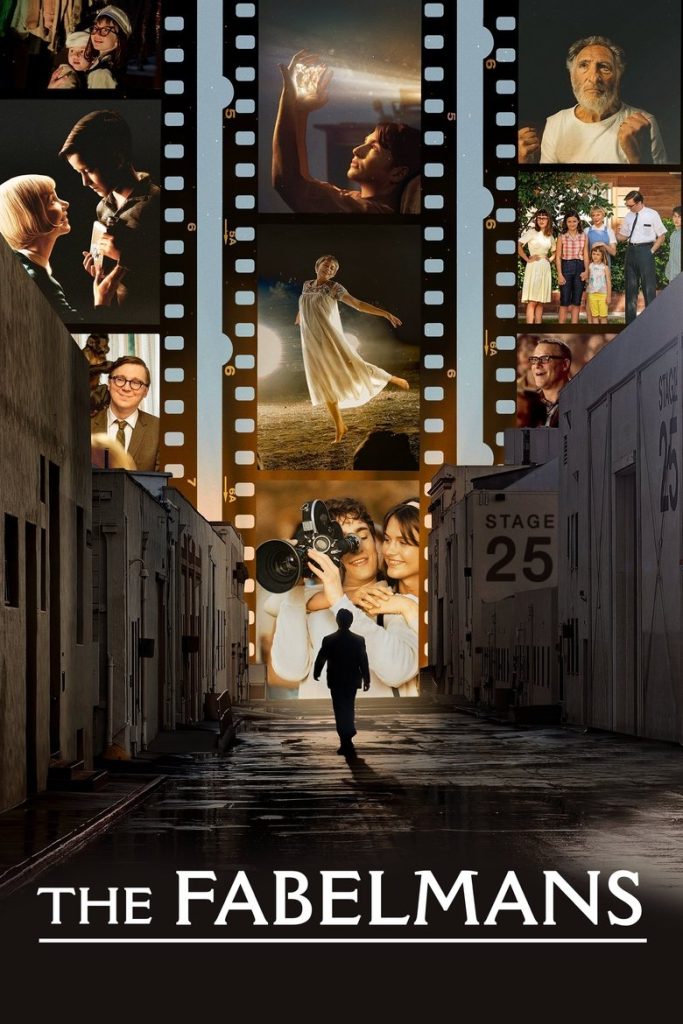
The Fabelmans is a 2022 drama film that explores themes of family, creativity, and personal growth. It follows a young protagonist navigating the complexities of relationships and artistic passion. The story provides an intimate look at the challenges and joys of pursuing one's dreams.
Parent Guide
A thoughtful drama exploring family and creativity, best suited for mature children and teenagers who can handle emotional complexity.
Content breakdown
May include minor conflicts or tense situations typical of family dramas.
Contains emotionally intense scenes that could be unsettling for sensitive viewers.
May include occasional mild language appropriate for PG-13 rating.
Could include mild romantic elements or discussions of relationships.
No significant substance use content expected in this type of drama.
Explores complex family dynamics and personal struggles that may be emotionally engaging.
Parent tips
This PG-13 drama deals with mature themes that may require parental guidance. The film's emotional depth and complex family dynamics make it more suitable for older children and teenagers. Parents should be prepared to discuss themes of artistic passion, family relationships, and personal identity with their children.
Parent chat guide
Parent follow-up questions
- What was your favorite part of the movie?
- How did the characters show they cared about each other?
- What creative things do you like to do?
- How do you feel when you make something new?
- What makes a family special?
- How did the main character follow their dreams?
- What challenges did the family face together?
- Why is creativity important to people?
- How did the characters show their feelings?
- What did you learn about growing up from this movie?
- How does the film explore the balance between art and family?
- What does the movie say about pursuing your passions?
- How do the characters handle difficult emotions?
- What makes family relationships complex?
- How does creativity help people understand themselves?
- How does the film portray the development of artistic identity?
- What insights does the movie offer about family dynamics?
- How do the characters navigate personal growth versus expectations?
- What does the film suggest about the creative process?
- How are themes of love and sacrifice presented in the story?
🎭 Story Kernel
At its heart, 'The Fabelmans' explores how art both reveals and distorts truth. Sammy Fabelman's journey with filmmaking isn't just about passion—it's about control. Through his camera, he can frame chaos into narrative, most poignantly when he edits home footage to expose his mother's affair. The film suggests that for artists, creation becomes a way to process pain, but also to manipulate reality. Sammy's final confrontation with his high school bully, reframed through cinematic heroism, shows how storytelling can rewrite personal history. It's ultimately about the double-edged sword of artistic vision: it heals wounds while sometimes creating new ones.
🎬 Visual Aesthetics
Spielberg employs a nostalgic, golden-hour palette that gradually sharpens as Sammy's perception matures. Early family scenes glow with warm, diffused light, mimicking childhood memory. As Sammy discovers film editing, the visuals become more precise—notice how the cutting rhythm mirrors his emotional realizations. The train crash sequence is meticulously staged not as spectacle but as obsession, repeated from different angles to show how Sammy reframes trauma. Camera movements often feel like a curious observer, peering through windows or lingering on faces, reflecting Sammy's directorial gaze. The final shot—a playful nod to John Ford—perfectly encapsulates cinema's power to transform reality into myth.
🔍 Details & Easter Eggs
💡 Behind the Scenes
Gabriel LaBelle, who plays teenage Sammy, spent weeks studying young Spielberg's mannerisms from archival footage. The film's family home was meticulously recreated from Spielberg's childhood memories in Arizona. Janusz Kamiński, Spielberg's longtime cinematographer, deliberately used different film stocks and lenses to distinguish time periods—16mm for early childhood, anamorphic widescreen for later years. Michelle Williams based her portrayal of Mitzi Fabelman partly on Spielberg's actual mother's concert pianist career. The infamous 'dinner table confrontation' scene was shot in one continuous take, requiring 27 attempts to perfect the emotional rhythm.
Where to watch
Choose region:
- Peacock Premium
- Peacock Premium Plus
- Fandango at Home Free
- Amazon Video
- Apple TV
- Google Play Movies
- YouTube
- Fandango At Home
- Spectrum On Demand
Trailer
Trailer playback is unavailable in your region.